Ohtani Ends 11-Game HR Drought, but Dodgers' Offensive Collapse Demands Skepticism
By Erik Schwartz ·
One night of solid contact doesn't cure what ails a lineup batting .233 with runners in scoring position and trending toward single-digit run production.
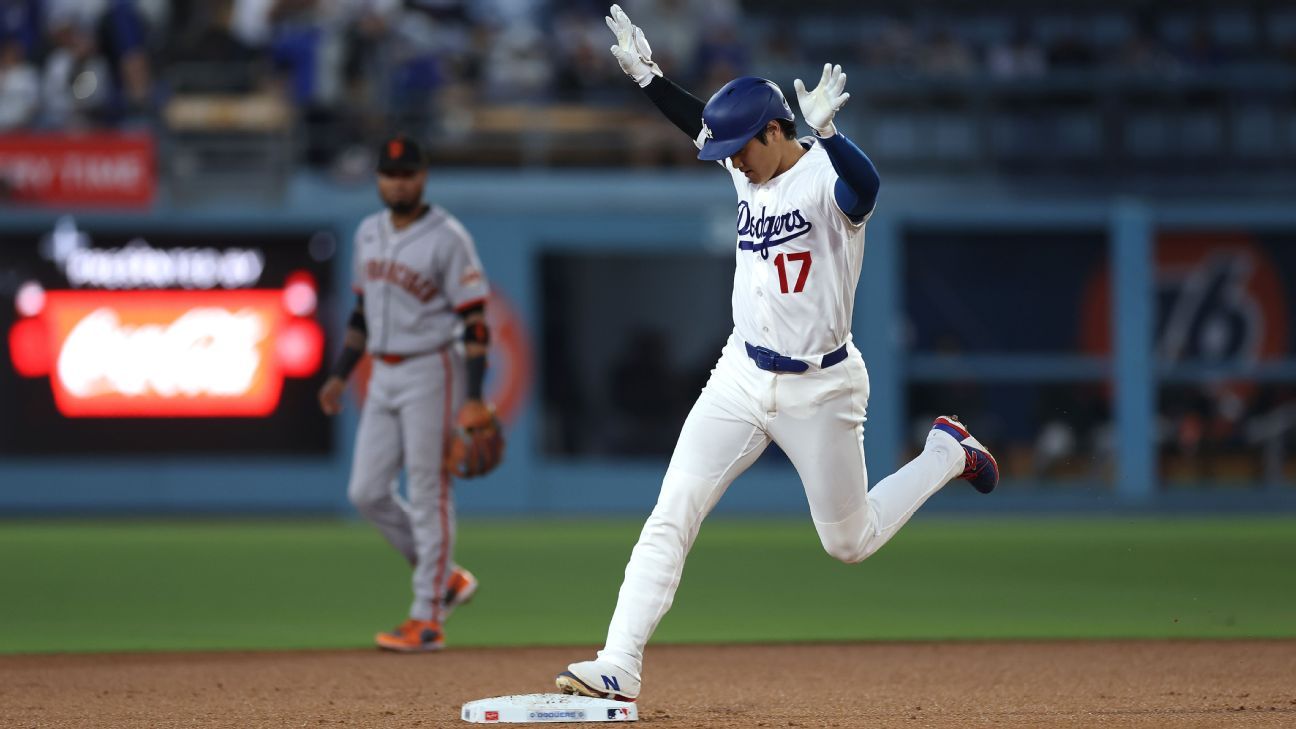
Shohei Ohtani snapped an 11-game homerless streak Tuesday against the Giants, collecting a homer, a single, a walk, and a line drive robbed at the wall in a 6-2 loss. The home run traveled 398 feet at 106 mph off a sinker that tailed away—the exact pitch Ohtani had worked on during Monday's outdoor batting practice with catching coordinator Rocky Gale. It was, on the surface, the kind of breakthrough moment a struggling offense needs. Manager Dave Roberts sounded hopeful: when your best player delivers at that level, it "adds energy into the dugout" and "frees guys up." The problem is context. Ohtani's one productive night arrived in the middle of a 10-game stretch in which he'd managed exactly three singles and one double across 36 at-bats. His season batting average had cratered to .233. His OPS sat at .767. The Dodgers themselves had surrendered to offensive mediocrity, scoring three runs or fewer in 10 of their last 13 games and losing four straight. One game does not reverse a month-long collapse.
The Dodgers' front office is treating Ohtani's situation seriously enough to bench him on back-to-back nights—Wednesday's game following his pitching start and Thursday's series finale. That decision, rare for a player who hadn't missed consecutive games outside the injured list since 2021, signals internal concern that runs deeper than a temporary power drought. The batted-ball data explains the alarm: half of Ohtani's balls in play this month have been grounders, a distribution that suggests mechanical issues or pitch recognition problems, not just bad luck. A single home run, even one crushed at 106 mph, doesn't recalibrate that profile.
For bettors, the temptation is natural: Ohtani hit a bomb, so his prop lines should reset upward. That framing collapses the moment you ask what caused the slump in the first place. His groundball rate spike and contact quality decline point to a persistent issue—likely swing mechanics or an adjustment by opposing pitchers to his current vulnerabilities. One corrective session with Gale and one positive at-bat don't constitute evidence of a systemic fix. The Dodgers lost the game. The offense remains anemic. If anything, the bench-on-back-to-backs decision telegraphs that Roberts sees the slump as structural, not situational.
The prop market will likely overweight Ohtani's homer and overnight efficiency into Wednesday and Thursday's reopened lines, especially if sportsbooks sensed the narrative shift. That's a timing advantage for faders. Ohtani's true contact quality—gauged by xBA, barrels, and hard-hit rates—hasn't fundamentally changed. His home run line and RBI props may tick up, but the underlying mechanisms that produced an 11-game drought remain unresolved. The one-game sample is a mirage. Resist the urge to chase it.
The Dodgers' inability to score runs even when Ohtani is at his best compounds the issue. A 6-2 loss despite a multi-hit, multi-walk night tells you that the problem extends well beyond one player's mechanics. If the broader lineup remains dormant—and the recent 10-of-13 games with three or fewer runs suggests it is—then even Ohtani's resumption of home-run power becomes a less reliable prop vehicle. Wait for consecutive games of strong output, better plate discipline in the supporting cast, and observable pitching attack adjustments before backing elevated Ohtani props. One night of good contact is newsworthy but not actionable.