Ohtani's Forced Rest Signals Real Mechanical Trouble, Not Just Early-Season Noise
By Ty Whitney ·
The Dodgers are sitting their franchise cornerstone for back-to-back games—a first since he arrived—because his at-bat quality has cratered, not because the scoreboard looks bad.
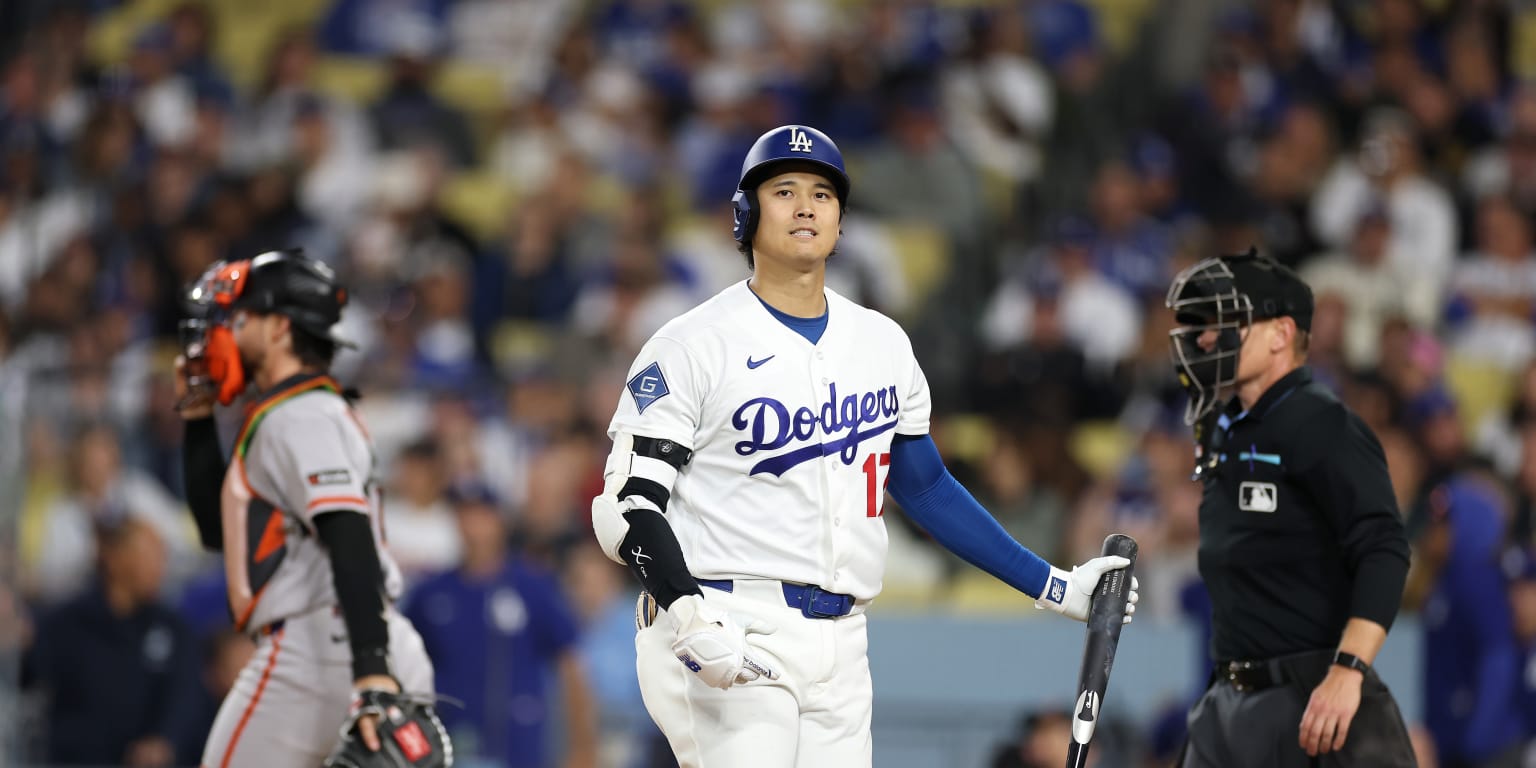
Shohei Ohtani will miss the Dodgers' Thursday series finale against San Francisco, marking the first time in his Los Angeles tenure that he's been on the active roster and benched in consecutive games. Manager Dave Roberts made the call after Ohtani took the mound Wednesday; rather than let him serve as the DH following his pitching appearance—as he has done three times already this season—Roberts opted for a full two-day break. The surface numbers tell one story: .240/.370/.427 through 39 games, seven homers, a line that resembles what Ohtani posted in his first 39 games of 2022. But Roberts isn't chasing a trend line. He's reacting to something he's watched deteriorate in real time: the mechanics and discipline of Ohtani's approach at the plate.
Roberts was explicit about the trigger. When the "quality of at-bat starts to go down consistently," the manager said, that's when the mind and mechanics fracture. Chase rate spikes. The player stays outside his game plan. One strong night—Ohtani went 2-for-4 with a homer on Tuesday, squaring up multiple pitches—wasn't enough to override what the team had been observing in practice and in-game mechanics over the prior week. This is the opposite of a panic move based on a slump. It's a surgical intervention based on observable degradation in process.
The timing matters more than the optics. Ohtani is also pitching at an elite level: 0.82 ERA, at least six innings in all seven starts, leading baseball in the metric that actually moves wins. His workload this year is genuinely new—he's a full-time two-way player for the first time since 2023, with no extended rehab window like he had the past two seasons. That dual load, compounded by his hitting mechanics breaking down, created the formula for the reset. Roberts framed it as giving Ohtani's body time to recalibrate, not his confidence. The player himself acknowledged the break was warranted and said his last at-bat (Tuesday's homer) represented the form he wants to carry forward.
For bettors, this is a critical distinction: Ohtani's absence in these two games is not predictive of his broader season trajectory; it's actually a management move designed to prevent one. The Dodgers are treating this as correctable—a mechanical reset, not a skill decline. The comparison to 2022 is instructive: he hit .253/.310/.456 in his first 39 games that year, then caught fire in June and never slowed down, finishing at .273 with an .875 OPS. When he returns to the lineup (likely Friday), expect the market to price in a near-term rebound from his Tuesday-night mechanics rather than extrapolate his season-opening slump. His return props—hits, runs, RBI—could offer value if the market has overcorrected downward on the assumption his hitting troubles are structural rather than fixable.
Dodgers team totals for Thursday should drift slightly lower with Ohtani out of the lineup entirely; his absence removes their primary power threat and run-generating engine. But Friday's totals could overweight the assumption of immediate correction if the market interprets the two-day break as a reset rather than a sign of deeper problems. Ohtani's batting line props post-return are the real angle: the team's internal confidence in a mechanical fix, not a decline, is the edge.