Correa's Season Ends Before It Started: Houston's Shortstop Shutdown Reshapes 2026 Lineup
By PropBetEdge Editorial Team ·
Houston's injury timeline just expanded six months, forcing the Astros to navigate the final stretch and beyond without their veteran infielder.
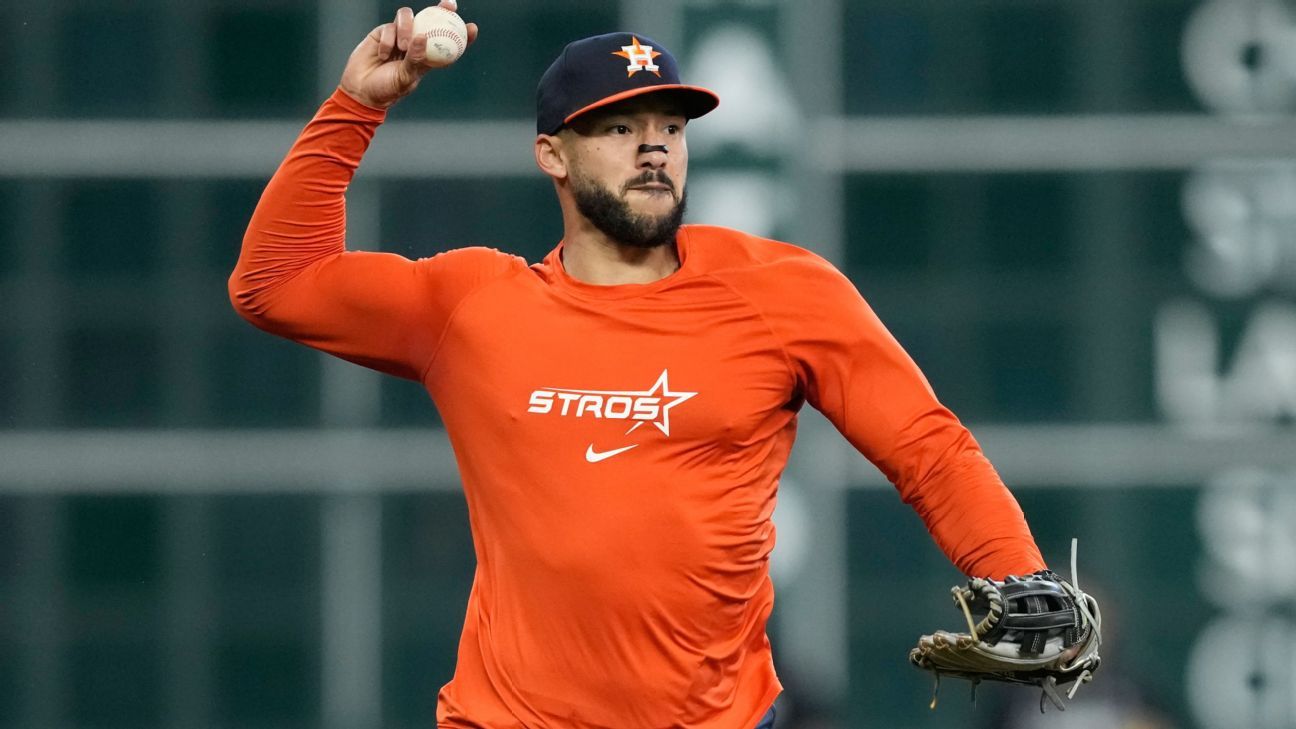
Carlos Correa will not play another inning for the Astros in 2026. The 31-year-old shortstop's comeback attempt from left ankle surgery ended Friday when his physician ruled him out, citing insufficient tendon maturity and the risk of compromising his 2027 readiness. Correa had been working toward a return since May 11, when he underwent the procedure with a standard six-to-eight-month recovery window. That timeline suggested late September or early October availability. Instead, inflammation and soreness over the past two to three days forced an MRI that revealed the damage: the tendon wasn't ready, and pushing forward would have jeopardized next season's spring training.
The decision reflects a calculated medical conservatism that prioritizes 2027 over 2026's final weeks. Correa said his physician explicitly told him, "I don't feel comfortable with this," leaving no room for negotiation. Houston manager Joe Espada had already announced the shutdown on Tuesday; Friday's remarks were Correa's first public accounting of the choice. The shortstop emphasized the emotional difficulty—four months of daily rehabilitation, live batting practice reps, a mental readiness he thought would translate to the field—but acknowledged the logic. An early return carries genuine risk: a re-injury in October could flatten his value for a full 2027 season and beyond, costing millions in earnings and disrupting the Astros' plans to deploy him at full strength.
For Houston's roster, this is a harder blow than the headline suggests. Correa was hitting .279 with three home runs and 16 RBIs before his May injury—modest numbers, but from a 31-year-old returning to shortstop after playing third base last season. Jeremy Pena remains the primary shortstop, but the depth layer Correa provided—a veteran bat capable of moving around the diamond—is now unavailable. The Astros' offense has leaned heavily on Yordan Alvarez (who the publication highlighted earlier this season as a potential MVP candidate and Triple Crown threat); without Correa as a secondary option to protect Alvarez in the lineup, Houston's run-production flexibility narrows considerably in a playoff push. The team will not have him for the final month-and-a-half of the regular season or any postseason appearance.
For bettors, Correa's absence simplifies the Astros' offensive modeling but removes a variable some books may have priced for in late-September and October matchups. Over the next six weeks, Houston's batting order loses a switch-hitting option with a .279 average at the time of injury. More significantly, the absence of a 31-year-old shortstop with veteran plate discipline (even in limited 2026 action) means fewer ways for the Astros to generate secondary scoring when Alvarez draws a double. Team total overs in September and October games should drift slightly lower as Houston's lineup becomes more Alvarez-dependent and less layered. Books may have already factored in a partial Correa return; the explicit medical shutdown removes any speculation.
Correa will undergo another MRI in two months and expects full recovery by spring training. Until then, he's shelved from all baseball activities—no hitting for the next month, no twisting motions that stress the ankle. The Astros' bet is clear: sacrifice October depth for a healthy shortstop in April 2027. For season-long bettors holding playoff wagers on Houston, that calculus feels conservative but defensible.