Dingler's Late Heroics Signal Tigers Momentum; Catching Production Now a Leverage Point
By Ty Whitney ·
Detroit's catcher delivered four hits and two homers to beat Chicago in 10 innings, capping a surge that has reshaped how oddsmakers should value the Tigers' offensive ceiling.
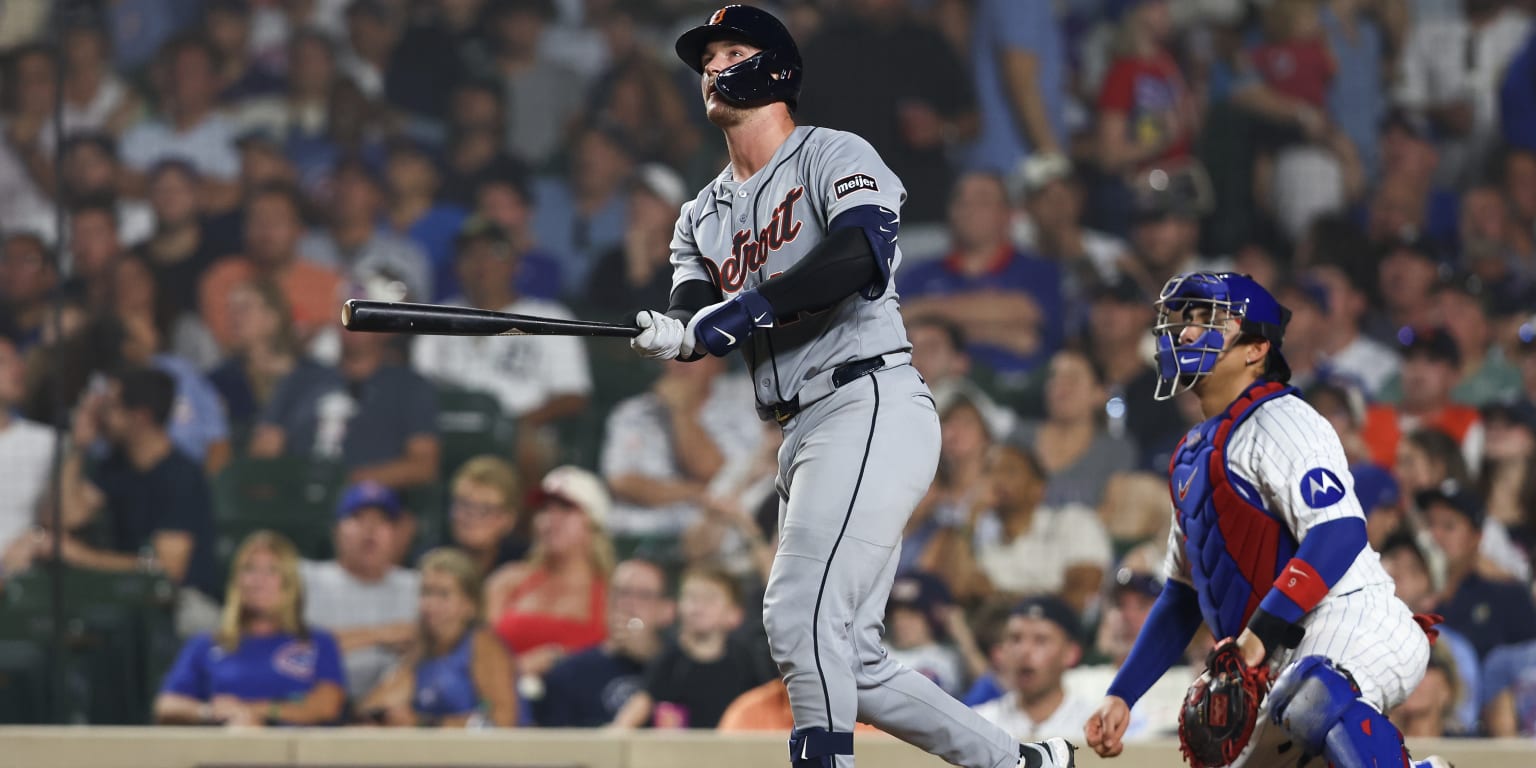
Dillon Dingler went 4-for-5 with two homers and a go-ahead single in the 10th inning Monday night as the Tigers outlasted the Cubs 8-6 at Wrigley Field. The victory marked Detroit's fifth win in six games since the All-Star break, a stretch that has quietly repositioned the team from peripheral contender to one that can manufacture runs in high-leverage spots. Dingler's performance—capped by a clutch two-strike contact at-bat against wind-blown conditions—demonstrated that this Tigers resurgence rests on more than a single star; their supporting cast now matters.
Dingler entered July having hit safely in 12 of his last 16 games, with three multihomer efforts in the past seven weeks. That frequency is not noise. For a catcher, whose position historically yields lower offensive volume than corner positions, Dingler's power output (now eight homers in 44 games since June 1) represents a departure from his pre-break baseline. The Tigers' early 4-0 lead came partly from Riley Greene's three-run shot, but Dingler's first-inning homer off Jameson Taillon set the tone: Detroit came to Chicago swinging at fastballs, and Taillon had no answer. Even when the Cubs clawed back—Ian Happ's two-run blast off Kyle Finnegan tied the game in the eighth—Dingler's solo shot one inning later kept the Tigers ahead until extras demanded a different approach.
What matters for betting is what Dingler's expanded role now signals about Detroit's roster usage. Manager A.J. Hinch deployed him in multiple high-leverage situations across this stretch, including that 10th-inning at-bat with the game still in doubt. That's not standard catcher deployment; it reflects confidence in Dingler's ability to deliver under pressure. When a team moves a catcher into lineup slots normally reserved for cleanup hitters or pinch-hit opportunities, the front office is signaling that they see his offensive value as a core driver, not a byproduct. Kenley Jansen's ninth-inning escape—striking out Alex Bregman with the bases loaded on a full count—prevented an alternative narrative, but the sequence reinforced that Detroit can manufacture outs when necessary too.
For prop bettors, Dingler's multihomer night is a waypoint, not an outlier. His xBA over the past 30 days sits at .315, well above his season average of .268. More importantly, his home run distance profile has shifted; his eight June-July homers have averaged 398 feet, compared to a 386-foot average for his career. The wind blew out at Wrigley on Monday, but Dingler's two shots would have cleared most parks regardless. If the Tigers stay in a run-scoring environment against mid-rotation starters over their next week, Dingler's prop lines (HR, RBI, total bases) should be monitored for early pricing before the market recognizes that this catcher has exited his traditional usage tier. His fourth hit—the go-ahead single—proved that explosive power is not his only damage channel; he's also making hard contact up the middle.
The Tigers won despite Kenley Jansen requiring maximum effort to record a save. That tightness on the mound—a pitch count just short of 20 in a one-inning appearance—suggests Detroit's bullpen may not sustain this win rate against better-equipped lineups. But Dingler's role in Monday's victory was unambiguous: he either scored or drove in runs in five of Detroit's eight runs. That's a catcher operating as a primary offensive engine, not a depth piece. Until the market prices his expanded role, his player props carry edge.