Mitchell's Durability Breakthrough Reshapes Brewers' Offensive Ceiling
By Ty Whitney ·
A four-hit night and go-ahead triple signal Garrett Mitchell's first healthy season is unlocking Milwaukee's lineup depth in a race where depth matters.
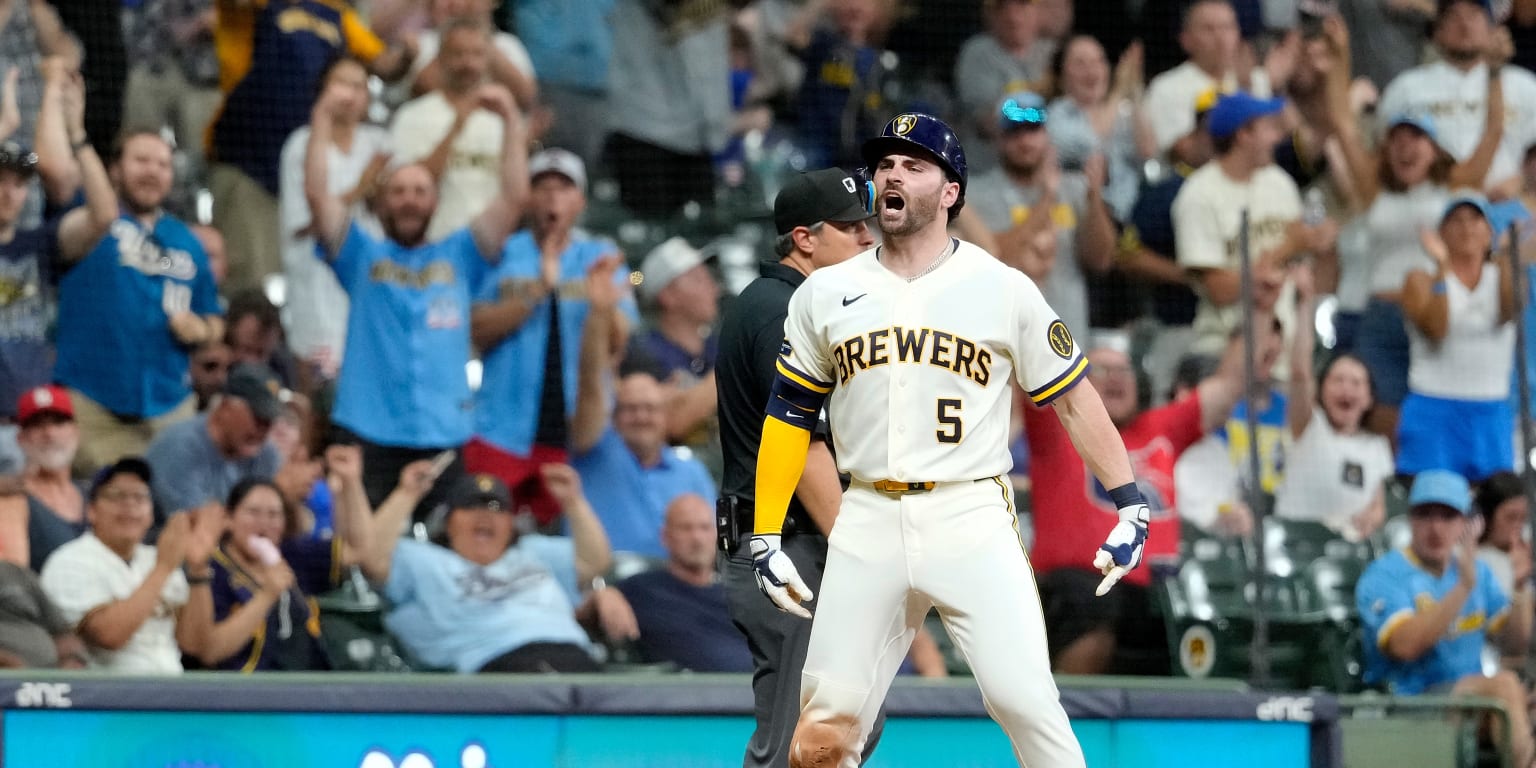
Garrett Mitchell delivered the decisive blow Wednesday—a seventh-inning triple off Brock Burke that broke a 2-2 tie and sent Milwaukee past Cincinnati 4-2. The moment itself was ordinary: a run-scoring hit in a division matchup. What wasn't ordinary was the context wrapping around it. Mitchell finished the night 4-for-5, a career-high performance on a night when a close call at home plate four innings earlier could have derailed his mental state. He stayed locked in instead. The Brewers, extending their dominance over the Reds to 51 wins in their last 70 matchups, moved to 22 games over .500 in the process—a season-high margin that reflects a team firing on multiple cylinders.
But the real stat lives in the box score's left margin: 74 games played. Mitchell has now appeared in more games in a single season than in any previous year of his Brewers tenure, which began in 2022. For a former first-round pick whose career has been periodically truncated by injury, health is the prerequisite to everything else. Performance matters only if you're on the field. This season, he finally is. Over his previous four seasons combined, Mitchell's injury profile created a ceiling on his availability—and therefore on the Brewers' ability to deploy their full roster confidence. A four-hit night means little if it happens in game 45 of a 162-game season. It means something different in game 74, when durability becomes demonstrable.
Mitchell's Wednesday performance wasn't an outlier—it was confirmation. He's hitting .289 with an 118 wRC+ through early July, production that looked like a mirage in previous seasons because his availability window was too narrow to matter to aggregate team strength. Now, with him logging near-everyday at-bats at center field, Milwaukee's lineup depth expands measurably. Aaron Ashby picked up win No. 12 as a reliever, a MLB-leading total that understates the bullpen's actual workload and reliability. The pitching staff can afford to trust bench bats and reserve outfielders when the starter isn't being asked to carry innings Milwaukee would normally shuffle toward Ashby anyway.
For betting purposes, Mitchell's sustained availability reshapes two distinct angles. First, the Brewers' team total and run-line products have benefited from a narrative that undershoots their actual lineup depth. Public perception still carries residual skepticism from previous seasons when Mitchell's name in the lineup meant "injury risk, short shelf life." That skepticism inflates Brewers unders slightly—the market isn't fully accounting for the fact that this roster's offensive floor is higher when Mitchell's in the lineup than it was in 2023 or 2024, simply because he's there. Second, Mitchell's hit totals (typically 1.5 or under for individual games) are available at pricing that doesn't fully reflect his current approach. He's not a boom-or-bust contact hitter; he's a true center fielder who works counts and drives the ball when he gets it. The four-hit night was rare. Nights where he registers two or more hits are now within his normal variance when healthy. The market prices him like he's still the injury-haunted reserve.
The Reds' loss here matters less than what Milwaukee's margin of victory—now 22 games over .500 with nearly three months of baseball remaining—signals about team construction. Durability isn't sexy. A four-hit performance is. But durability is the prerequisite that makes performances accumulate into season-long production, and that's the real betting signal. The Brewers are constructed to win more games than their preseason totals anticipated, in part because their best young outfielder finally stayed healthy long enough to matter.