Yastrzemski's Return Forces Atlanta Into a Messy Mid-Season Roster Crunch
By Ty Whitney ·
The Braves released Kyle Farmer to make room for an outfielder who went 0-for-2 in his first game back, setting up harder decisions ahead on Acuña, Kim, and their lineup's defensive balance.
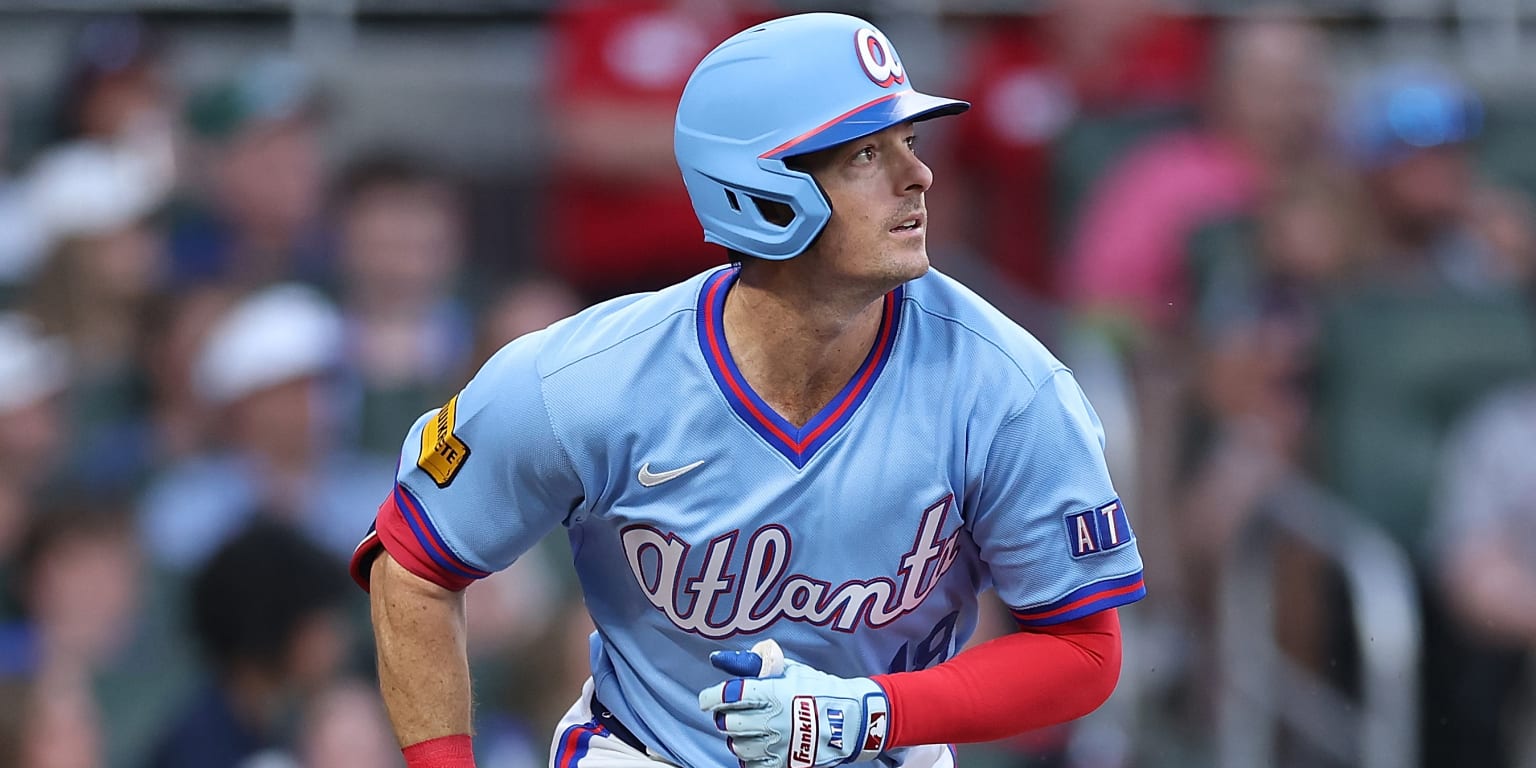
Mike Yastrzemski cleared the injured list and returned to Atlanta's lineup on Tuesday, prompting the Braves to release Kyle Farmer and triggering a cascade of roster decisions that will reshape their roster composition through August. Farmer, despite being a credible clubhouse presence and a hometown player, had virtually no runway—just 17 plate appearances all season, with only two coming since May 15—so the move was logistically straightforward. What's less certain is what Yastrzemski's production will look like after time away, and whether his roster spot justifies the opportunity cost.
The immediate fallout extends beyond Farmer. Ronald Acuña Jr. is expected back from the injured list this week, which likely puts Brewer Hicklen in the crosshairs for release or demotion. Hicklen posted a 5-for-14 mark since arriving earlier in July, but the Braves have a clearer alternative in Eli White—who carries a .755 OPS and an 18.5 at-bats-per-home-run ratio specifically against left-handed starters. That split matters because it gives the coaching staff a defensible platoon option if one of their outfielders needs to rotate out. The real test is whether White's ISO and on-base work hold up in regular rotation.
Ha-Seong Kim presents a taller problem. The shortstop signed a one-year, $20 million contract in the offseason, then tore a right middle finger tendon on ice roughly three weeks after signing (around late January). He missed the first six weeks of the season, returned to play, promptly collapsed to a .068 average over 73 plate appearances through early July, and landed back on the IL. He's now in a rehab stint at Gwinnett that runs through August 1, and his early numbers—4-for-15 (.267) with three doubles, seven of 11 batted balls at 95+ mph exit velocity—suggest some offensive life is returning. But .267 over a four-game rehab window is still too thin to build a case for him, and the Braves' defensive alignment at short already favors Mauricio Dubón and Jim Jarvis.
From a betting perspective, this carousel creates two distinct angles. First, Atlanta's offensive consistency is now in flux. Yastrzemski's absence left a production gap; his immediate return (with a 0-for-2 debut) means the Braves aren't getting instant help. If Acuña returns this week but the team is still rotating Hicklen, White, and Yastrzemski across outfield spots, the lineup will lack rhythm and may underperform team total expectations. Second, Kim's $20 million salary and defensive limitations mean the team is actively shopping for an exit route or a bench role—not a recipe for a player earning regular at-bats. The Braves entered late July as a 97-win-pace team; these internal conflicts don't threaten that tier, but they do introduce variance into game-to-game offensive output. Lean toward unders on Atlanta's team total if oddsmakers price in the full-strength lineup; that lineup isn't playing yet.
The Braves' front office hasn't signaled panic, but the pace of roster moves suggests they're hedging their bets. A $20 million player on the bench or in trade limbo while an outfielder returns 0-for-2 is not the midseason picture any contender draws up.