Arizona Clears Roster Space With Thomas Trade to LA; Dodgers Bet on Redemption Upside
By Erik Schwartz ·
The Diamondbacks' mid-season exit of Alek Thomas signals organizational impatience with stalled development—and hands the Dodgers a low-cost swing at reclaiming outfield depth.
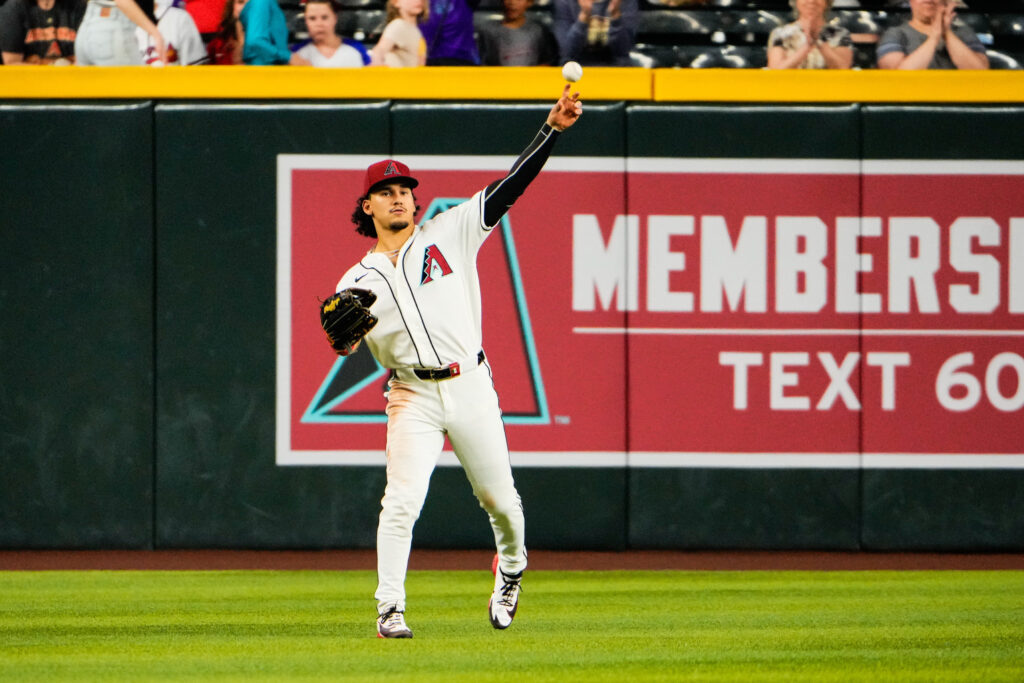
The Diamondbacks have traded outfielder Alek Thomas to the Dodgers, clearing roster space after designating him for assignment last week when top prospect Ryan Waldschmidt arrived. The move closes a chapter on a high-ceiling talent that failed to deliver consistent offensive production in Arizona, and hands Los Angeles a reclamation project with upside at a minimal cost.
Thomas was a first-round pick (16th overall) in 2022 and arrived in the majors with elite defensive metrics and top-10 prospect pedigree. But his plate discipline eroded faster than expected—strikeout rates climbed while walk rates stagnated—and he cycled between minor-league stints and low-leverage at-bats over two seasons. Arizona's decision to move on reflects an organizational reset: Waldschmidt's prospect status and perceived higher ceiling in right field pushed Thomas into the transaction market, a clear signal that the organization has written off meaningful upside from further development time.
For the Dodgers, the calculation is different. Los Angeles carries the financial flexibility and organizational depth to absorb Thomas without roster construction pressure. If he resurfaces as a fourth or fifth outfielder, his defensive range in center field and speed profile offer operational value in a rotation system. The Dodgers' front office has consistently treated prospect-level talent as optionable—they've cycled young players through injury rehab assignments and performance-dependent call-ups without the organizational urgency that pins careers to single seasons. Thomas's move to Chavez Ravine is a low-leverage bet: if he stabilizes his zone discipline in a change of scenery, the Dodgers own the upside; if he doesn't, they move on without roster bloat.
From a wagering perspective, Thomas's disappearance from Arizona's everyday lineup removes one of the Diamondbacks' most volatile offensive variables. Over the 2024-25 seasons, he accumulated sub-20% walk rates paired with strikeout rates above 27%—a combination that produces feast-or-famine at-bats in high-variance games. The D-Backs' team total overs have been plagued by inconsistent secondary scoring behind their star power; Thomas's departure eliminates one more outcome distributor in their lineup, making the math around their overall run production more predictable (and slightly more vulnerable to compression). Waldschmidt, by contrast, carries prospect optionality: his plate discipline metrics are superior—he'll likely offer more structured on-base performance than Thomas, which stabilizes Arizona's lineup volatility rather than amplifying it.
The Dodgers' outfield volatility absorbs a new variable, but with lower leverage. Los Angeles ran a more efficient offensive ecosystem in 2024-25; adding a high-variance hitter in a fourth-outfield role doesn't move their team totals in either direction. However, prop markets on individual Dodgers hitters may tighten slightly if Thomas returns to active duty and receives spot starts—plate appearances in Los Angeles's system tend toward higher-value situations due to lineup construction, which could inflate his per-game prop volume relative to his Arizona baseline. Monitor Dodgers outfielder props for marginal line adjustments if Thomas enters the rotation.