Santana's Arizona Exit Opens Platoon Questions for Diamondbacks
By PropBetEdge Editorial Team ·
The Diamondbacks' release of Carlos Santana mid-season signals a pivot away from left-handed pop at first base and creates uncertainty around their offensive construction.
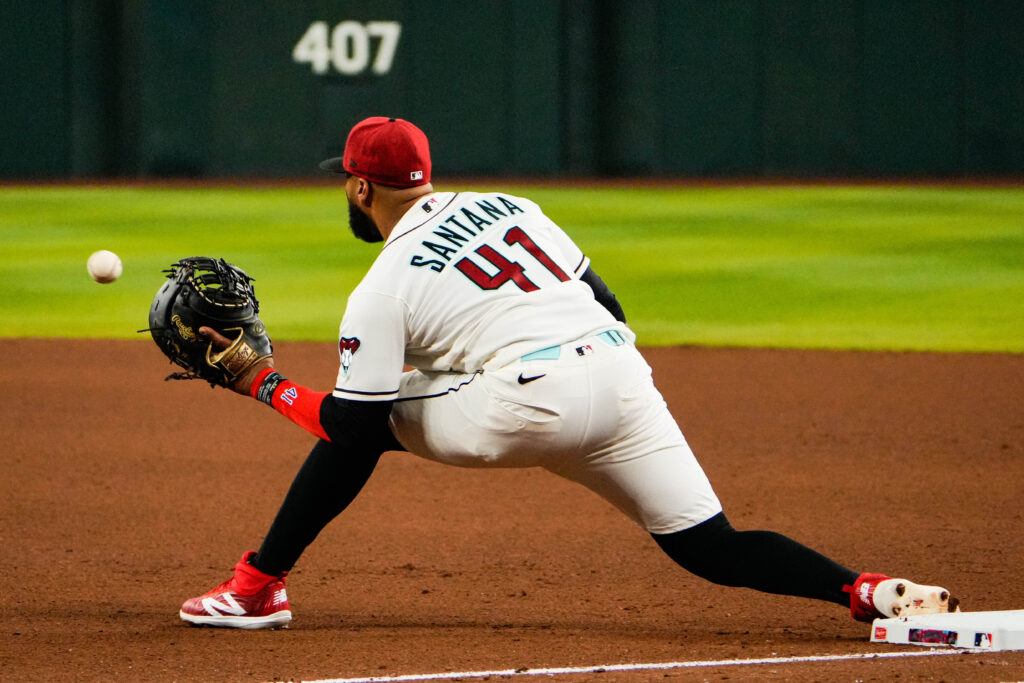
The Diamondbacks officially released Carlos Santana on Friday, concluding a brief tenure that lasted less than four months. Santana had been designated for assignment two days prior after failing to establish himself as a consistent contributor in Arizona's lineup. He signed a modest $2 million free agent deal before spring training, brought in specifically as a right-handed option in a platoon role at first base—a task he ultimately could not execute at the level the organization required mid-season.
What makes this move notable is the timing and what it reveals about the Diamondbacks' first-base picture. Santana, a switch-hitter who has carried a career .280 OPS split advantage from the right side, was supposed to provide left-on-left flexibility. Instead, his inability to produce consistently forced Arizona's hand just as the team moved closer to the trade deadline. The $2 million investment—minimal in absolute terms—becomes a sunk cost far earlier than management likely projected when they signed him.
For Arizona's offense, the release compounds questions about depth and platoon construction heading into the season's second half. First base becomes a clearer responsibility for whoever holds the everyday role, removing the specialized niche Santana was meant to fill. If Arizona was comfortable releasing him now, it suggests either internal depth charts shifted or his market value in a platoon setting has simply cratered since April.
From a betting perspective, Santana's departure narrows Arizona's left-handed offensive options, which carries minor implications for team total props. The Diamondbacks' team total line may face modest downward pressure if oddsmakers view this as a net loss in offensive versatility—though the impact hinges on who replaces him in the lineup against right-handed starters. If Arizona promotes a young left-handed hitter, the team total could stabilize; if the role cycles between right-handed bench players, expect books to shade team totals down slightly over Santana's final week of availability and through the next 10 games. The edge here is not dramatic—Santana's production was already marginal—but the directional signal (fewer offensive options, tighter roster flexibility) favors modest caution on Arizona overs until clarity emerges on the replacement option.
Santana will return to free agency with limited leverage. His next landing spot will likely be as a bench or late-inning bat on a contender, not as a featured platoon piece. For the Diamondbacks, the release is a minor roster housekeeping move that quietly acknowledges their first-base situation demanded a different shape than Santana could provide.