Arizona's Pitching Depth Passes First Real Test Against Dodgers
By Erik Schwartz ·
The D-backs' rotation and bullpen held a 14-of-17 Dodgers team to one run, signaling that Arizona's May-to-June surge is built on sustainable pitching construction, not variance.
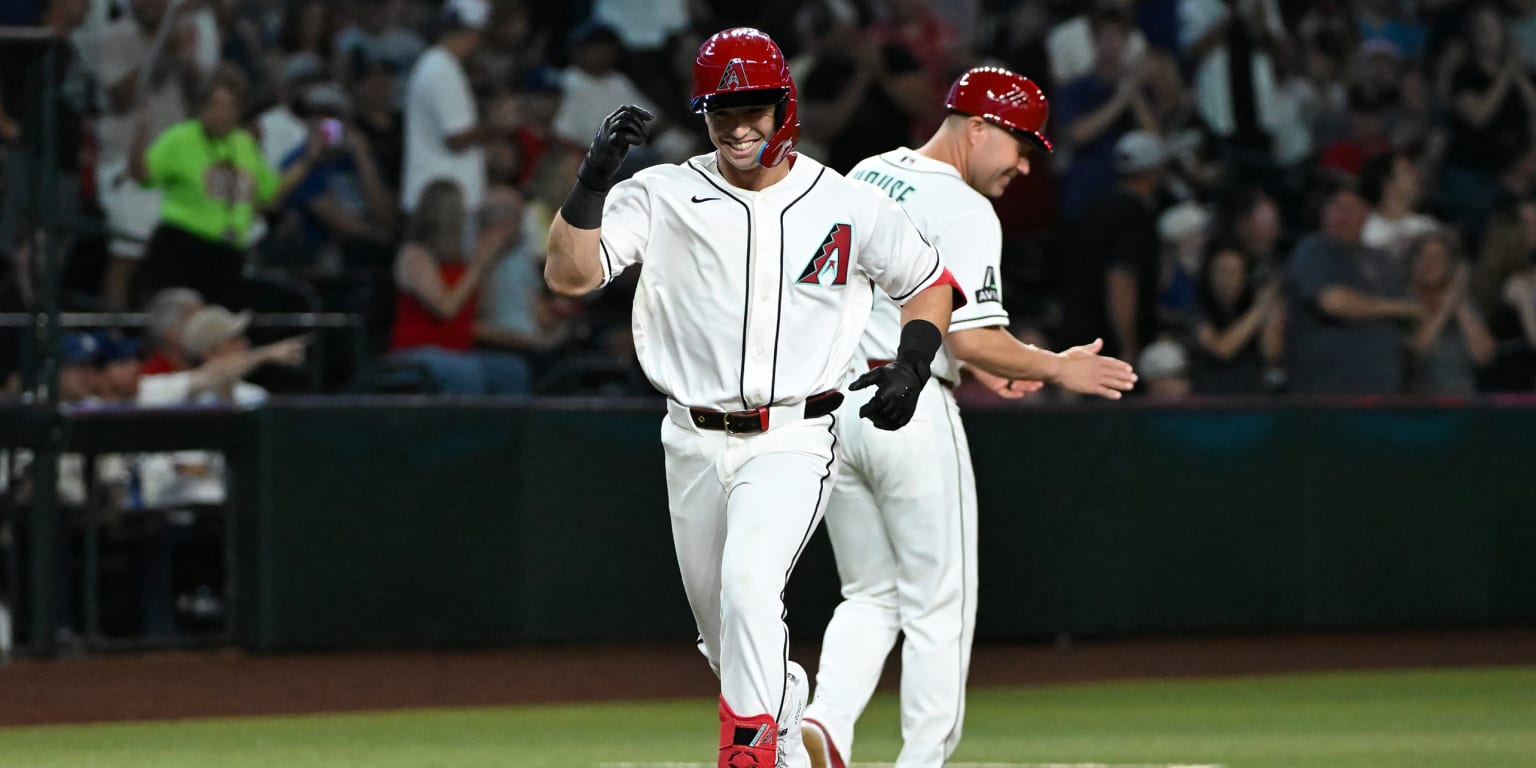
Arizona beat Los Angeles 4-1 Monday night at Chase Field, stopping a Dodgers offense that had won 14 of its previous 17 games by a combined 70 runs. On the surface, it looks like another June upset—the D-backs ride some hot streak to a single victory over a Western Division rival. But the underlying mechanics matter: Eduardo Rodriguez delivered six innings of one-run ball, marking Arizona's 18th quality start since May 5, the most in baseball over that span. That's not luck. That's infrastructure.
The real signal isn't that the D-backs beat the Dodgers once. It's how they beat them. Rodriguez anchored the outing, but the relief corps—Taylor Clarke, Brandyn Garcia, Paul Sewald—combined for scoreless frames when leverage shifted. Over their last 26 games, the D-backs have allowed fewer than two earned runs in 17 contests and now rank in the top five across MLB in innings pitched, ERA, BB/9, and WHIP. A defense that included two diving catches from Jorge Barrosa in center field neutralized extra-base damage. And the offense—Tommy Troy's first career home run, Nolan Arenado's three-run shot, Ketel Marte's insurance dinger—provided just enough run support without relying on a high-wire act.
What's striking is the age distribution of that production. Troy is 24, a prospect still settling into his position. Arenado, 35, has seen 2,000 pitches this season already and doesn't chase. Marte, at 32, is a middle-of-the-order stabilizer. The fact that Arizona's wins aren't dependent on one demographic—not leaning entirely on youth or veteran leadership—suggests the pitching backbone can hold up across a full month. Rodriguez himself is in his 11th season; he's not overextending on any given start.
For betting purposes, the Dodgers' elevated scoring pace (70 runs in 14 wins) masks a concerning vulnerability: a starting rotation and bullpen that can be attacked with precision. Arizona's pitching staff isn't accident-prone. Their zone management and strikeout rate improvements are measurable across multiple relievers and starters. If this same D-backs rotation faces teams that also depend on aggressive counts and early-inning explosiveness—which describes most contenders—the unders become viable for Arizona's pitching matchups. The market still prices Arizona as a secondary NL West threat; but a staff in the top five in ERA and WHIP for over a month isn't noise, it's a competitive asset that line-makers haven't fully repriced.
June will test whether this run holds. But Rodriguez, Clarke, Garcia, and Sewald just proved that beating the Dodgers doesn't require a miracle—it requires the kind of consistent, multi-layer execution that repeats.