Cubs Gamble on Zulueta's Control as Bullpen Depth Craters
By Erik Schwartz ·
Chicago adds a high-velocity arm with a walk-rate problem to fix a mid-season injury crisis in the pen.
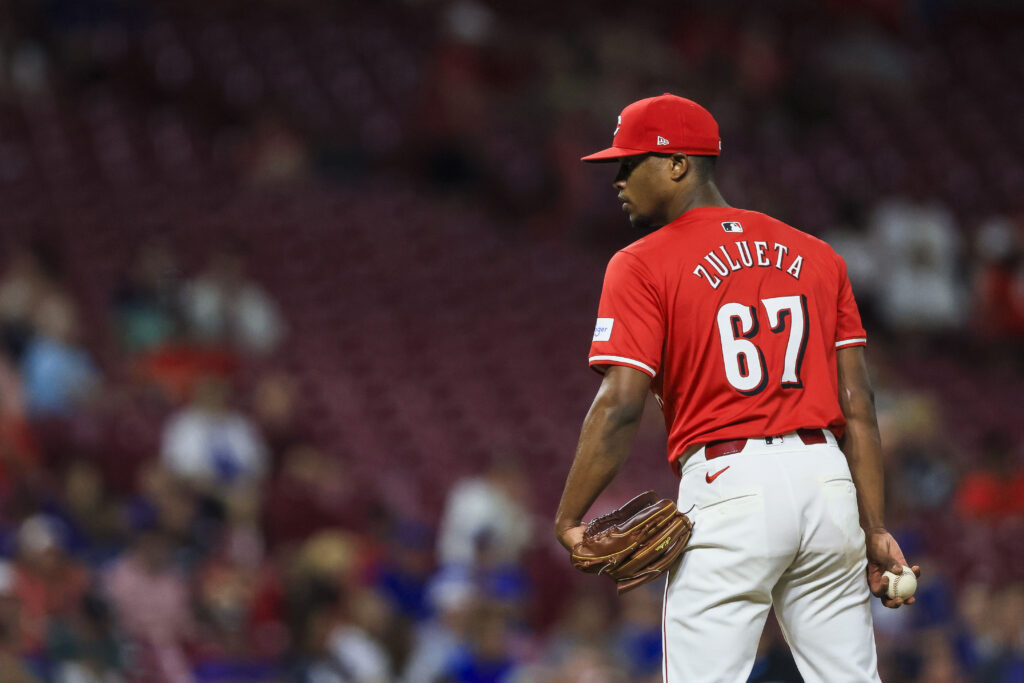
The Cubs acquired right-hander Yosver Zulueta from Seattle on Monday, trading a minor leaguer and cash for a 28-year-old pitcher designated for assignment earlier in the week. It's a low-risk maneuver—a minor-league chip and pocket change—but it tells a clear story: Chicago's bullpen is thin enough that they're willing to take a shot on a reclamation project with a documented control leak.
Zulueta's resume reads like a team-hopper's itinerary. Originally signed by Toronto in 2019, he bounced to Cincinnati on waivers in March 2024, made his MLB debut that season, then moved to Seattle in January after the Reds designated him. Across his MLB time with Cincinnati, he posted a 5.32 ERA in 23⅔ innings—serviceable enough that clubs keep swinging. The fastball velocity (high-90s) and ground-ball rate (56.9% in Triple-A this season) hint at what teams see: a low-ceiling guy with some usable stuff. The problem is persistent: a 13.93% walk rate over 254⅓ minor-league innings, plus a 10.9% walk rate at the major-league level. In his recent Triple-A stint with Tacoma, Zulueta walked 16.3% of batters over 20⅓ innings, a rate that would be catastrophic in high-leverage situations.
The Cubs are banking on their development apparatus or a simple change of environment to smooth out the mechanics. His .339 BABIP in Triple-A suggests some bad luck on balls in play—ground-ball pitchers often benefit from correction noise—but the underlying issue isn't luck. A 16.3% walk rate doesn't care about ERA luck; it cares about command. For a team that has leaned hard on bullpen productivity this season, adding a pitcher who yields walks at an MLB-average rate of 10.9% is a necessity born of desperation, not confidence.
From a betting angle, Zulueta's arrival has no immediate impact on Cubs bullpen totals or reliever props unless he earns consistent leverage innings. More relevant: his walk rate is a reliable drag on strikeout efficiency. If he pitches enough innings to matter, expect his K-rate to underperform relative to his velocity profile. Any prop backing his strikeout prop should price in his command deficit—his 21.4% strikeout rate at Triple-A and 10.9% walk rate at the majors form a floor, not a breakout scenario. This is a lottery ticket for the Cubs, not a bullpen reinforcement.
Watch innings pitched and leverage usage over the next two weeks. If Zulueta doesn't get meaningful work within a month, the move was organizational depth noise. If he does, his appearance in games correlates with elevated unearned-run risk for the Cubs due to elevated walk totals, which should shift team-total unders into sharper focus.