Pete Crow-Armstrong's Strike-Zone Discipline Has Transformed the Cubs' Offense
By Erik Schwartz ·
A deliberate overhaul in plate approach—fewer swings, higher walk rate, harder contact—has vaulted the 24-year-old into MVP conversation and upended team total expectations.
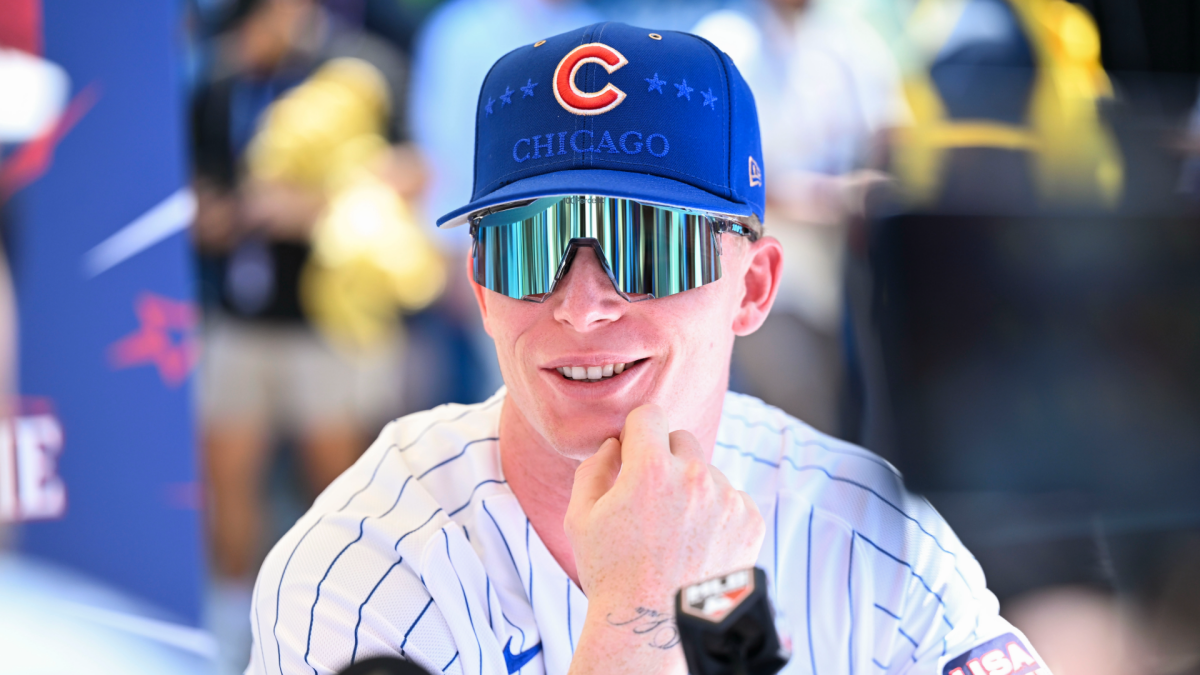
Pete Crow-Armstrong identified his weakness and executed a systematic fix. A year ago, the Cubs center fielder recognized he was chasing too many pitches outside the strike zone. He committed to changing that. Now, with the All-Star break behind him and the second half ahead, the transformation is complete: walk rate up from 4.5% to 11.2%, chase rate down more than six percentage points, hard-hit rate up seven points, and career-best on-base percentage at .386. The data isn't noise—it's the blueprint of disciplined hitting.
The inflection point came on May 24 against Houston, when Crow-Armstrong drew three walks despite recording one hit. By the box score alone, the game looked forgettable. But that night crystallized his approach. In the 44 games after, he's hit .291/.386/.531 with a 155 OPS+, compared to .228/.316/.370 with a .682 OPS in the 52 games before. That's a 1.170 OPS swing. He's gone from nine walks to 30, from six home runs to 15. The discipline shift isn't theoretical—it's producing tangible power and run-scoring output.
What makes this sustainable is the mechanism behind it. Crow-Armstrong didn't just luck into more walks; he's demonstrably cut down on chase pitches even when behind in the count (0-2 counts, historically a batter's most vulnerable moment). He's walked seven times after 0-2 this season versus four total before this year. His ability to maintain discipline when the pitcher has leverage is the core competency that separates a hot streak from a genuine level shift. When a hitter rewires his approach at the plate—fewer swings, better pitch selection, harder contact on fewer attempts—that rewiring persists. It's not recency bias; it's a new baseline.
For Cubs team totals, the context matters. Crow-Armstrong is on pace for 108 runs and a 9.8 WAR, which would rank among the greatest individual seasons in franchise history. A position player hitting .291 with a .386 OBP, 36 home runs, and elite baserunning doesn't just boost his own value—he anchors the lineup and forces opposing pitchers to navigate around him differently. Teams that pitch around Crow-Armstrong create upstream pressure on the rest of the order. His on-base discipline also means more opportunities for teammates to drive in runs; a runner who reaches base on a walk is a runner who can score. Cubs team totals over the final two months should reflect not just his power spike, but the offensive infrastructure he's creating simply by not swinging at garbage.
The one caveat: Crow-Armstrong's 11.2% walk rate is exceptional but not historically anomalous for a disciplined leadoff hitter. Mike Trout's career walk rate sits at 9.1%; Juan Soto operates north of 13%. So while Crow-Armstrong's +6.7 percentage-point swing is dramatic relative to his own baseline, it lands him in elite company rather than breaking baseball. That means the edge in team totals is real but not limitless. The market has likely already moved on his breakout. What hasn't fully priced in is the durability of this approach through September. If he maintains it, Cubs totals in the 4.2–4.5 range become undervalue as the season wears on and playing time compresses. If he regresses toward the 7–8% walk rate, the reverse is true.