Woodford's NL Central Shuffle: Cubs Grab a Streaky Reliever Fresh Off Milwaukee's Roster Purge
By Erik Schwartz ·
A mid-season reliever swap in the division reshuffles bullpen leverage and surfaces a volatility play for Cubs games over the next two weeks.
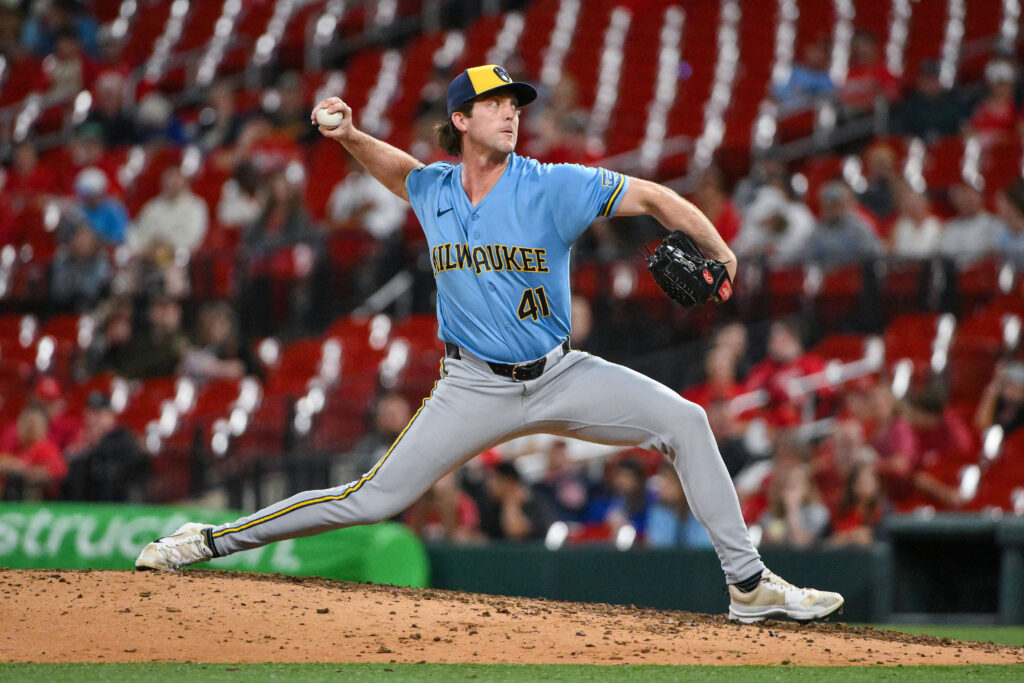
Jake Woodford is now a Cub. The right-hander exercised an opt-out clause in his minor league deal with the Brewers on July 2, forcing Milwaukee's hand: release him or promote him to the active roster. Rather than add another arm to a crowded bullpen, the Brewers let him walk, and Chicago signed him to a major league contract within 48 hours. It's the kind of low-friction acquisition that looks quiet on the surface but carries real implications for how both teams deploy relief innings down the stretch.
Woodford's profile is streaky volatility wrapped in a mid-rotation fastball. His career strikeout rate sits around 9.2 per nine innings, respectable for a bullpen piece, but his control is a live variable—walk rates have ranged from 3.1 to 4.8 per nine depending on the season and role. He doesn't miss bats with elite frequency, which means his value hinges entirely on command and sequencing. In 2025 and into 2026, he's been a short-inning specialist, typically deployed in low-leverage or setup situations. The Cubs likely aren't using him as a closer or high-pressure matchup arm; they're plugging a spot in the middle innings where depth matters more than dominance.
The timing is notable. The Brewers' decision to release rather than re-add him suggests they viewed the roster cost as not worth the upside—a telling organizational verdict on his current utility. Yet Chicago's swift signing indicates they see enough in his arm or matchup profile to justify a big league contract. That disagreement between division rivals is worth monitoring. If Woodford lands in high-leverage spots (which would be a use case mismatch given his profile), Cubs over-under totals could spike on nights when the bullpen is stretched. If he stays in low-leverage innings, the impact is peripheral.
For prop bettors, the angle centers on Cubs bullpen volatility and team total sensitivity. When a reliever enters a new organization mid-season, integration lag is real: he needs reps to mesh with the catcher's gameplan, the pitching coach's philosophy, and the team's late-inning sequencing. Over the next 10-14 days, Cubs games will carry elevated variance on team totals because the bullpen's depth and execution—which directly impact run-prevention and close-game outcomes—is unsettled. Specifically, if Woodford absorbs 3-5 innings per week across three or four appearances, he's taking work away from established arms who have track records within the Cubs system. That redistribution creates uncertainty on which relievers get exposed in high-leverage frames. The market often prices Cubs totals symmetrically (slightly favoring the over on offensive output, neutral on run prevention) without accounting for mid-season bullpen reshuffles that suppress predictability.
Target Cubs team totals at 4.0 or higher over the next seven games—the period before the market fully prices Woodford's integration and role clarity. If the line sits at 4.5 or higher, lean under. The Cubs' offense is solid, but their win margin in close games tightens when bullpen usage becomes fractional and reactive rather than established. This isn't a bet against the Cubs' talent; it's a volatility tax on organizational transition.