Crow-Armstrong's Spiral Masks a Deeper Cubs Problem
By PropBetEdge Editorial Team ·
Pete Crow-Armstrong's defensive collapse and offensive drought are symptoms, not the disease—and the Cubs' defensive metrics are about to get worse before they improve.
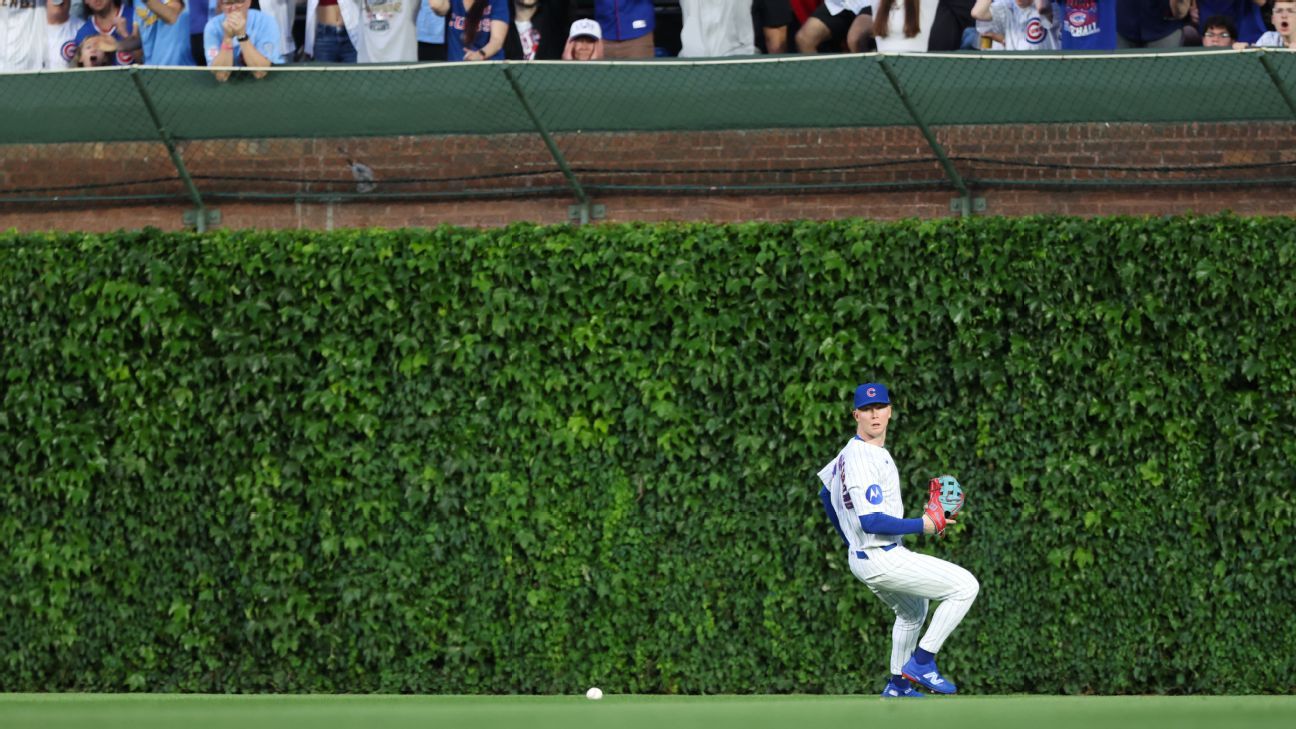
Pete Crow-Armstrong let a ground ball scoot under his glove in the second inning Wednesday, one of three Cubs errors in a 5-0 loss to Milwaukee. It was the center fielder's second defensive mistake in as many games, and it cost Chicago three runs immediately. The play crystallized what's been a brutal week: Crow-Armstrong is 0-for-3 with two strikeouts in that game alone, carries a .659 OPS on a six-year, $115 million extension signed over the winter, and has become a lightning rod for the team's collapse after back-to-back 10-game winning streaks earlier in the season.
But the individual performance masks the structural issue. The Cubs have lost five straight and ceded first place in the NL Central to Milwaukee following a three-game sweep. More telling: Wednesday they recorded three errors and two hits—a ratio that doesn't happen by accident. Manager Craig Counsell framed it as a momentary funk, and third baseman Alex Bregman offered the veteran's reassurance that Crow-Armstrong is still a difference-maker. Both statements are technically true and completely insufficient. A $115 million player pressing so hard he's dropping routine fly balls is a symptom of a team in cognitive freefall, not a personality problem.
Crow-Armstrong himself nailed the mechanism: "trying too hard and trying to make up for the lack of production that I have given this team." That mental cascade—offensive drought leading to defensive urgency leading to defensive collapse—compounds. When a defender starts thinking instead of reacting, error chains follow. The Cubs' three-error game Wednesday isn't an outlier; it's the logical endpoint of a team that's stopped executing. Their defensive efficiency has cratered over the past week, and with Crow-Armstrong's confidence visibly shaken, expect that number to stay depressed for at least the next 5-7 games until the streak stabilizes.
For betting purposes, the Cubs' defensive deterioration creates two parallel angles. First, team totals should be faded hard. A team that put up two hits and three errors in a loss with an elevated error rate isn't going to score its way out of this—the mental component bleeds into baserunning, pitch selection, and situational execution. Second, Brewers offensive props (runs, RBI, team total) gain durability because Chicago's defense is actively helping them now. When a team's center fielder is panicking, extra-base hits and gap opportunities multiply. The Brewers scored three runs on a single that should have been a routine out; that's not luck, that's the Cubs gifting possessions.
Crow-Armstrong will recover. Counsell is right that things happen and teams move on. But the Cubs won't move on until their defense stabilizes, and that won't happen until Crow-Armstrong stops thinking and starts playing. Until then, any Chicago team total under 4 runs carries real value because their margin for error has compressed to nearly zero.