Cabrera's Mid-Outing Exit Upends Cubs Rotation Depth Heading Into Deadline
By Ty Whitney ·
A freak hamstring-adductor strain on a routine first-base coverage play knocks the Cubs' third starter out of the rotation and tightens their pitching options before the trade deadline.
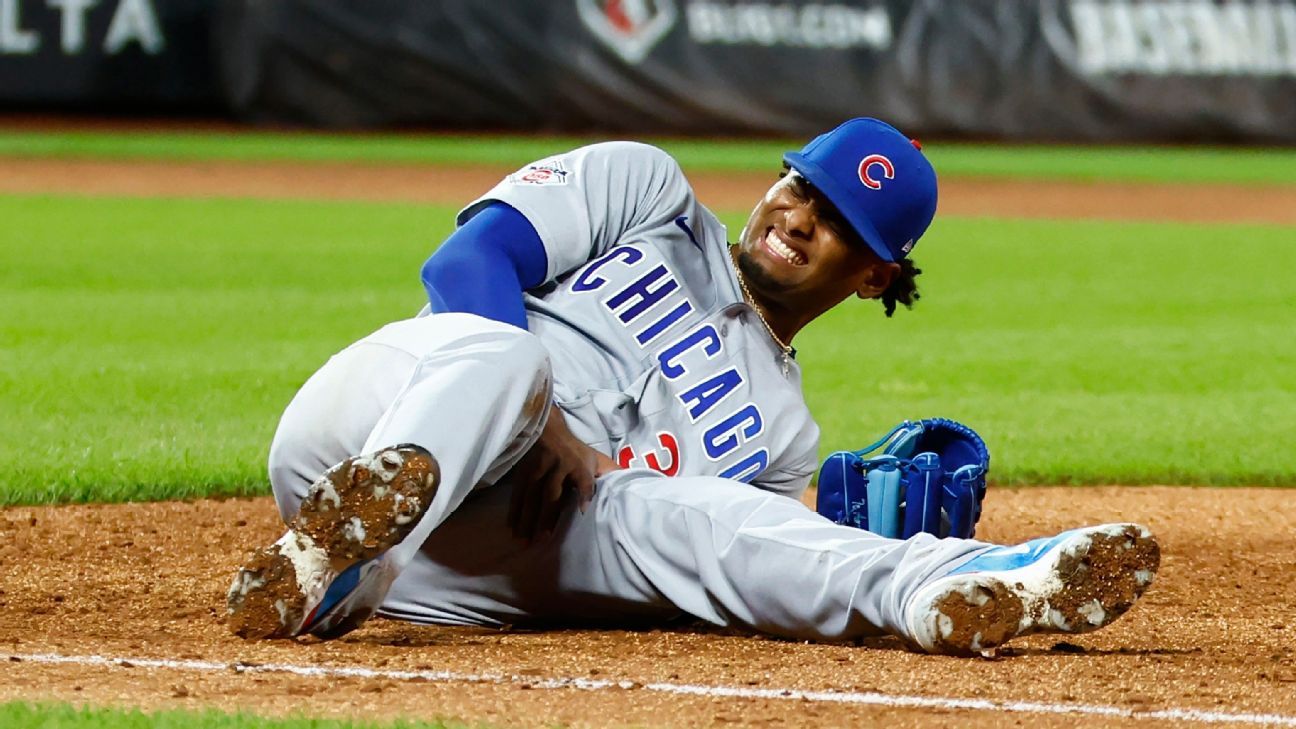
Edward Cabrera exited Tuesday night's Cubs-Mets matchup at Citi Field after tearing into a split attempting to catch a throw at first base in the fifth inning—a non-contact moment that produced immediate, visible pain in his left hamstring and adductor. The 28-year-old right-hander had to be carted off the field and was later diagnosed with a left hamstring/adductor strain. Cabrera had thrown 99 pitches through five innings and was cruising with a 7-2 lead; the Cubs won 9-6 and he picked up his fifth victory, but his availability going forward is now in hard question.
Cabrera arrived in Chicago from Miami in January on a spring-and-summer rebuild of the rotation. Over 13 starts before Tuesday's injury, he carried a 4-4 record with a 5.21 ERA—respectable depth work but not the ace-level stabilizer the Cubs were betting on. The injury itself is not positioned as catastrophic in the immediate reporting, but hamstring and adductor strains in pitchers carry unpredictable recovery windows. A pitcher returning to mound work too early risks re-aggravation; the Cubs are likely in a hold-and-wait posture with Cabrera through the July 31 trade deadline, unable to count on him for rotation stability in a pennant race.
That uncertainty cascades into the Cubs' depth calculus. A rotation that was already lean on reliable innings now has a gap that forces either internal scrambling or external shopping. If Cabrera is unavailable for two weeks or more, the Cubs may need to accelerate acquisition talks or lean harder on spot starters and bullpen games—both costly propositions in June and July when playoff teams are fighting for positioning. The market knows this. Every team with a fringe starter or starter-capable reliever will adjust their asking price upward knowing the Cubs have a sudden need.
For betting purposes, Cubs team totals and run-line pricing deserve scrutiny in Cabrera's absence. The Cubs offense is sturdy enough to generate volume, but pitching depth shortages often correlate with higher team totals (because the team concedes more runs) and wider spreads in games where the Cubs aren't favored. Watch for the Cubs' implied team run projection to tick up in games where Cabrera's replacement starts—that's the market pricing in elevated opponent scoring. If the Cubs deploy a reliever-heavy game or a fourth-string starter, unders on the Cubs' own total may offer value if their lineup was priced in concert with Cabrera's baseline stuff. Conversely, opponent team totals may trade wider than they would against a healthy Cabrera start; isolate that differential when the Cubs announce his replacement.