Cabrera's Early Exit Accelerates Cubs Rotation Collapse
By Ty Whitney ·
A blister forces the Cubs starter out after three innings, deepening a pitching crisis that now threatens to overwhelm the bullpen and tank team totals.
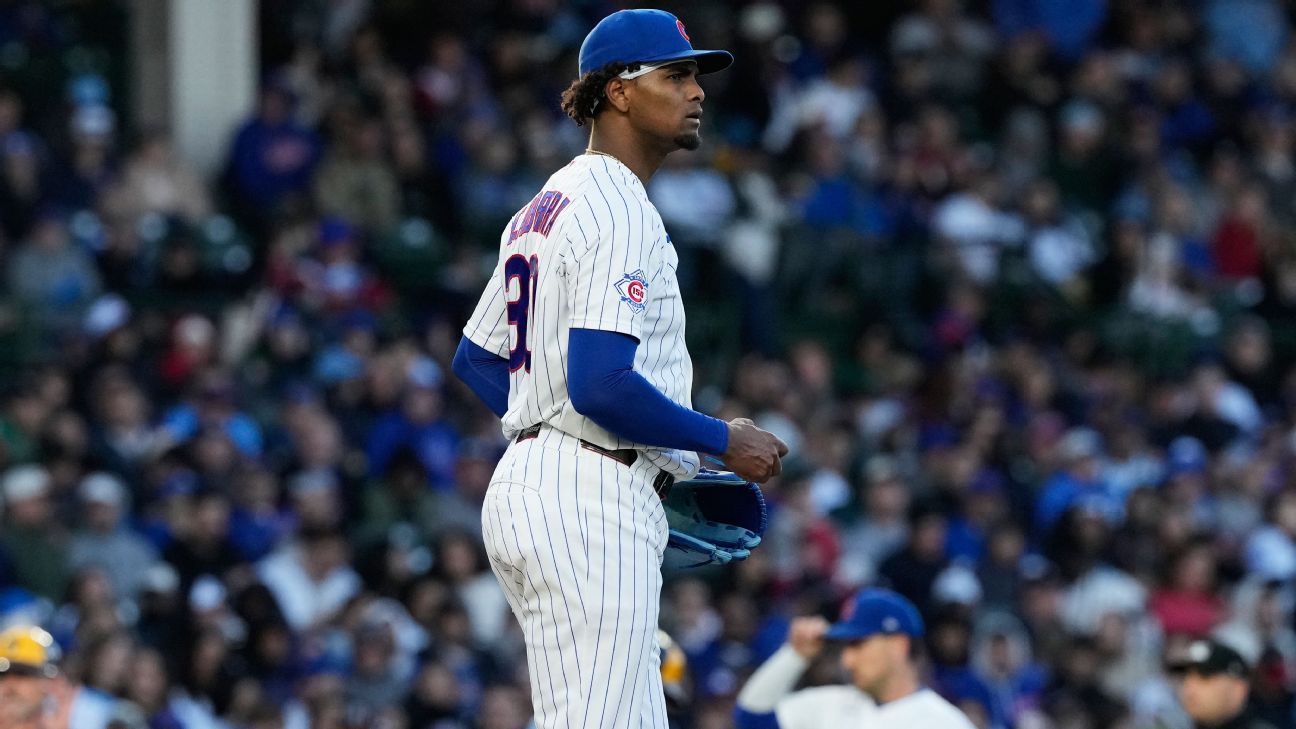
Edward Cabrera made it three innings Wednesday before a blister on his right middle finger ended his outing against Milwaukee, forcing the Cubs to lean on their already-taxed bullpen in the fourth inning. Per ESPN, the 28-year-old threw one pitch in the fourth before signaling for the training staff; moments later, righty Trent Thornton took over. Cabrera had allowed four runs (one earned) on four hits and two walks with two strikeouts through his abbreviated start.
Context matters here: this isn't an isolated blister. The Cubs are operating a rotation held together with tape and hope. Matthew Boyd, Cade Horton, and Justin Steele all sit on the injured list. Hunter Harvey and Riley Martin are down in the bullpen. Cabrera had been the one constant—he'd made every start this season before Wednesday—so his early exit represents a structural failure, not a random injury blip. The team's contingency plan is Javier Assad, recently demoted to the minors to stretch out his workload. If Cabrera lands on the IL, Assad becomes the emergency call-up into a rotation already gasping for innings.
The immediate prop impact flows directly from bullpen depletion. When a starter exits in the fourth inning, the relief corps absorbs three additional innings they weren't built for. The Brewers got a free look at a degraded relief unit Wednesday; any team facing the Cubs over the next two weeks faces the same advantage. Thornton and the rest of the pen will accumulate fatigue faster than usual, inflating ERA and walk rates across the board.
On the macro level, team totals become a fade. The Cubs' ability to construct innings shrinks when the rotation can't deliver starter durability. A healthy Cabrera working six innings keeps the bullpen fresh for leverage situations; Cabrera exiting in the fourth flips the script. The Cubs will be forced into higher-leverage relievers earlier in games, which increases volatility in tight contests and compounds losses in blowouts. Overs on the Cubs' team total, which typically trade around 4.0-4.2 depending on opponent strength, carry elevated risk for the next 10 days—until either Cabrera returns healthy or Assad settles into the rotation and provides some predictability.
The market will adjust the Cubs' implied run production downward once the severity of the injury rotation becomes clear in pricing. Early action Wednesday night may have missed the full scope of this depletion; by Thursday morning, sportsbooks will have factored in the loss of starter depth and tightened team total lines. For bettors catching overs at 4.1 or higher, that's recency—the market's not yet priced the compounding fatigue that shallow rotation depth creates.