Crochet's Lat Strain Deepens Red Sox's Pitching Crisis
By Erik Schwartz ·
Boston's $170 million ace revealed a far more serious shoulder injury than the team's initial diagnosis, erasing any near-term return timeline and forcing a recalibration of rotation depth.
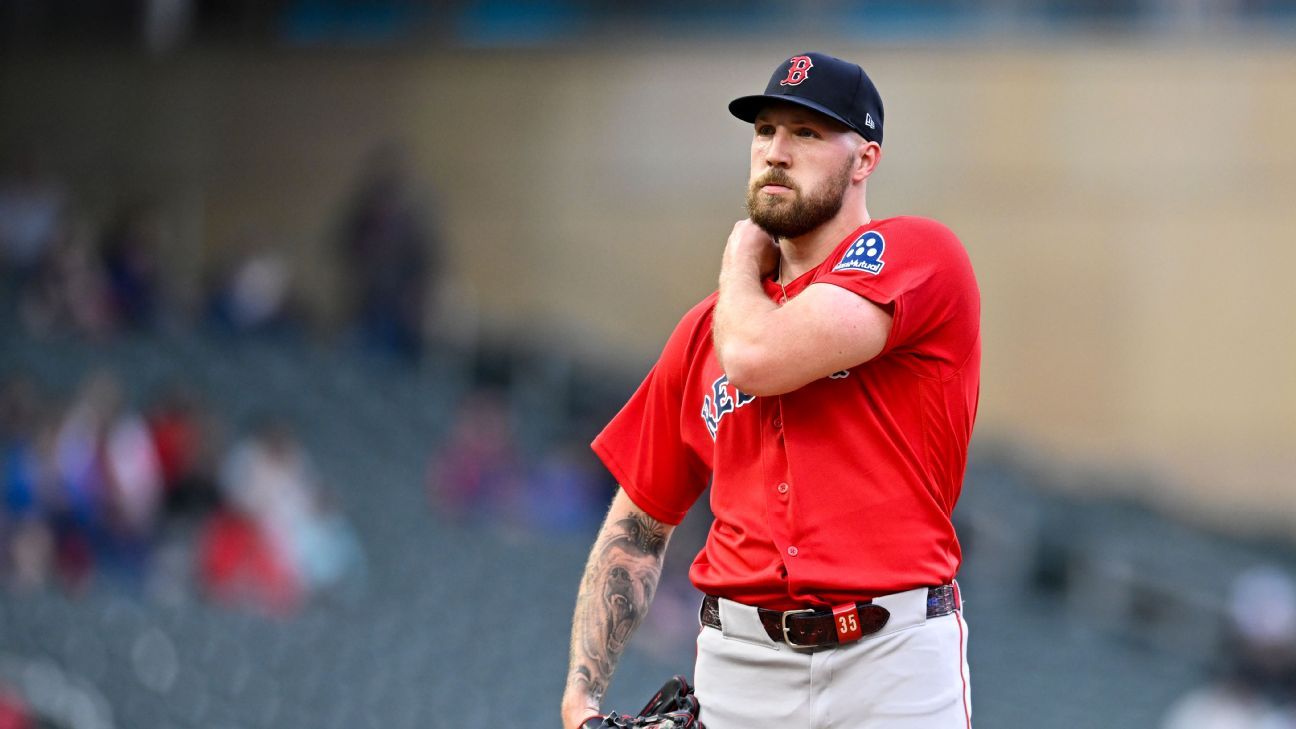
Garrett Crochet told the Boston Globe on Wednesday that his lat strain is significantly worse than the Red Sox disclosed when they placed him on the injured list on April 29. The left-hander, who signed a six-year, $170 million deal with Boston entering this season, hasn't pitched in a major league game since April 25—now 46 days without competitive action. His last simulated game on May 12 resulted in renewed shoulder tightness, and manager Chad Tracy ordered further testing this week to determine severity.
This is not a minor recalibration. Crochet opened 2026 at 3-3 with a 6.30 ERA, already underperforming the ace-level production that justified his contract. The Red Sox characterized the initial injury as "very low-grade," a description Crochet's own words have now contradicted. The gap between team spin and player reality is significant—and it matters for timeline. When a pitcher on the mound says he doesn't know when he'll be cleared to play catch, the typical recovery arc (simulated games → minor league rehab -> return) stretches from weeks into months.
Last season, Crochet's 18-5 record and 2.59 ERA in his first Boston campaign validated the investment. That performance is now functionally irrelevant to rotation construction this summer. The team entered June already depleted; now they're operating without their ace for the stretch run, and the odds of a meaningful return before August have contracted sharply. Crochet's continued unavailability forces the Red Sox to either elevate secondary starters to heavy workloads or lean harder on trade market acquisitions—both expensive levers that constrain flexibility.
For betting purposes, this widens the Red Sox team-total under window significantly. Boston sits in the AL East with limited margin for error; losing six weeks of elite left-handed innings in June-July carries compounding risk. The rotation tightens, bullpen load increases, and the offense inherits a higher burden to generate offense against deeper opposing pitching. With Crochet sidelined indefinitely and no hard return date communicated, the Red Sox's month-to-month ceiling in high-leverage games declines measurably. Sportsbooks haven't yet fully repriced the depth hit; early unders on Boston's next 10-game window reflect the lag between Crochet's admission and market adjustment.
Further testing later this week will likely clarify the structural severity—whether this is a six-week recovery or a multi-month undertaking. Either scenario erases Crochet as a 2026 factor for at least the next month, and the pitching market still underweights that reality.