Will Smith's Month-Long Absence Reshapes Dodgers' Catcher Market—and Their Deadline Calculus
By Ty Whitney ·
A neck disc injury has benched the Dodgers' starting catcher for six weeks, but Dalton Rushing's 120 wRC+ means Los Angeles doesn't have to panic-buy.
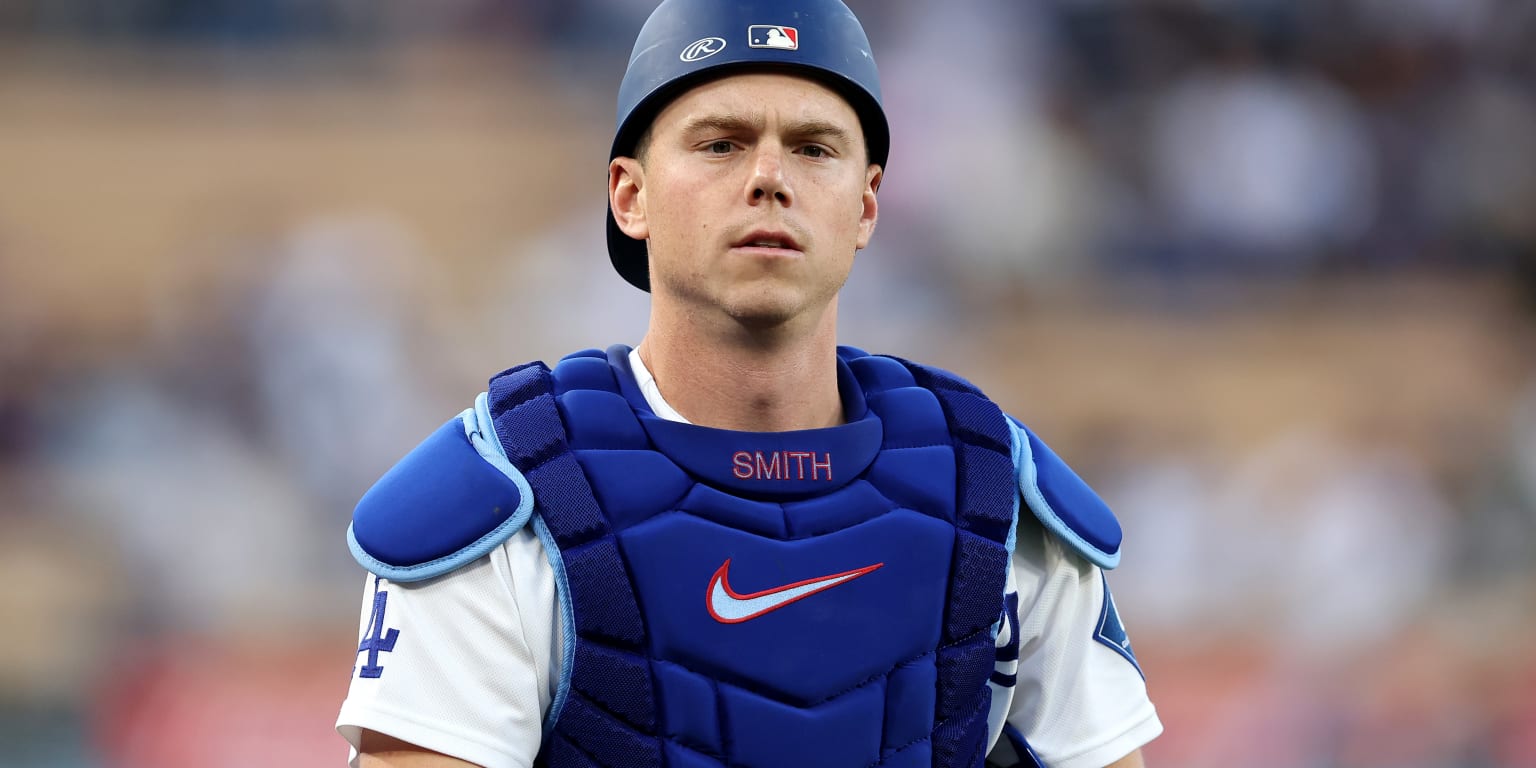
Will Smith last played on June 5. What began as routine neck stiffness has evolved into a prolonged absence: the Dodgers' starting catcher won't return until mid-August at the earliest, sidelining him through the Trade Deadline on August 3 and into the final stretch of the regular season. The team initially believed the injury would resolve in days. It has not. Smith was placed on the 10-day injured list on June 11 with optimism about a quick turnaround. By the All-Star break, the Dodgers made the difficult decision to shut him down entirely, hoping complete rest would allow an inflamed disc in his neck to finally stabilize. Previous attempts at managed activity—cage work, modified baseball drills—were forestalled by persistent inflammation and pain that resisted an injection treatment administered weeks into the injury.
Manager Dave Roberts acknowledged the uncertainty in any rehab timeline: the progression can only begin once Smith experiences consecutive days of genuine improvement, at which point ramp-up will be glacial by design. The Dodgers' medical staff has pivoted to a conservative bet that inactivity will reduce swelling enough to prevent regression once throwing and hitting resume. Smith's pre-injury performance was unremarkable—a 102 wRC+, barely above league average for the position—but his absence still cost the Dodgers a reliable defender and a veteran presence behind the plate.
The gap Smith leaves has been filled with unexpected competence. Dalton Rushing, a second-year backup, has delivered a 120 wRC+ over enough plate appearances to rank sixth among MLB catchers, though his offensive consistency has wavered. This performance has fundamentally altered Los Angeles' deadline calculus. The catcher position, typically a high-leverage target for contenders seeking marginal improvement, is no longer a glaring weakness for the Dodgers. Rushing's bat remains above-average even as a backup; when paired with functional depth signings like Eliezer Alfonzo, the catching corps functions adequately without emergency acquisition.
For bettors tracking Dodgers run-production curves, the story is subtly bullish. A healthy Smith, even at his pre-injury 102 wRC+, was a known quantity—a roster piece rather than an uplift. Rushing at 120 wRC+ through the deadline represents a net positive in aggregate offensive value. If Smith's injury extends past mid-August, the Dodgers enter September with their actual offensive ceiling higher than Smith's return would have provided. More practically: avoid any "Dodgers underperformance" narrative plays tied to catcher depth. The data doesn't support it. When Smith does return—if he returns—it may actually represent offensive regression relative to what Rushing has delivered.