Correa's Accelerated Recovery Opens a 2026 Window for Houston
By Ty Whitney ·
Three months after ankle surgery, the Astros shortstop is tracking toward late-August availability—a timeline that could reshape Houston's playoff roster just as the trade deadline passes.
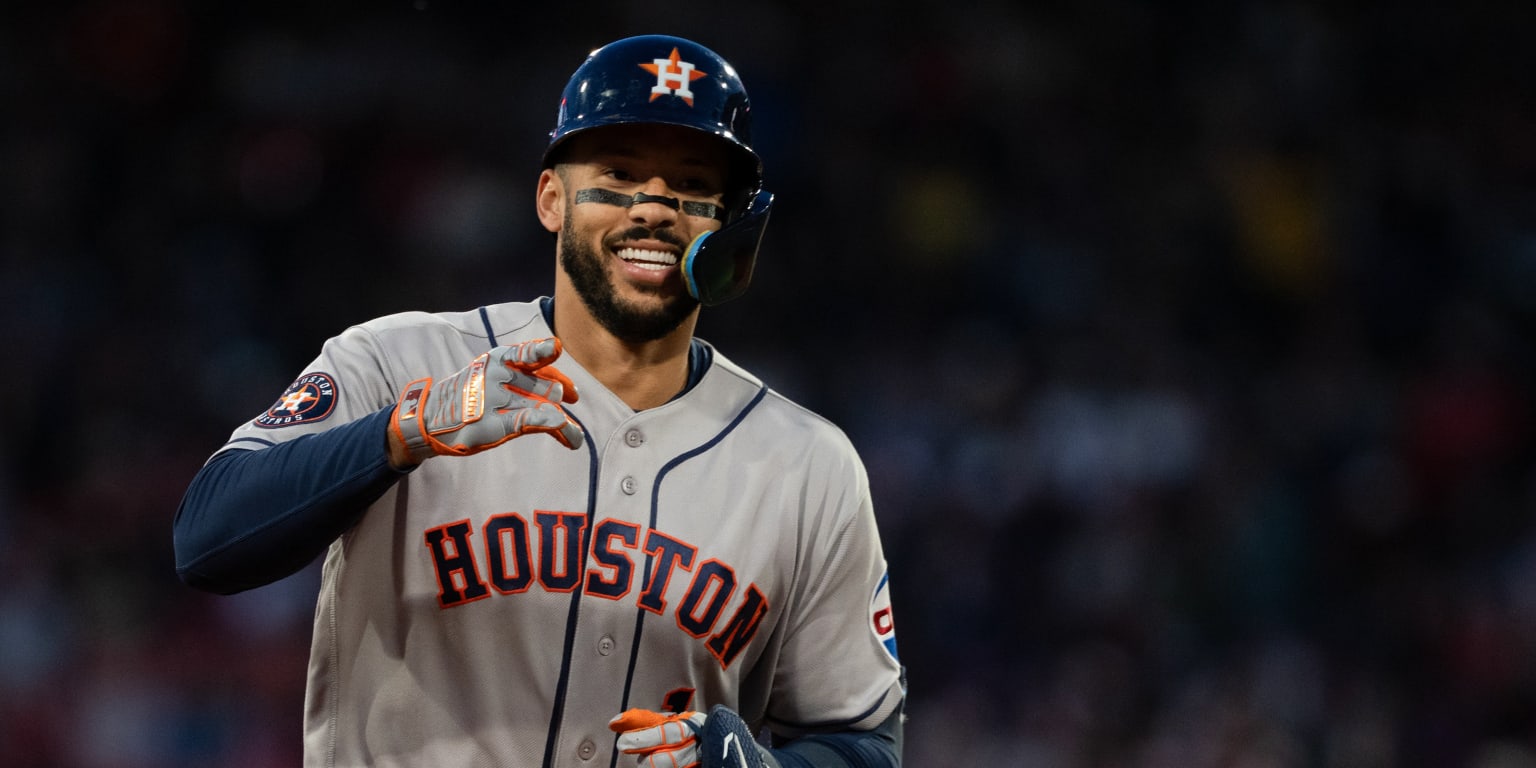
Carlos Correa said Saturday he hasn't ruled out a 2026 return, and the timeline is tightening. The Astros shortstop underwent peroneus brevis tendon repair surgery on his left ankle on May 11 and was initially projected for a six- to eight-month recovery—a window that would have ended his season in October at the earliest. Instead, he's working out on the field, running and sprinting at 80-90 percent intensity, and has a doctor's appointment Tuesday to determine whether he can resume hitting. For context: he suffered the injury May 5 while taking a swing in the batting cage against the Dodgers. Three months of focused protocol work—diet, sleep optimization, specialized treatment—has compressed what was supposed to be a late-fall timeline into a late-August possibility.
The injury struck at the worst moment for Houston's roster cohesion. Correa's absence coincided with a 20-31 start that looked like a season-ending death spiral. But the Astros have run off 36 consecutive games at .600 pace since then and now sit atop the AL West, a momentum shift Correa has watched unfold from the sidelines while attending remote hitting meetings post-surgery. His re-emergence would arrive into a team playing the kind of baseball it signed him to play—sharp pitching, disciplined at-bats, long offensive innings. Before the injury, Correa was slashing .279/.369/.418 with 3 homers and 16 RBIs in 32 games, a pace consistent with his 2025 performance (.290/.355/.430) after the Twins traded him back to Houston at last year's deadline.
The betting calculus hinges on two variables: medical clearance and the probability he's healthy enough to contribute immediately. A late-August return (weeks away, if Tuesday's appointment greenlights hitting) doesn't give Houston a full roster sample at strength, but it does matter for October. Correa's upgrade at short—his Gold Glove pedigree and veteran on-base skills—would be felt most in playoff games where the margin between contention and elimination is razor-thin. The book hasn't fully priced in a scenario where he's available before the first postseason game; most models still treat him as a "maybe" rather than an expected addition. If Tuesday clears him to hit and he avoids re-injury in the next 8-10 weeks of field work, Houston's October ceiling shifts materially upward.
For short-term moneyline and playoff odds purposes, treat Correa's status as a binary event with a clearer deadline than it appeared three weeks ago. The Astros' run to first place was achieved without him; his return is upside, not necessity. But upside in a compressed window before October creates optionality that the market priced as distant. Houston's acquisition cost at the trade deadline—about to be concluded Monday—will partly reflect whether the front office and bookmakers believe he's actually coming back this year. If the deadline passes with Houston holding pat on shortstop depth, that's a market signal that the team doesn't expect Correa to be available in meaningful October at-bats. If Houston adds depth insurance, the opposite is true.