Cole's Velocity Returns, But Command Remains His Real Comeback Test
By Erik Schwartz ·
Thirteen months after Tommy John surgery, Gerrit Cole faces the Guardians again tonight seeking consistency—not just dominant outings punctuated by rough innings.
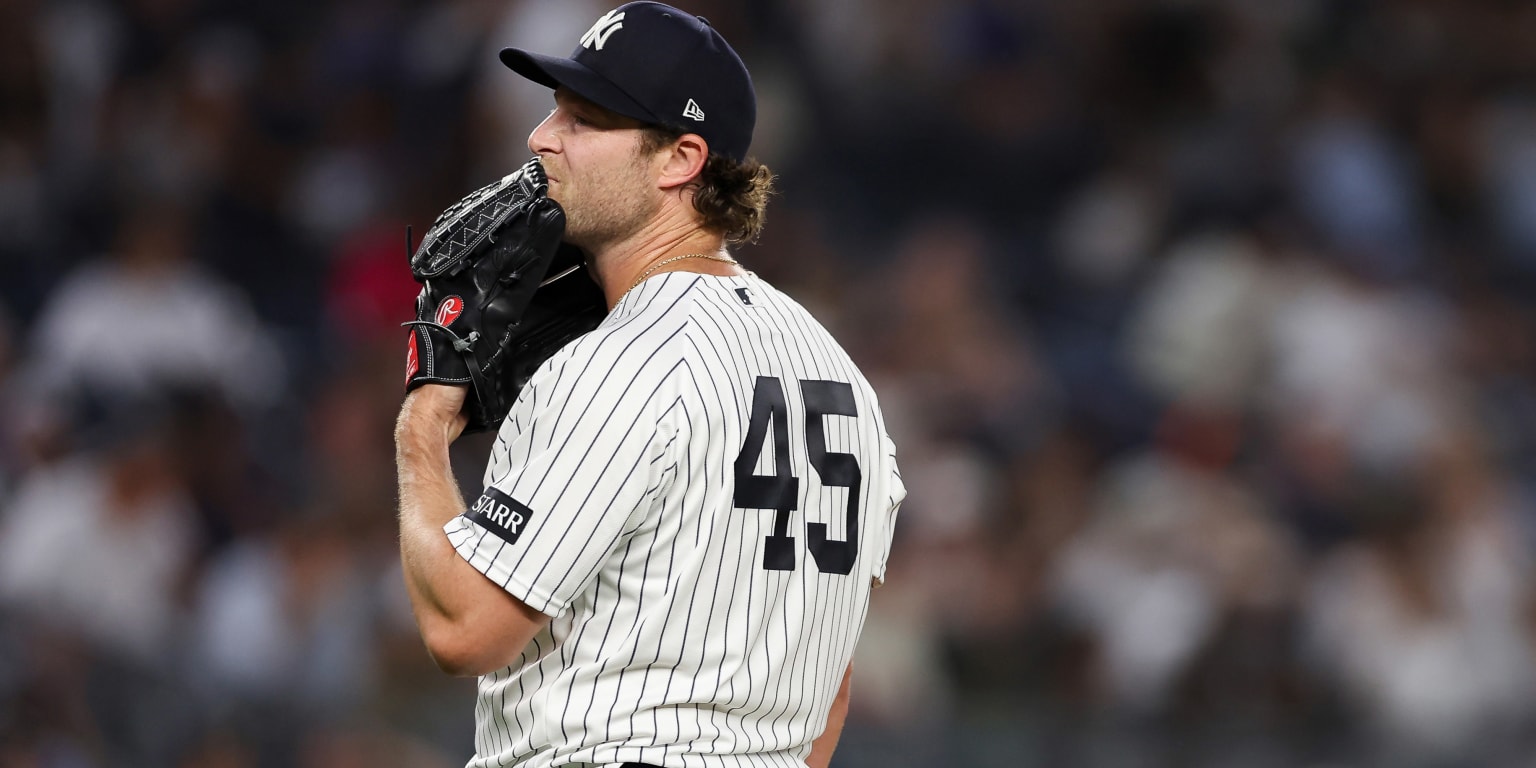
Gerrit Cole takes the mound against Cleveland on June 9, his second consecutive start against the Guardians after a four-run, 5⅓-inning outing on June 4. The sequence tells the story of his rehab arc: Cole fired 6⅓ scoreless innings against Kansas City on May 27, then left too many fastballs in the zone against Cleveland four days later, yielding three home runs including a two-run shot off José Ramírez. The contrast between those starts—excellence followed immediately by slopiness—reflects the reality of a 35-year-old pitcher 569 days removed from a March 2025 Tommy John surgery that erased his entire 2025 season.
The good news travels in Cole's fastball radar gun. His velocity sits at 96 mph on average, fractionally above his pre-surgery baseline, indicating the arm strength returned cleanly. His walk rate of 5.9% is legitimately strong, and just 28% of batted balls against him have been classified as hard-hit. But strikeout rate—20.6% through three starts—lags where Cole has operated for a decade. That's the lowest mark since 2016, a 10-year backslide. The mechanical reality: Cole hasn't lost his power, but his precision remains inconsistent. Against Kansas City, he threaded the needle. Against Cleveland, he left pitches belt-high and paid for it.
Ramírez has feasted on Cole across their career matchup: 11-for-26 with five extra-base hits (three homers). Kyle Manzardo, who faced Cole for the first time on June 4, went 2-for-3 with a double and home run in that initial encounter. Neither hitter represents an outlier; they're exploiting a specific tell. Cole's fastball command wavered in that June 4 start, and aggressive hitters with short swings capitalized. The Guardians' approach against Cole isn't a secret—it's film study confirming that early-season Cole can be vulnerable when he's working out of sync.
For prop purposes, the Cole narrative has two layers. First, the strikeout number: 20.6% K-rate through three starts is suppressed relative to his career 27%+ benchmarks, and Cleveland's patient approach (the Guardians ranked 14th in strikeout rate last season) will test whether Cole's command can support elevated whiff rates as he stretches deeper into games. If Cole is taking on more pitches to get outs—relying on weak contact rather than blow-it-by fastballs—his pitch count will climb and his innings floor will drop. Second, the home-run exposure: Cole allowed three in 5⅓ innings four days ago to a lineup with moderate home-run power. The Guardians don't profile as a home-run-heavy offense, but against a Cole struggling with command, the relative cost of his fastball mistakes spikes. Fade Cole strikeout props at anything above 7.5; the command variance is real and the Guardians' approach favors contact. Conversely, the Yankees' team total carries secondary risk—Cole's short outings and early exits compress run-scoring opportunities and lower the ceiling on run production.