Cole Executes Under Pressure as Yankees Rotation Sustains Elite Stretch
By Erik Schwartz ·
The Yankees ace navigated a bases-loaded sixth-inning jam to extend his dominant run, signaling the rotation's ability to suppress damage even when traffic builds.
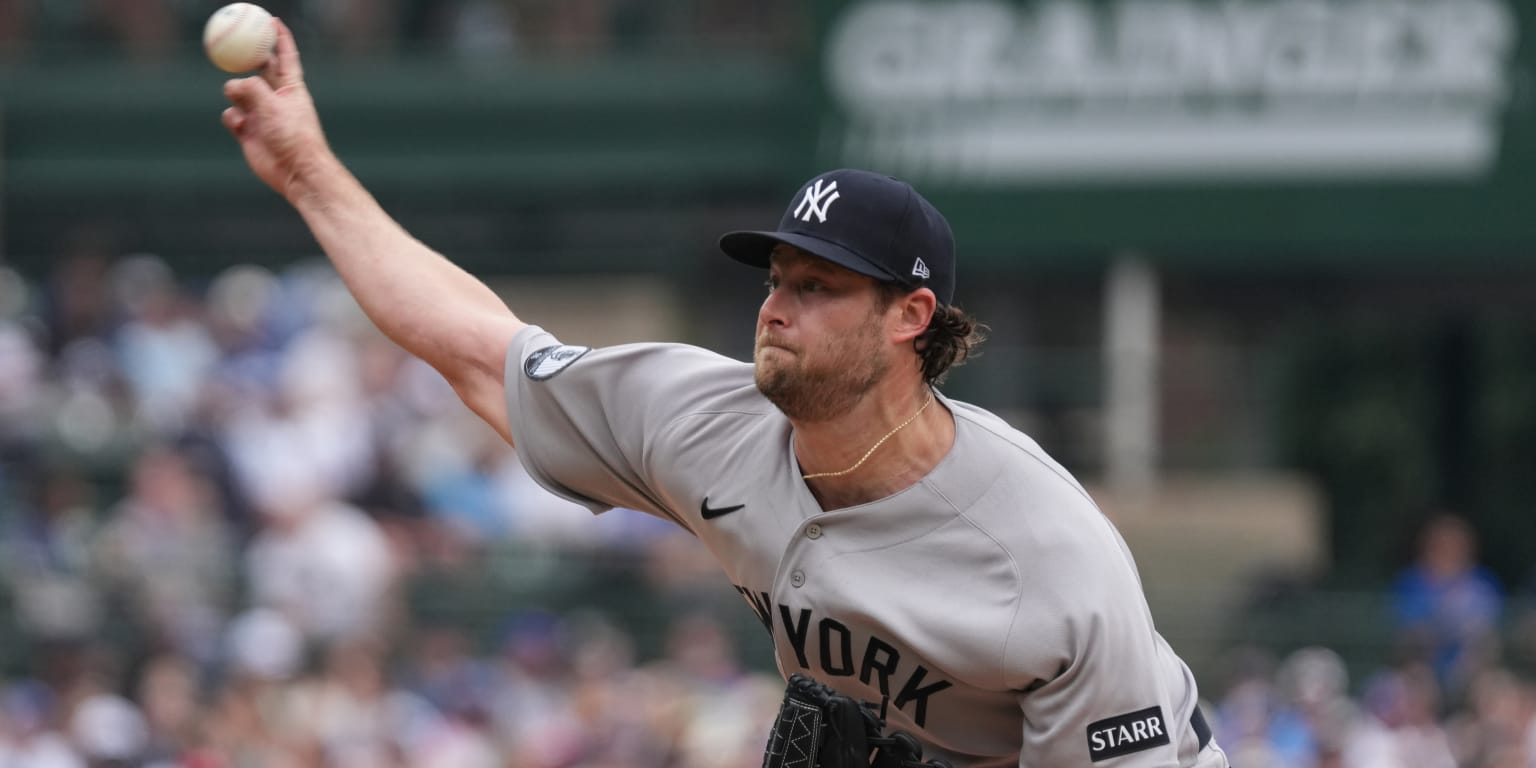
Gerrit Cole pitched through traffic on Sunday at Wrigley Field and emerged with another quality start—5 2/3 innings, one run, four hits, five strikeouts, three walks. The Yankees won 2-1, and Cole's ERA improved to 3.42 after a two-run homer by José Caballero in the third gave him early working room. The real performance wasn't in the final line; it was in the management of a sixth-inning crisis.
With two outs and the bases loaded after a walk to Ian Happ, Cole had thrown 99 pitches and faced the kind of situation that separates effective starts from damage-control efforts. He handed the jam to Brent Headrick, who induced a flyout to end the threat. The construction of that inning—two walks sandwiching a single, Michael Busch retired on a fly ball, Alex Bregman struck out—reveals Cole's approach: when the margin tightened, he attacked the zone rather than nibbled. His strike rate was 63.6% for the day, well above the league average for elevated-pitch counts.
This performance fits into a broader Yankees rotation pattern that's become the team's structural advantage. In 10 of Cole's 13 starts this season, he's allowed three earned runs or fewer. In eight of those, he's allowed two or fewer. That consistency—not a single game, but a multi-month sample—is the foundation of the rotation's carry. Over the past six games, Yankees starters have repeatedly handed the bullpen leads in the seventh or later, allowing the relief corps to operate in low-leverage situations. That dynamic is how rotations prevent bullpen collapse over a full season.
The prop implication sits in Cole's strikeout line relative to opponent quality. The Cubs' strikeout rate against right-handed pitchers ranks in the bottom third of baseball, yet Cole still produced five strikeouts through 5 2/3 innings with three walks. His K/9 rate sits at 8.9 on the season, and while the walks (3.2 per 9) have ticked up slightly from his career norm, the strikeout floor appears durable. Against weaker-strikeout teams, Cole's line often tightens further because he doesn't have to reach as hard; against swing-and-miss defenses, his K prop carries upside. The real edge isn't the strikeout volume itself—that's baked into the market—but the granularity: Cole's strikeout prop typically opens conservatively, and when he faces bottom-third K-rate opposition, the line often underestimates his ability to induce whiffs on elevated fastballs when ahead in counts.
The stability of Cole's ERA trajectory and his ability to manage high-traffic innings without surrendering crooked innings suggests the rotation has become prediction-resistant. Sunday's start was proof of execution under pressure, not an outlier. For bettors, that means Cole's strikeout props warrant attention early in the week before the market adjusts for opponent profile, and team totals where the Yankees receive Cole remain valuable because his ability to suppress runs allows the offense to generate win probability on thin margins.