Max Clark's July Tear Is Translating to Triple-A—But Call-Up Timing Remains Murky
By Ty Whitney ·
Detroit's top prospect is demolishing minor league pitching with elite contact quality and speed; the question is whether the Tigers will test him against MLB arms before September.
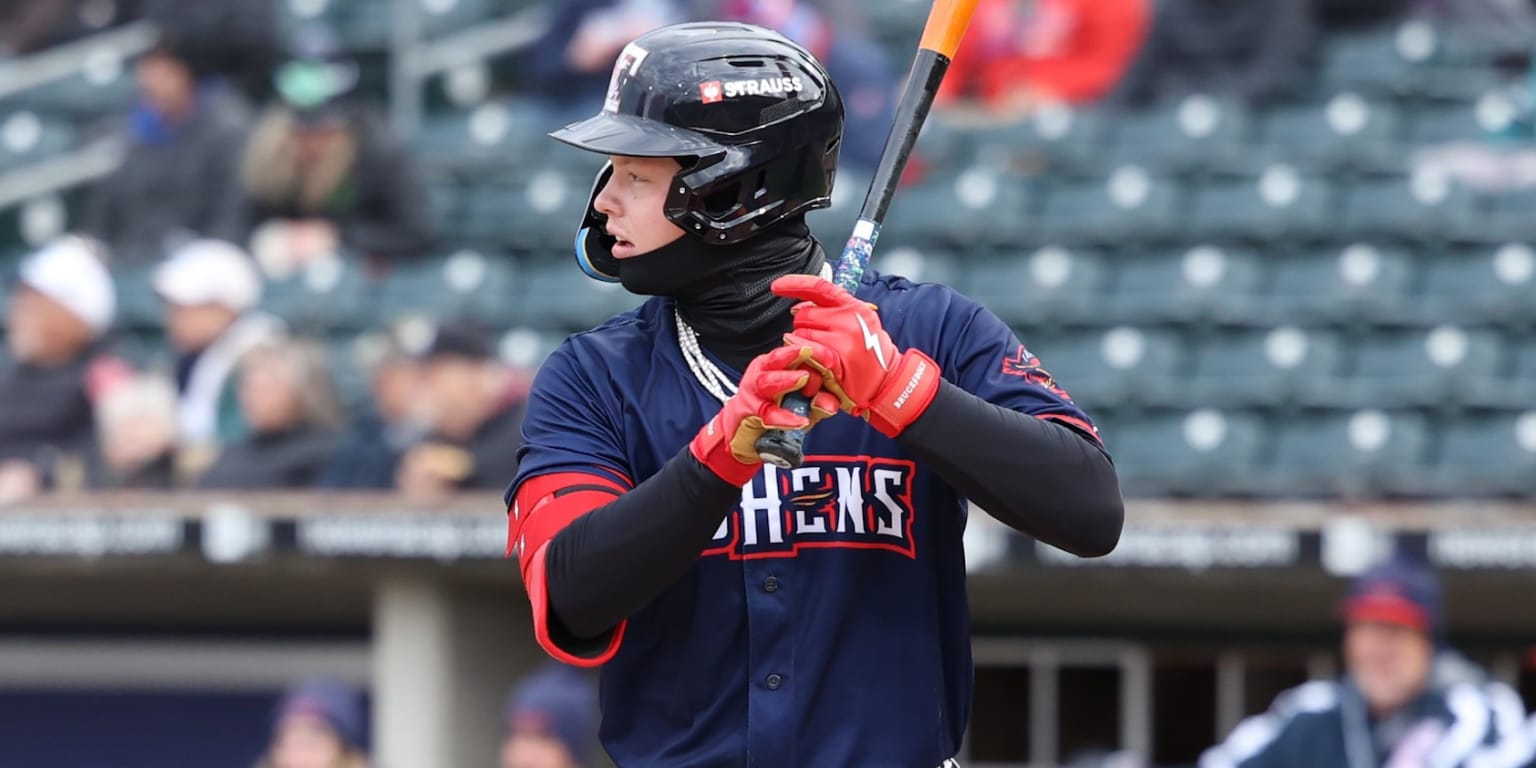
Max Clark went 3-for-4 with two runs, a walk, and a steal Thursday night for Toledo, extending a July that has redefined what dominant minor league production looks like. The 21-year-old Tigers prospect is slashing .316/.435/.544 this month with three home runs, four doubles, and four steals—the kind of multi-tool performance that shifts the internal timeline for call-up conversations. Clark's hits Thursday all carried substance: a 106.9 mph liner to right in the second, a 102.9 mph single to center in the sixth, and a genuine speed play in the eighth where he outran the throw on soft contact. This is his sixth multi-hit game in July and his third game with three or more hits all season. He's now firmly the organization's most interesting position-player prospect.
What makes Clark's month noteworthy isn't just the slash line—it's the mechanism behind it. He's generating hard contact consistently (both singles clocked over 102 mph), stealing bases with ease (four steals in one month after 11 for the whole season), and showing patience at the plate (.435 on-base percentage reflects legitimate pitch recognition, not just hit-and-run variance). The Tigers ranked him as their top prospect heading into 2026, and Pipeline has him 13th overall. That pedigree matters. Teams don't invest nine figures in draft compensation and development infrastructure for a player who posts one hot month; they do it because the underlying toolkit—bat speed, approach, athleticism—projects. Clark's July isn't a fluke; it's the prospect finally assembling the pieces in a way that sticks.
The betting implication emerges in how teams price call-up windows. Detroit's outfield remains a work-in-progress; Andrew Benintendi is serviceable but aging, and the corner slots are up for grabs. If Clark sustains this production through August—another month at or near his July pace—the Tigers will face genuine pressure to promote him before rosters expand in September. A July-to-August performance arc matters because it narrows the noise window; one month is talent, two months is a trend. If the organization calls him up in early September for a taste of big-league pitching, the betting market will have already baked in expectation. The real edge is identifying whether his recent performance forces an earlier call (late August) versus a standard September callup, because early promotions often catch markets flat-footed on playing-time distribution and platoon assumptions.
For prop bettors tracking Tigers outfield exposure, Clark's emergence compresses the timeline on depth-chart shuffles. If he arrives before Labor Day, Benintendi's playing-time floor drops materially, which ripples through team-total lines and individual hitter props for Detroit during the final month of the season. The volatility plays both directions: Clark's call-up could juice the Tigers' lineup if he produces immediately, or introduce friction if he struggles in his first exposure to advanced pitching. Right now, the market hasn't fully priced the timing uncertainty because the call hasn't been announced. When it comes—and it feels imminent given the production level—lines will adjust sharply for any games he appears in.
Clark's July run is real, not a mirage born from minor league padding. The hard-hit rates, base-stealing success, and approach metrics all point to a prospect who is ready to be tested. Whether Detroit promotes him in August or waits until September will determine how much value bettors can extract from Tigers outfield props over the final stretch. The edge belongs to anyone tracking the organizational timeline.