Dollander's Elbow Surgery Ends Colorado's Rotation Hope for 18 Months
By Erik Schwartz ·
The Rockies' best young arm is sidelined through at least mid-2027, leaving their pitching staff—already baseball's worst—with no anchor for a rebuild that needed one.
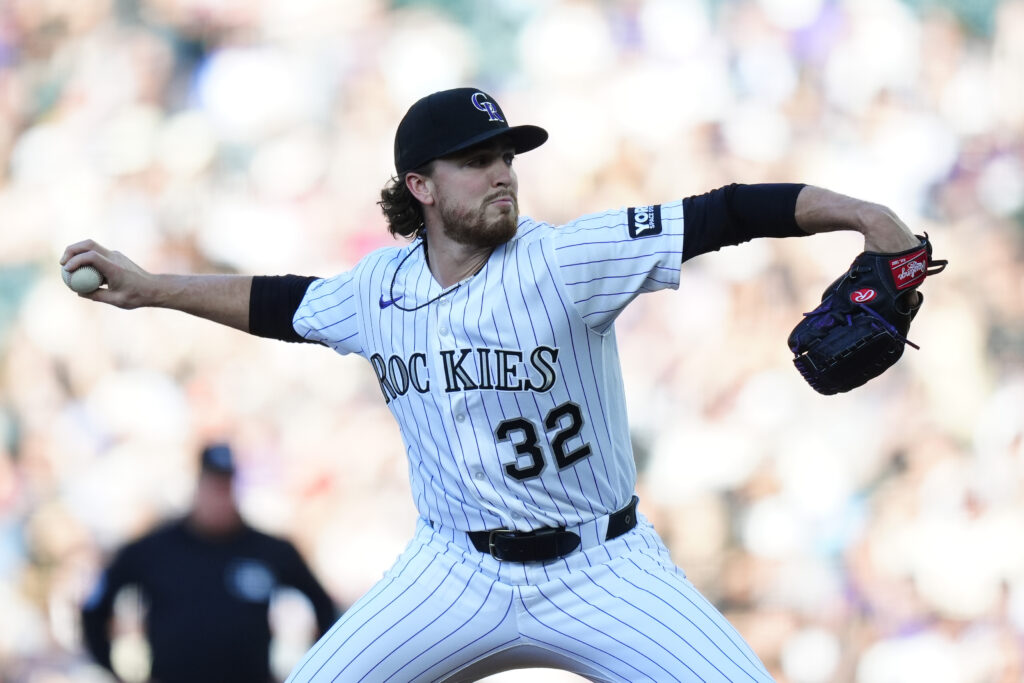
Chase Dollander underwent internal brace surgery on June 22, ending not just his 2026 season but projecting him out of action through roughly the first half of 2027. Per Rockies manager Warren Schaeffer, the 24-year-old's UCL sprain had been trending toward the operating table for weeks, and that trajectory finally materialized. The internal brace procedure carries a standard 12-month recovery window—less severe than Tommy John reconstruction but a full calendar year of absence nonetheless.
Dollander's loss hits Colorado harder than it would most organizations. The ninth overall pick from the 2023 draft was the organization's clearest path to sustainable rotation depth. In year two, he'd stabilized: a 3.89 ERA across 44 innings with a 25% strikeout rate and fastball velocities in the 98-99 mph band. His swinging-strike rate of 12% ranked near league average for his usage. He was, plainly, the only Rockies starter capable of striking out batters at an above-average clip. The team was transitioning him from an opener role into full rotation deployment right before the injury hit.
Without Dollander, Colorado's rotation becomes a collection of expiring assets. Kyle Freeland, Tomoyuki Sugano, Michael Lorenzen, and Jose Quintana are all in walk-year situations and headed to free agency. Ryan Feltner carries arbitration control but projects as a back-of-the-rotation hold. The Rockies are on pace for 64 wins and chasing a fourth consecutive 100-loss season. Their starters' collective 5.88 ERA is worst in baseball. Strikeout rate (16.2%) and home-run susceptibility mirror that collapse. Dollander wasn't going to fix a systemic rebuild in one season, but he was the one established pitcher the front office could build around for 2027 and beyond.
For bettors, this forecloses an important variance lever. Rollover-rosters like Colorado sometimes surprise in the back half when young talent stabilizes late in a rebuild year. Dollander's presence created that small edge—a pitcher capable of stealing games against weak lineups or carrying mediocre-team parlays. His absence hardens the Rockies' ceiling for the next 18 months. Any bullish lean on Colorado pitching, rotation strikeout totals, or first-five-innings unders involving their starters should move inward. The team was already playing baseball's worst pitching defense; now it's defending without its only above-average starter.
The calendar matters too. Dollander won't be ready for spring training 2027 and likely won't throw in games until the second or third month of the season. That delays his re-integration and extends the period in which Colorado operates as a de facto Triple-A lineup facing MLB starting pitching. The organizational setup is a rebuild; the timeline just got longer, and the margin for error tighter.