Chandler's Strikeout Spike Masks the Real Fracture: Control Issues and Defensive Collapse
By PropBetEdge Editorial Team ·
Bubba Chandler posted career-high whiff numbers in Toronto, but three Pirates errors and three walks exposed the fragility beneath the surface-level domination.
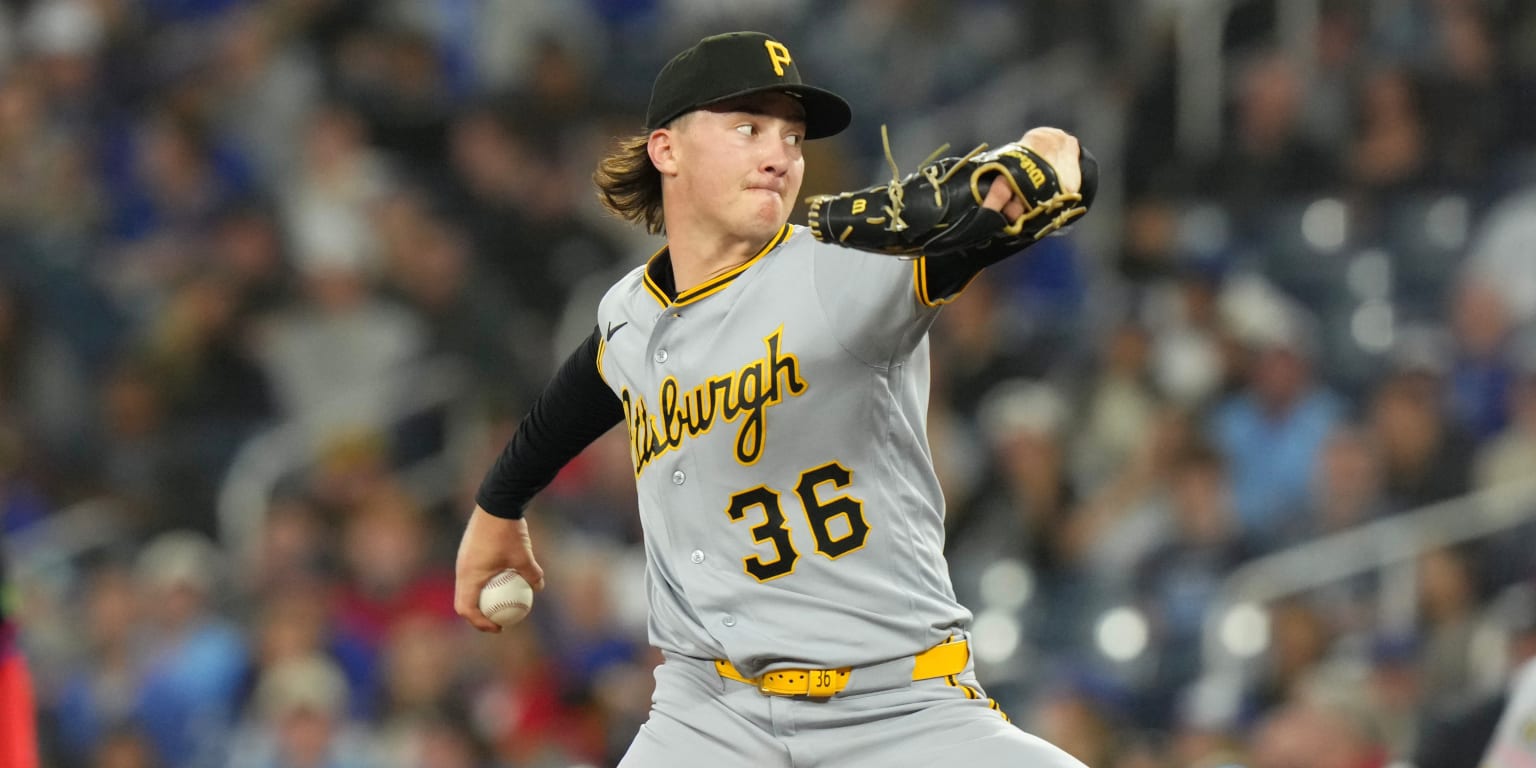
Bubba Chandler struck out 11 Blue Jays batters across five innings Friday night at Rogers Centre—a career high achieved in just four innings—and generated 22 whiffs, tying for the second-most by a Pirates starter in the first five frames since pitch tracking began in 2008. To the casual reader, this was a breakout performance from a 23-year-old right-hander who has struggled early in 2026. To anyone digging into the mechanics and the box score, it was a mirage built on elite stuff meeting sloppy execution.
Chandler's fastball was the engine. He threw it 55 times at an average of 99.3 mph, generating 10 whiffs with the offering alone. His slider, changeup, and curveball all earned multiple strikeouts, and his ability to work multiple pitches for swings-and-misses is legitimately elite for a young arm. But strikeouts mask decision-making. Chandler issued three walks on the night and watched Pittsburgh commit three errors between the second and third innings—the most damaging in the third when first baseman Spencer Horwitz's errant throw to third allowed George Springer to score. A 114.8 mph double by Yohendrick Piñango added two more runs Chandler could have contained with better command on his breaking stuff. The Pirates lost 6-2. Pitcher Don Kelly said Chandler "settled down" after the third-inning chaos and struck out six of the next nine batters he faced, which is true. But settling down after three errors and two unearned runs have already crossed the plate is damage control, not dominance.
The substance to monitor is whether Chandler's walk rate normalizes or expands. Early in 2026, he has labored through starts marked by elevated free passes—a sign that his fastball command, despite its velocity, is inconsistent. A pitcher who racks up strikeouts but works deep into counts (high pitch counts per inning, multiple balls per at-bat) cannot sustain that strikeout rate in a full workload. Chandler threw 97 pitches in five innings Friday—19.4 per frame. For context, elite strikeout pitchers like Juan Soto's counterpart in the rotation maintain 16-17 pitches per inning while still missing bats.
For prop bettors, the edge lies in fading Chandler's strikeout props in his next 2-3 outings. The 11-K ceiling was achieved against a Blue Jays lineup that went 2-for-20 while Chandler was on the mound (a .100 batting average), but it required him to throw 97 pitches in five innings. If Pittsburgh's defense tightens and Chandler doesn't spike his walk rate further, his strikeout production could normalize downward—he's likely to face opponents with better contact discipline than Toronto's poor approach Friday. The market will price Friday's outing too heavily into his next line, especially if sportsbooks project him for another high-volume strikeout night. Chandler's ceiling is real, but his floor is a pitcher working elevated pitch counts with pedestrian strikeout efficiency. That delta is where the value sits.
Kelly's pregame comments about Chandler trusting his stuff are instructive: the manager is saying publicly what the stat sheet already shows. Chandler has the arm talent. He does not yet have the command precision to convert that arm talent into sustainable, bet-able strikeout numbers week to week. Friday was an outlier, not a trend.