Cease Recalibrates Control; Blue Jays' Ace Signals Reliable Strikeout Floor Returning
By Erik Schwartz ·
After walking nine batters over two starts, Dylan Cease delivered a seven-inning shutout with surgical command, reshaping expectations for his strikeout prop floor for the remainder of the season.
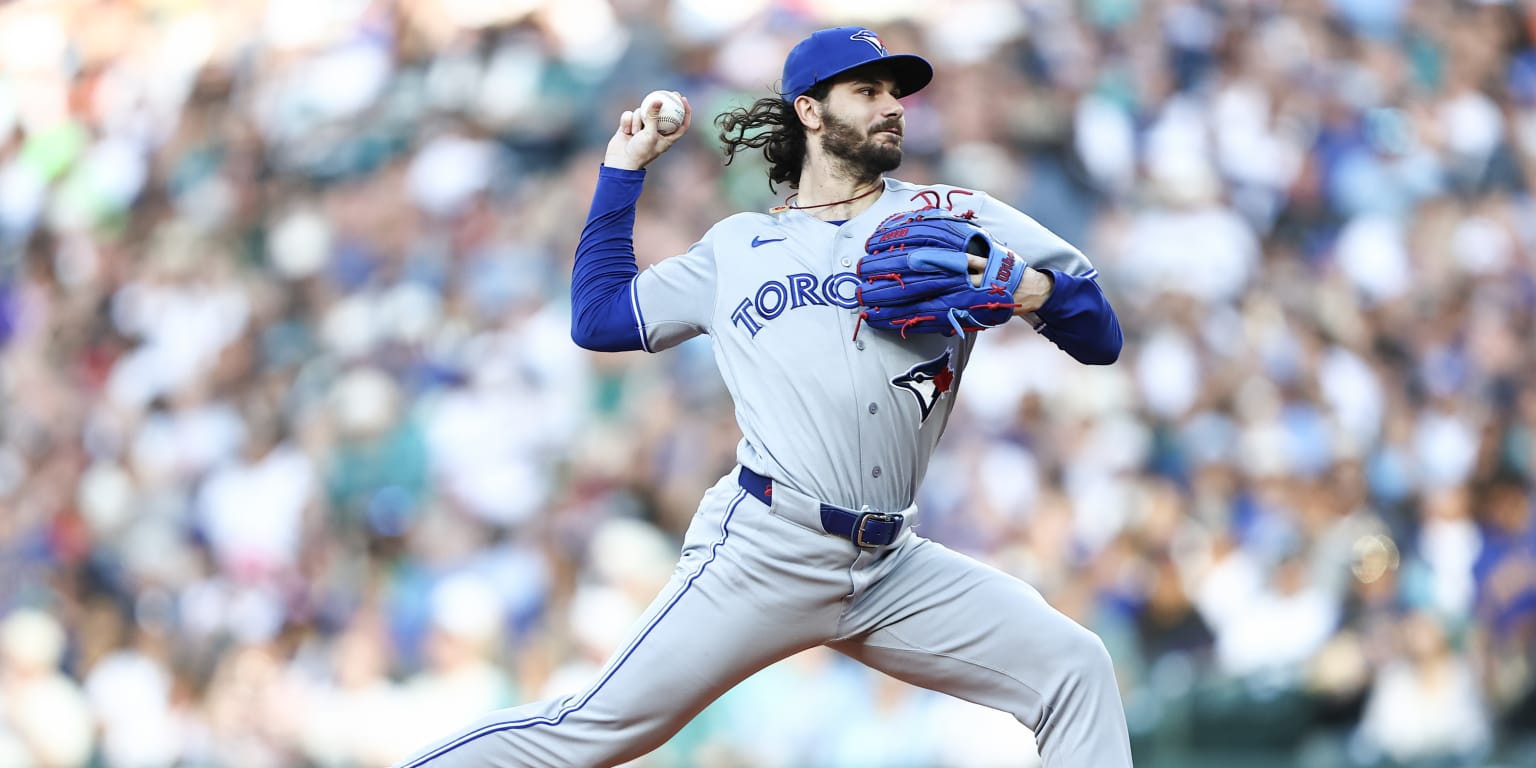
Dylan Cease dismantled Seattle on Friday night—seven innings, three hits, nine strikeouts, one walk—and in doing so answered the most pressing question about Toronto's $210 million offseason acquisition. The Blue Jays signed him to stabilize their rotation. Over his last 15 1/3 innings before this start, Cease had hemorrhaged free passes, issuing nine walks across two outings and coughing up four runs in 4 2/3 innings against Texas just prior. Command erasure at that scale doesn't get corrected by accident.
Cease said he made no significant mechanical overhauls—just minor refinements to his feel and timing. That matters. A pitcher who fixes inefficiency through incremental recalibration rather than wholesale rebuild tends to hold the correction. He struck out the side in the first inning cold, which he downplayed in postgame, but the third inning onward is where his mechanics settled enough to generate consistent carry. By his own assessment, he didn't truly feel comfortable in his mechanics until the fourth frame. That progression—early roughness, middle-innings command—is the profile of a guy rediscovering his release point, not a flash performance built on anomalous luck.
The offensive score was almost irrelevant to the narrative. Toronto scratched out two runs in the third on hard contact—Sean Keys single, Andrés Giménez double, Vladimir Guerrero Jr. RBI single—and Cease's seven zeros held up cleanly. Guerrero himself had entered the night hitting .214 over his last ten games, a span that invited regression speculation. His single here wasn't redemption; it was one swing in a lineup that Mariners starter Luis Castillo kept mostly in check. What mattered was Cease removing doubt about his foundational stuff and command.
For prop purposes, the strikeout line carries asymmetric value over the next 4-6 weeks. Cease entered Friday at 123 strikeouts over 111.1 innings (9.93 K/9), placing him in the 72nd percentile league-wide. But his last two starts had tanked his reliability: four walks in 4 2/3 innings against Texas, then nine walks over 15 1/3 before that. A pitcher issuing free passes at that volume either sees his strikeout count collapse—fewer batters faced—or his strikeout rate stays flat while walk rate deteriorates the per-appearance floor. Friday's outing (one walk across 27 batters faced) suggests the walk spike was correctable rather than structural. If Cease returns to his early-season 1.2 walk rate per nine innings, he'll face 28-30 batters per start on average, which is his runway for strikeout consistency. The market likely priced him with some discount for volatility in his last two starts; books are slow to fully credit a single dominant performance, especially when preceded by shakiness.
One other layer: All-Star rosters were set to be announced Saturday at 7:30 p.m. ET. Cease improved to 5-4 with a 2.79 ERA—a legitimate case for selection. If selected, that raises his profile in public consciousness and may nudge strikeout lines upward reflexively rather than mechanically. Lock in strikeout props on Saturday morning before any ASG announcement and before bookmakers fully digest the Texas outing as an outlier.