Cavalli's Consecutive Quality Starts Signal Shift in Nationals' Pitching Identity
By Erik Schwartz ·
Three straight six-inning, one-run outings suggest Washington's rotation is finally matching the offensive firepower carrying the team through 2026.
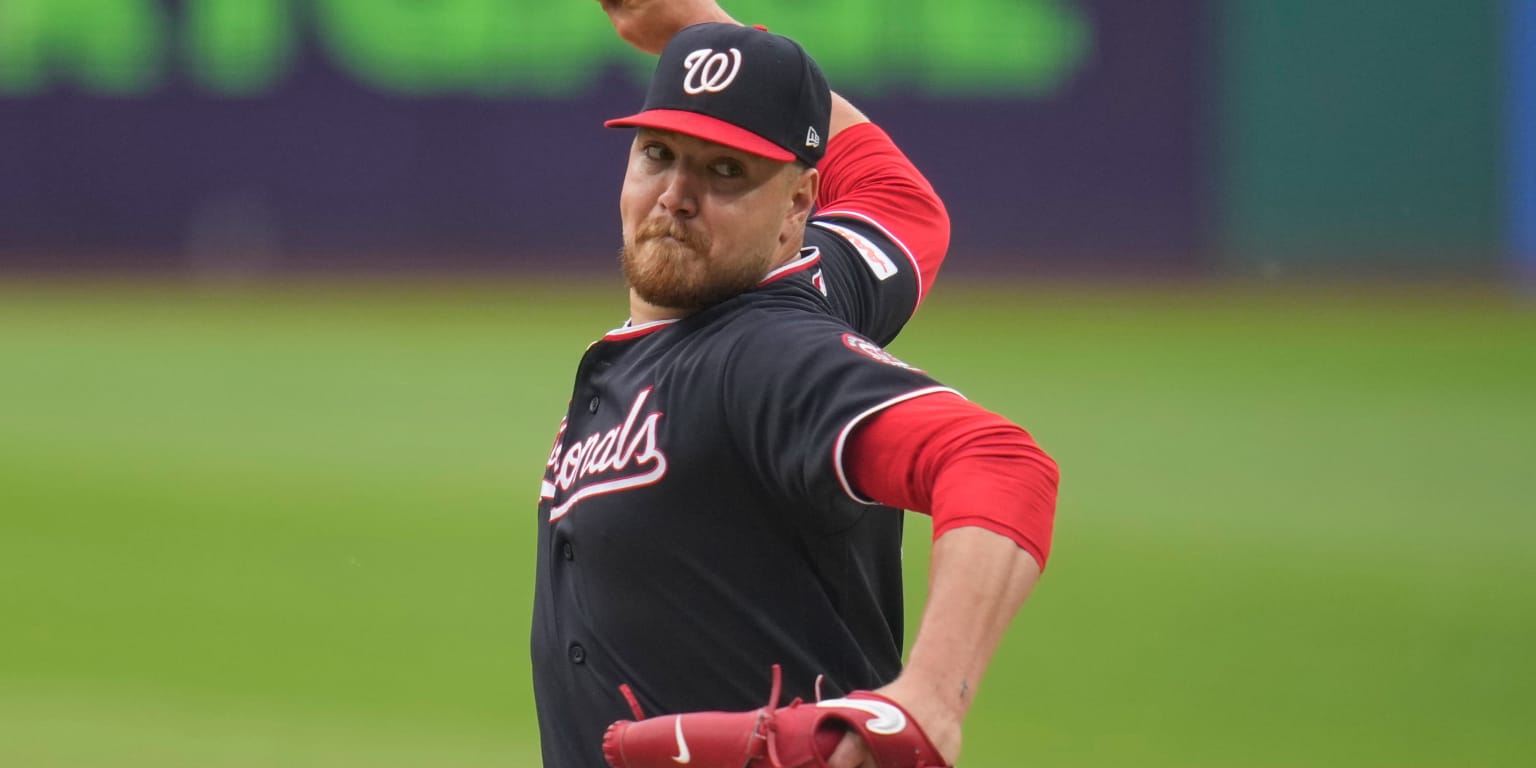
Cade Cavalli has now strung together three consecutive quality starts, the latest a six-inning, one-run performance against Cleveland on Tuesday that flipped the script on what's been driving the Nationals' success. For most of this season, the narrative around Washington has centered on an offense that continues to produce; Tuesday was no different, with a four-run second inning (highlighted by a Keibert Ruiz two-run single and a James Wood two-run homer) putting the Guardians in early deficit. But Cavalli's steadiness—allowing just three baserunners through three innings and escaping trouble in both the fifth and sixth when Cleveland loaded the bases and put runners in scoring position—suggests the Nationals may finally be developing rotation depth that doesn't rely on the offense to cover defensive shortcomings.
The mechanical details matter here. Cavalli generated 13 whiffs on the evening, including four strikeouts with his knuckle curve and three with his fastball. His pitch mix wasn't spectular by his own season standards—he racked up 10 strikeouts against Atlanta in late April—but his command and sequencing allowed him to escape high-leverage spots without capitulating. When José Ramírez came to the plate with the bases full in the fifth, Cavalli induced a sacrifice fly. When the Guardians threatened again in the sixth, he struck out Ángel Martínez and got Kwan to line out. That's not luck; that's pitcher control in critical moments.
What's significant about three consecutive quality starts is the durability signal it sends. One-off performances get buried in variance. A three-game stretch of consistent six-inning, sub-two-run outings suggests Cavalli has either corrected a mechanical flaw, sharpened his fastball command, or stabilized his sequencing against league-average competition. The market will be slow to recalibrate if this sample remains small—two or three more starts at this level and sportsbooks will begin pricing Cavalli's strikeout prop higher and his innings pitched prop lower, as both will reflect elevated sustainability.
For prop bettors, the angle crystallizes around Cavalli's next two starts. If the Nationals face a below-average offense (bottom-15 in OPS or team strikeout rate), backing his strikeout total makes sense only if the line hasn't moved. The line will move. Books already adjusted their opening Cavalli K props higher once the three-start streak became apparent; his next matchup will reflect a market that now views him as a league-average starter rather than a volatility play. The real edge is fading overs on Nationals team totals when Cavalli takes the mound going forward. His ability to pitch into the sixth inning on low pitch counts means the Nationals' bullpen stays fresher, and teams that preserve bullpen arms tend to underperform their run-production in the game Cavalli starts—the offense carries less leverage when the pitching isn't a liability. Look for Nats team totals to compress by 0.5 to 1 full run when Cavalli is announced, especially against league-average or better offenses where Washington's hitters can't run up double-digit totals.
The broader takeaway: Cavalli's consecutive quality starts are real and durable enough to monitor long-term, but the betting edge doesn't live in his strikeout prop anymore—it lives in the secondary effects on team totals and bullpen usage. The market prices strikeout upside fast. It prices the knock-on effects on run production and relief usage much slower.