Carroll's Power Surge at Coors Masks Arizona's Pitching Edge Against Rockies
By PropBetEdge Editorial Team ·
The D-backs' breakthrough offensive performance in Denver obscures a deeper truth: their starting rotation is dominating on the road, and that durability matters more for future matchups than a single two-homer game.
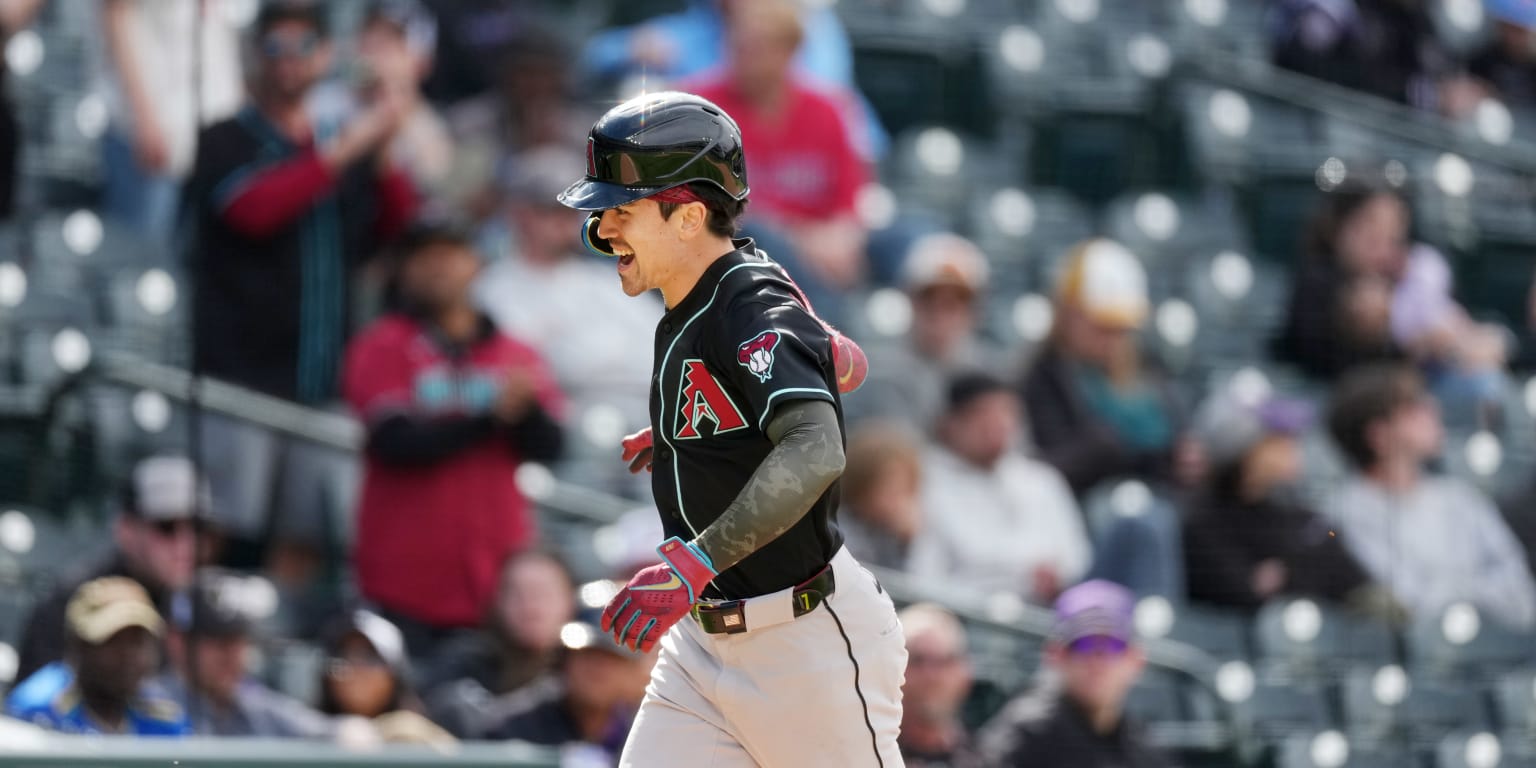
Arizona's 8-6 win over Colorado on Sunday looked like a classic Coors Field slugfest—Corbin Carroll clubbed two homers, Lourdes Gurriel Jr. added another, and the D-backs' bats finally woke up after being shut out through the first two games of the series. But the real story lives in the box score's bottom line: across three games in Denver, Arizona's starting pitchers combined for 20 innings, a 2.70 ERA, and only six runs allowed. That consistency is what secured the series win and kept the road trip even at .500.
Carroll's performance—a 448-foot two-run shot in the sixth and an earlier homer to extend Arizona's lead to 5-0—represents what happens when opposing pitchers miss their margins at altitude. Michael Soroka's outing typifies the D-backs' rotation strength: 5 2/3 innings, eight strikeouts, two earned runs on six hits. He was economical with his pitches (98 total, 67 for strikes) and kept damage to a single fourth-inning blip where consecutive two-out doubles off his fastball accounted for both runs. Once Ryan Thompson entered and Paul Sewald closed in the ninth, the Rockies' late rally in the eighth—four runs on two sacrifice flies and two singles—couldn't bridge a six-run deficit. The execution gap between Arizona's pitching staff and Colorado's lineup was evident across the series.
For prop bettors, the takeaway splits into two distinct angles. Carroll's two-homer performance was noise—a beneficiary of a rare three-game span in which Arizona's offense found elevation compensation at Coors. He's a 24-year-old with legitimate upside, but one game doesn't reprogram his seasonal trajectory. His home run rate (approximately 1 HR per 12.5 at-bats this season) and his career profile at altitude don't suggest he's suddenly unlocked sustained two-homer games. Single-game spike performances at Coors fade quickly; the market will have already adjusted his next props downward within 48 hours if they haven't already. Fade any overvalued Carroll power props in Arizona's next non-Coors matchup.
The durable signal is on the pitching side. Arizona's rotation has logged 20 innings in one road trip with a 2.70 ERA—that's execution consistency that persists. Soroka's strikeout rate (8 K in 5 2/3 IP = 12.7 K/9) aligns with his season average, meaning this wasn't an outlier performance; it was his baseline on the road. When Arizona's starters face non-Rockies lineups going forward, they'll carry the same underlying strikeout and walk management that held Denver scoreless through stretches. For the next 5-10 days, Arizona starting pitcher strikeout props—particularly Soroka in his next start—carry legitimate value against teams without the Rockies' late-inning sacrifice-fly vulnerability. The rotation's road ERA of 2.70 over a three-game sample is small, but it reflects preparation and execution that's portable to other stadiums.