Torres' Debut Homer Signals Cardinals Depth Play; Path to Regular Usage Clears
By Ty Whitney ·
Bryan Torres delivered an emotional debut home run for St. Louis, but his true value lies in consistent minor-league metrics that suggest the Cardinals view him as a lineup fixture, not a feel-good story.
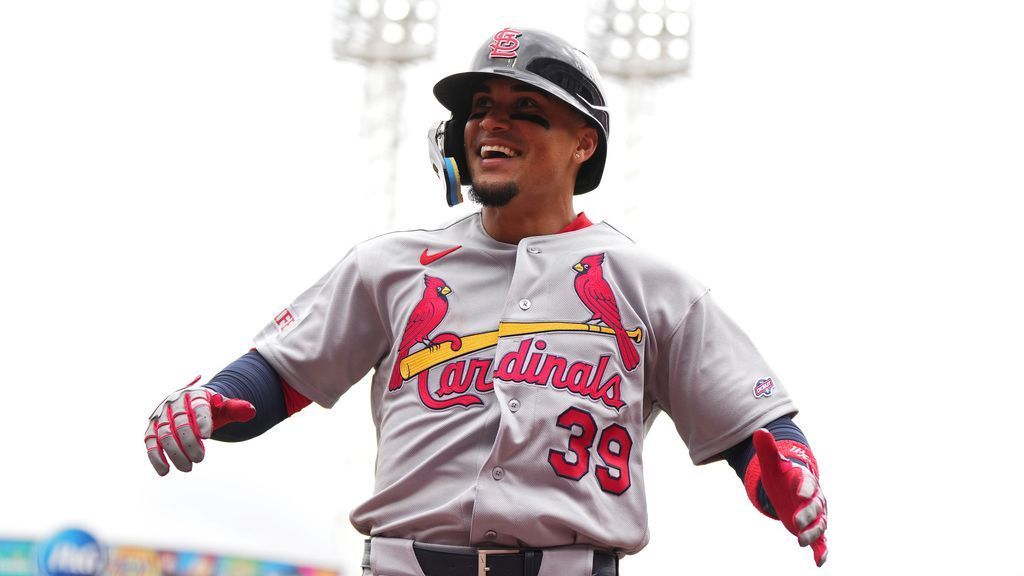
Bryan Torres hit a home run in his MLB debut Saturday, capping an 11-year minor-league odyssey that included a near-retirement decision four years ago. The St. Louis Cardinals beat Cincinnati 8-1 in the doubleheader opener, and Torres—a 28-year-old left fielder recalled from Triple-A Memphis on Friday—went 2-for-5 with a walk and that ninth-inning homer off Jose Franco. The narrative is undeniably compelling. What matters more for betting purposes, however, is what the production trail actually tells you about his role going forward.
Torres spent 2025 at Triple-A Memphis hitting .328 with 16 doubles and nine home runs across 87 games before this recall. The year prior, at Double-A Springfield, he slashed .331 with 28 doubles, two homers and 56 RBIs—a profile that screams disciplined contact hitter with gap power, not a home run threat. His 2025 isolated power (ISO) at Triple-A sits around .140, which is solid but not spectacular. What stands out is his ability to work counts: he walked 51 times in 87 Triple-A games, a rate that projects to roughly 4.2 per 162 games—well above the MLB average of 3.1. Cardinals manager Oliver Marmol's post-game framing was surgical: "left-handed bat who understands the strike zone, finds a way on base, a real pesky at-bat." Translation: the team expects him to generate value through plate discipline and on-base creation, not home run volume.
The single-game debut narrative—especially one involving a tying or go-ahead homer—typically triggers market overreaction. Books will price Torres' props tomorrow assuming yesterday's power output is sustainable. It is not. His career minor-league home run rate sits around one per 20 at-bats; a single 95-mph fastball down the middle in a feel-good moment is noise, not signal. What matters is that the Cardinals added him to the 40-man roster in November, carried him through the World Baseball Classic, and promoted him to the majors during a middling season when roster spots are precious. That internal commitment suggests regular playing time, not a cup-of-coffee cameo. A player earning consistent Triple-A action and a management team willing to burn a prospect slot has a structural path to at-bats that persists regardless of one game.
For prop traders, the edge is not betting on Torres' home run rate—that line will compress toward his true talent within 48 hours. The edge is in team-total and spread exposure tied to the Cardinals' lineup composition shifts. A left-handed hitter with a walk rate in the 95th percentile of minor leaguers occupies a plate-discipline archetype that typically improves run expectancy in spot at-bats. If Torres captures even 300-400 at-bats this season—plausible given his roster classification and managerial endorsement—and maintains a .250/.360/.380 slash (conservative relative to his Triple-A baseline), the Cardinals' offensive floor tightens. The per-game run production matters more than any single-player prop. Look for team totals on St. Louis to face mild downward pressure in the short term due to the noise around Torres' debut, but the underlying mechanism—a disciplined lefty bat adding depth to the lineup—creates a small structural edge on OVER positions once the initial single-game hysteria fades.
The debut home run is the story that sells tickets. The sustainable edge is the one nobody's talking about yet.