Cardinals' First-Inning Efficiency Against Springs Rewrites Early-Game Script
By Erik Schwartz ·
St. Louis broke an eight-game drought scoring in the opening frame by capitalizing on Jeffrey Springs' command lapses, a pattern that matters for game-flow and team-total pricing.
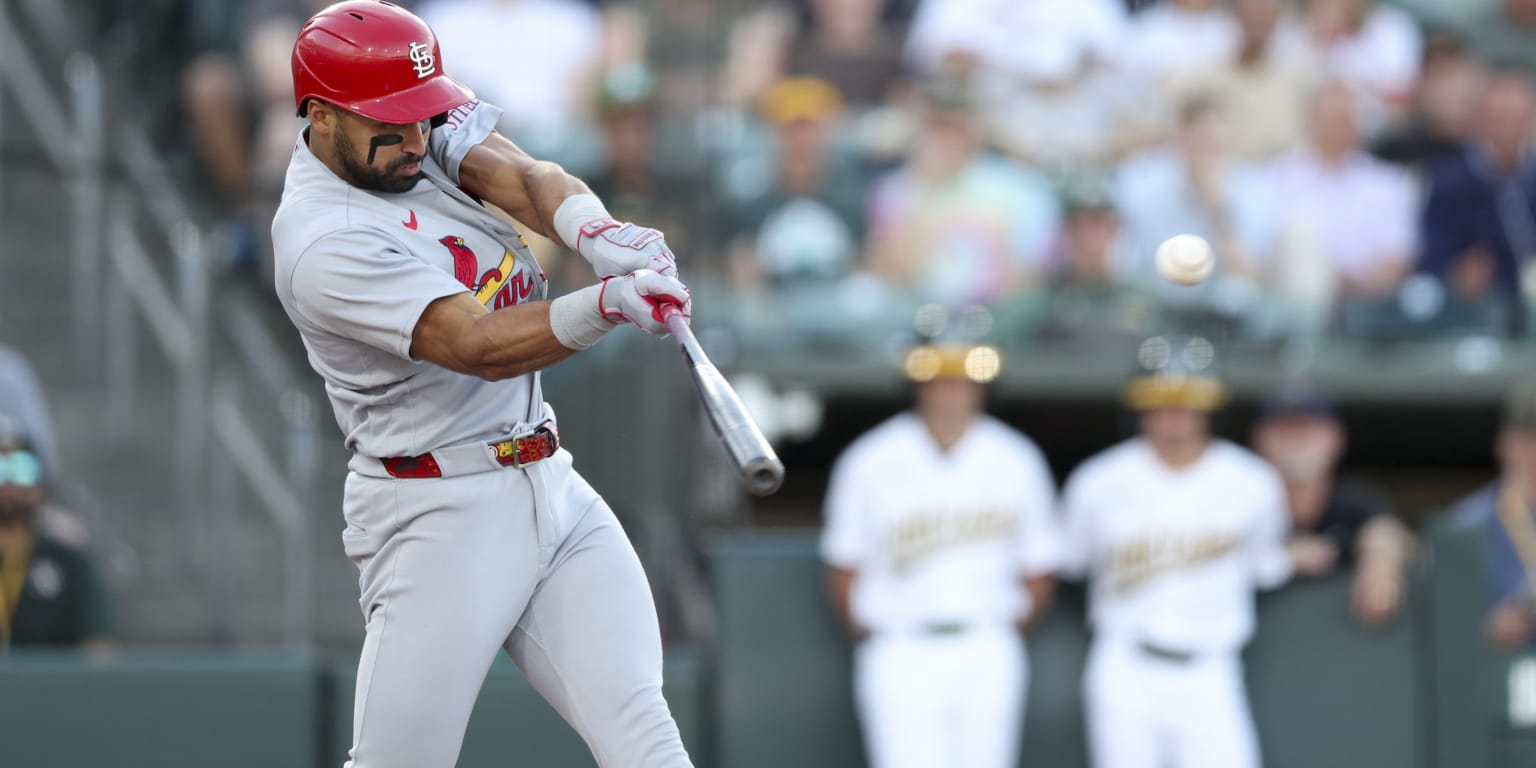
The Cardinals scored four runs in the first inning Tuesday against Oakland, ending a stretch of eight consecutive games without a first-inning run. The sequence wasn't built on power—only one batted ball exceeded 96.6 mph—but rather on situational awareness and Springs' inability to command his changeup. José Fermín lined a two-run double into right-center after taking a ball, then Gabriel Pozo drove in two more after Springs left a changeup 1.72 feet off the plate. It was the Cardinals' highest-scoring first inning since July 2024.
What matters for the larger picture: Springs' game-to-game volatility is substantial. His command issues Tuesday—particularly his willingness to elevate and miss in the zone—align with a known weakness: the 32-year-old has allowed 5.2 runs per nine innings on the road over his career, and Oakland's ballpark in West Sacramento (hitter-friendly dimensions, sea-level elevation) amplifies early-inning exposure for opposing starters. The Cardinals' approach also reflects preparation—manager Oliver Marmol had Fermín and Pozo, both left-handed hitters, in the lineup specifically to attack Springs' southpaw delivery, and the roster executed late in counts.
The Cardinals' road record now sits at 14-7, second only to Atlanta's 16-7, and their May performance (6-4) has stabilized despite a brutal early-month schedule against playoff-contending Dodgers, Brewers, and Padres. Tuesday's 6-4 final included a two-run blast from JJ Wetherholt in the sixth, insurance that proved critical when Oakland trimmed the deficit to one run in the second. The early offensive setup—converting mediocre contact into four runs—is a repeatable edge when St. Louis faces left-handed starters with elevated walk rates and inconsistent fastball location, which Springs has demonstrated throughout his career.
For bettors, the immediate angle centers on Cardinals team totals in upcoming matchups against similarly profiled starting pitchers (soft fastball velocity, elevated changeup usage, high walk rate). The 4-run first didn't require explosive contact; it required a starting pitcher vulnerable to two-strike counts and competitive left-handed hitters positioned to punish pitches in dangerous locations. Springs' struggle to stay ahead in counts—Fermín worked a full count, Pozo swung at a pitch nearly two feet off the plate—reflects a chronic issue rather than a one-game variance. If St. Louis faces another left-handed starter with comparable command profile over the next 10 days, their early-inning scoring rate should expect to revert upward from the eight-game dormancy. Conversely, teams with elite fastball command and low walk rates will provide a tighter early-inning environment.
The Cardinals' offensive approach also telegraphs roster usage: Fermín and Pozo's inclusion suggests manager Marmol is willing to platoon aggressively against certain handedness matchups, which increases the probability of optimized contact quality in favorable situations. That structural flexibility, combined with their strong road record and May trajectory, supports a lean toward Cardinals team totals (over their implied run total at 4.0-4.5) in matchups featuring left-handed starters outside the elite tier.