Cardinals Quietly Shopping Burleson as Deadline Sellers Emerge
By Ty Whitney ·
St. Louis has fallen four games back in the Wild Card race, and teams are already circling first baseman Alec Burleson on the trade market.
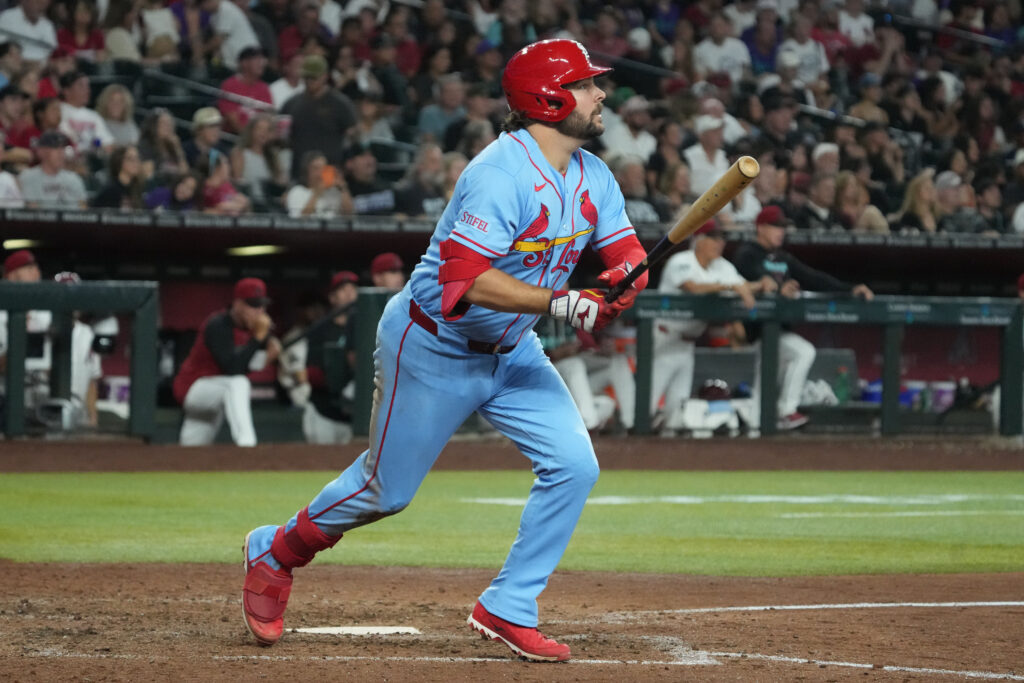
The Cardinals have entered seller mode. After a rough stretch that left them four games outside the final National League Wild Card spot, St. Louis is fielding inquiries on veteran assets, including first baseman Alec Burleson, per Jon Morosi's reporting. The team hasn't been active at the deadline yet, but interest in their roster pieces signals the front office has accepted that a mid-season reversal isn't materializing.
Burleson represents the kind of mid-tier offensive talent that contending teams target in early August—a productive left-handed bat with positional flexibility and moderate salary relief depending on the deal structure. His profile as a switch-hitter with gap power makes him valuable in playoff lineups, especially for teams looking to patch roster gaps without surrendering top prospects. The fact that multiple clubs are inquiring suggests the market sees value where St. Louis no longer does, a classic deadline arbitrage moment.
From a betting standpoint, Burleson's usage patterns and team context become fluid. If he stays in St. Louis, his plate appearances and counting stats remain tied to a rebuilding timeline with diminished win probability in tight games—lowering his late-inning leverage opportunities and thus suppressing RBI and runs upside. A trade to a contender shifts both the narrative and the lineup construction. Contending teams deploy productive bats in higher-leverage situations, which typically means more runners in scoring position and more opportunities for a bat of Burleson's caliber to accumulate counting stats.
The prop angle hinges on whether and when a deal gets done. If Burleson remains a Cardinal through the deadline, expect his individual prop ceilings to compress—fewer RBI and runs opportunities in a team shedding talent for future value. The Cardinals' offensive environment will deteriorate as other pieces move. However, if a trade materializes, his new team's context matters more than his historical Cardinal splits. A move to a lineup with genuine playoff equity (Houston, Philadelphia, or Atlanta remain typical deadline buyers) would unlock higher prop floors on runs and RBI simply from better run-scoring opportunities and more competitive game scripts.
Right now, the uncertainty itself is the angle. Market-makers typically hold baseline props steady during active trade speculation because the acquisition context is unknown. Once a trade is announced, new lines will account for the acquiring team's run environment and Burleson's projected role—but the first 12-24 hours after a deal often see sharper moves as books reprice in real time. Early bettors on his props post-trade announcement capture that volatility before the efficient market settles.