Báez's 473-Foot Grand Slam Signals Triple-A Mastery, Not MLB Readiness
By Ty Whitney ·
A Minor League home run record doesn't automatically translate to big-league production; what Báez's power surge actually tells bettors about the Cardinals' timeline.
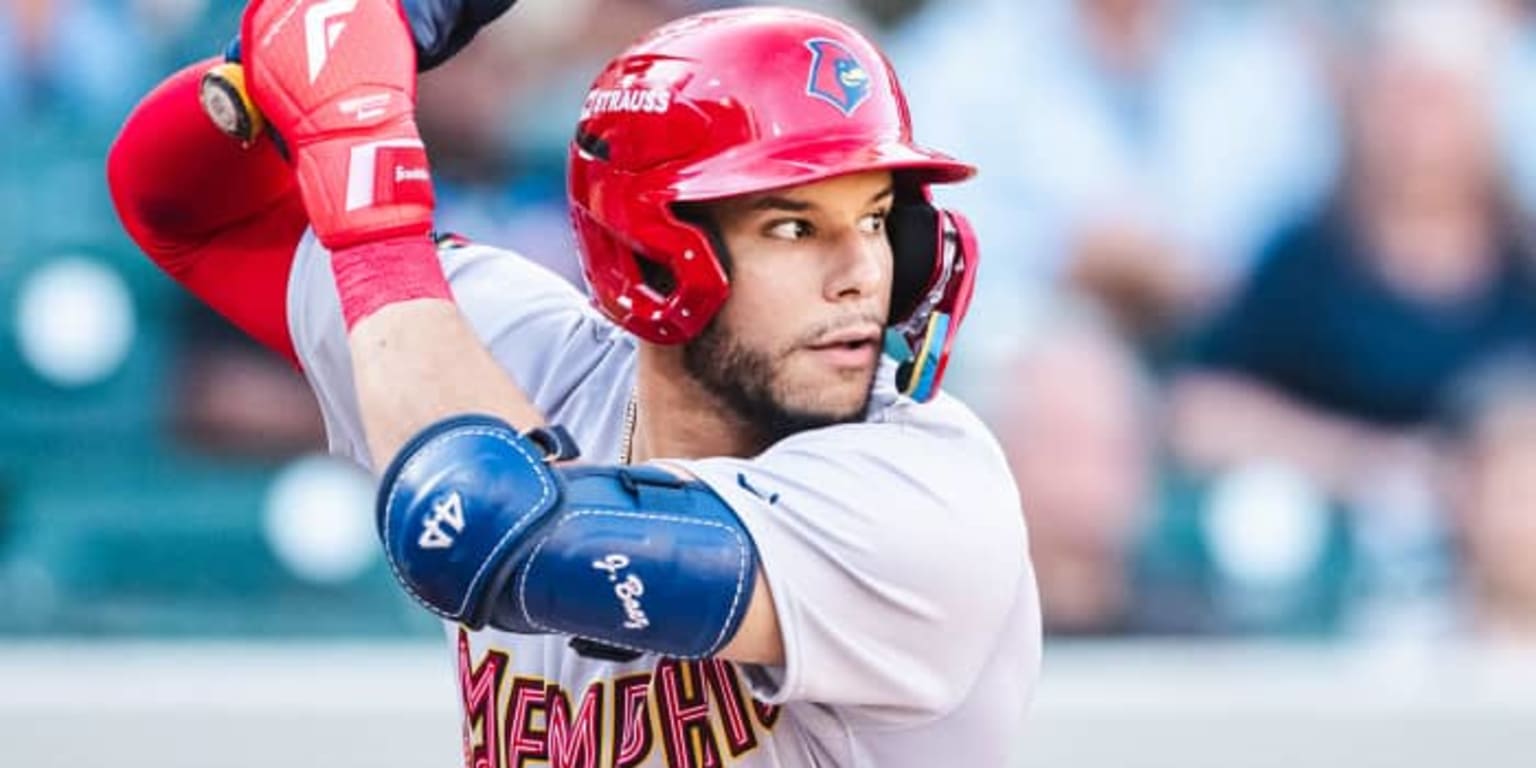
Joshua Báez launched a 473-foot grand slam in the third inning of Friday's Memphis game—the longest tracked homer he's hit all season and one of just three balls hit farther anywhere in Triple-A this year. The blast came off a first-pitch fastball at 108.8 mph exit velo, ricocheted off the center-field batter's eye, and capped a 10-9 walk-off win for the Redbirds. At 23, ranked No. 3 in the Cardinals' system and No. 46 overall by MLB Pipeline, Báez is now carrying 29 home runs on the season—tied for the Minor League lead—with a .900 OPS across 83 games.
The raw power is undeniable. A .578 slugging percentage leads the International League; his 48 extra-base hits and 73 RBIs rank highest in the same circuit. These are the numbers that get scouts nodding and front offices measuring callup windows. But here's what separates prospect thunder from big-league thunder: Triple-A pitching is a different animal. A 108.8 mph fastball against a Cubs farmhand carries a different weight than the same velocity against a playoff rotation. Báez's .250 batting average—even paired with elite power—hints at the gap. He's hunting one type of pitch and connecting on it with violence, but the average suggests he's either struggling with secondary offerings or running into a different quality of opposition the moment he moves up.
From a prospect valuation standpoint, Báez's power trajectory matters to the Cardinals' payroll planning and to how trades might be valued around him. But from a betting lens, the critical question is whether this 473-foot moon shot accelerates a call to the majors—and whether that call happens with enough lead time to matter. If Memphis stays hot and Báez maintains this slugging rate into late August, the front office faces pressure to bring him up before September rosters expand. Early MLB playing time in September could float his name into next year's prop markets: rookie strikeout rates, rookie home run totals, rookie batting average lines. Right now, those props don't exist because he's still in the minors. The moment he gets called up—whether that's next week or next month—the books will open lines with tight early windows before public money floods in with incomplete big-league data.
Bettors tracking prospect pipelines should note that September call-ups often come with inflated early props because the market prices in uncertainty. A hitter who crushed Triple-A gets a defensive bump when he reaches the majors; his home run total over a partial September might be set high, and his strikeout prop might be set conservatively. The edge isn't in betting on Báez's September props directly—that would be chasing a single-month sample in unfamiliar conditions. The edge is in understanding where the books will misprice him relative to his actual MLB competition. A .250 average in Triple-A with 29 home runs across 83 games annualizes to a .230 hitter with 57 home runs over a full season—well above league average on power, below on contact. That gap is where value lives, not in celebrating a 473-foot grand slam.