Cardinals' Bench Depth Delivers in 11-Inning Thriller; Walker's Discipline Shift Signals Deeper Offensive Evolution
By Ty Whitney ·
Yohel Pozo's pinch-hit walk-off and Jordan Walker's two-strike home run reveal a Cardinals offense learning to execute in high-leverage spots rather than chase early counts.
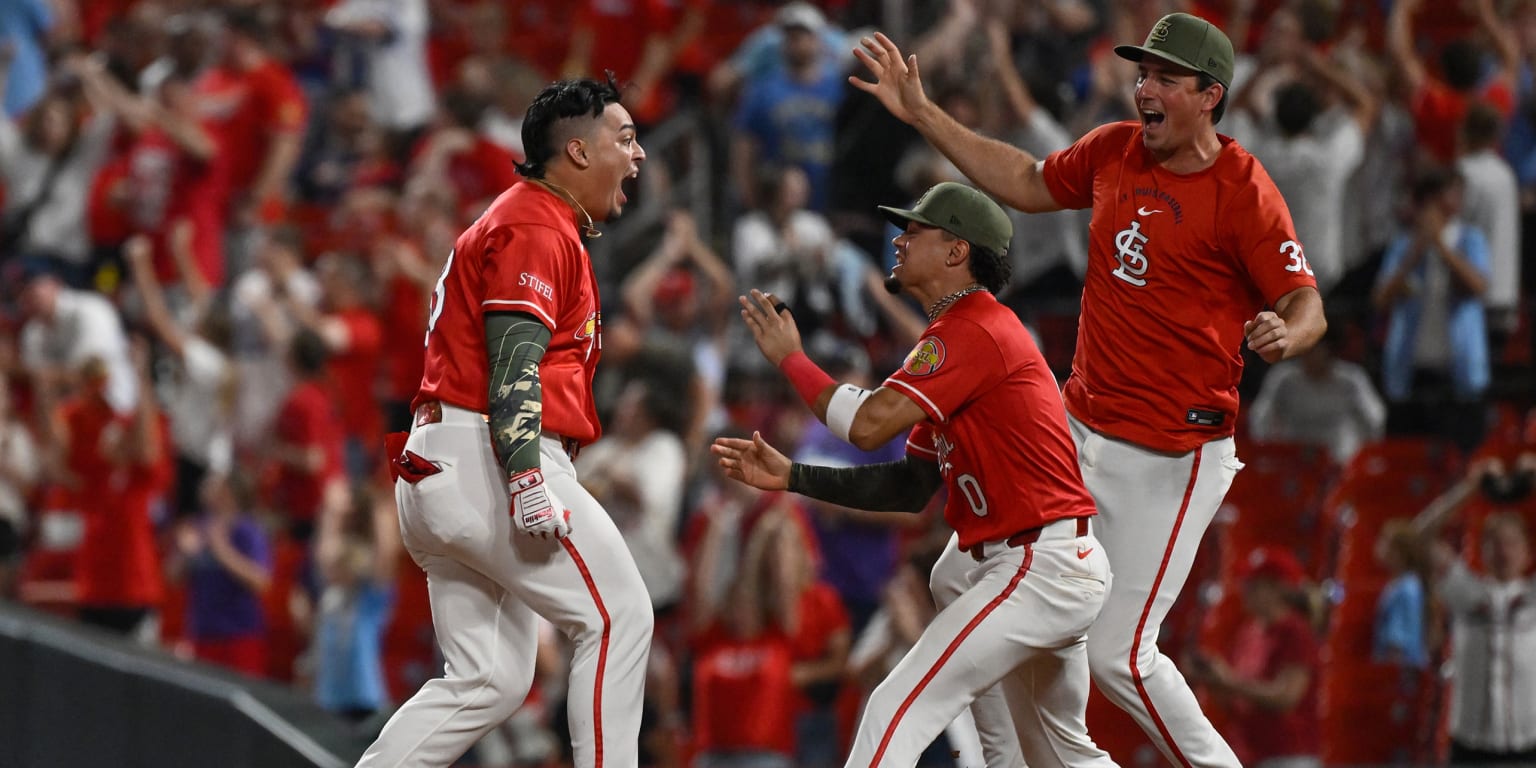
The Cardinals stole an 11-inning victory from Kansas City on Friday night at Busch Stadium, with Yohel Pozo delivering a two-out single through the right side in the bottom of the 11th to end a marathon. The margin was thin—5-4—and the path there serpentine: Royals manager Matt Quatraro walked JJ Wetherholt intentionally, only to have the Cardinals counter with a pinch-hitter instead of relying on the next scheduled batter. That decision to go to Pozo, who delivered, underscores a real strategic edge: St. Louis has functional bench depth at the plate, and Oliver Marmol knows when to deploy it.
What matters more for the Cardinals' trajectory, however, is what Jordan Walker did earlier in that game. Down 0-2 against Royals starter Michael Wacha in the fourth inning, Walker stayed compact and hammered a 79 mph changeup that didn't miss by much—Wacha himself admitted the pitch missed location only slightly, designed to induce chase. Walker didn't chase. He recognized a hittable middle-of-the-zone offering and punished it at 104.5 mph exit velocity, tying the game at 2-2. That discipline at the plate—the willingness to work a count and then explode on a mistake rather than expand the zone—is a measurable shift from his approach in prior seasons. Marmol noted the preparation, and the stat line backs it: Walker is carrying a 13-home-run pace over a full season with markedly improved two-strike selectivity.
When a young power hitter stops chasing 0-2 pitches and waits for his pitch—and then actually hits it hard—that's not luck. It's a mechanical and mental recalibration. Walker's 104.5 mph off a pitch that almost missed is the sound of a hitter who has learned the difference between aggressive and reckless. Over a 162-game slate, that shift in discipline tilts the expected-value curve upward. A player swinging at pitches outside the zone at league-average rates will produce a given home-run total; a player who improves his chase rate by 5-8 percentage points relative to his zone contact rate will outpace that baseline. Walker appears to be one of the latter cases.
For betting purposes, the Cardinals' offensive infrastructure just proved durable under duress. They didn't fold in 11 innings against a solid Royals team; they bent, then snapped back. Pozo's bat off the bench and Walker's two-strike execution in a pressure moment suggest that St. Louis has multiple levers to pull when games tighten. This matters for team total projections: a team that manufactures runs in extras and converts high-leverage at-bats will sustain higher run-scoring profiles than raw offensive talent alone would predict. The 5-4 final in an 11-inning frame is a small sample, but it reflects execution patterns—patience, contact, timely delivery—that compound across a season.
The implication for the I-70 Series and beyond: Cardinals team totals have modest but real upside against pitching that doesn't command the zone. Wacha threw a mistake—an admittedly close one—and Walker made him pay. Royals bullpen arms will do the same. In games where the Cardinals face starters in the 3.5-4.5 ERA band or relievers with walk rates above 9% per 9, their ability to wait for mistakes and hit them hard becomes a pricing edge. Early action suggesting the Cardinals should underperform their Pythagorean record misreads their actual skill set.