Wetherholt Returns to Cardinals Lineup as Wrist Clears; Late-Season Depth Play Adds Variability
By PropBetEdge Editorial Team ·
St. Louis activates its young second baseman after 15 games on the shelf, reshuffling infield depth and reintroducing a speed element into a lineup fighting for playoff position.
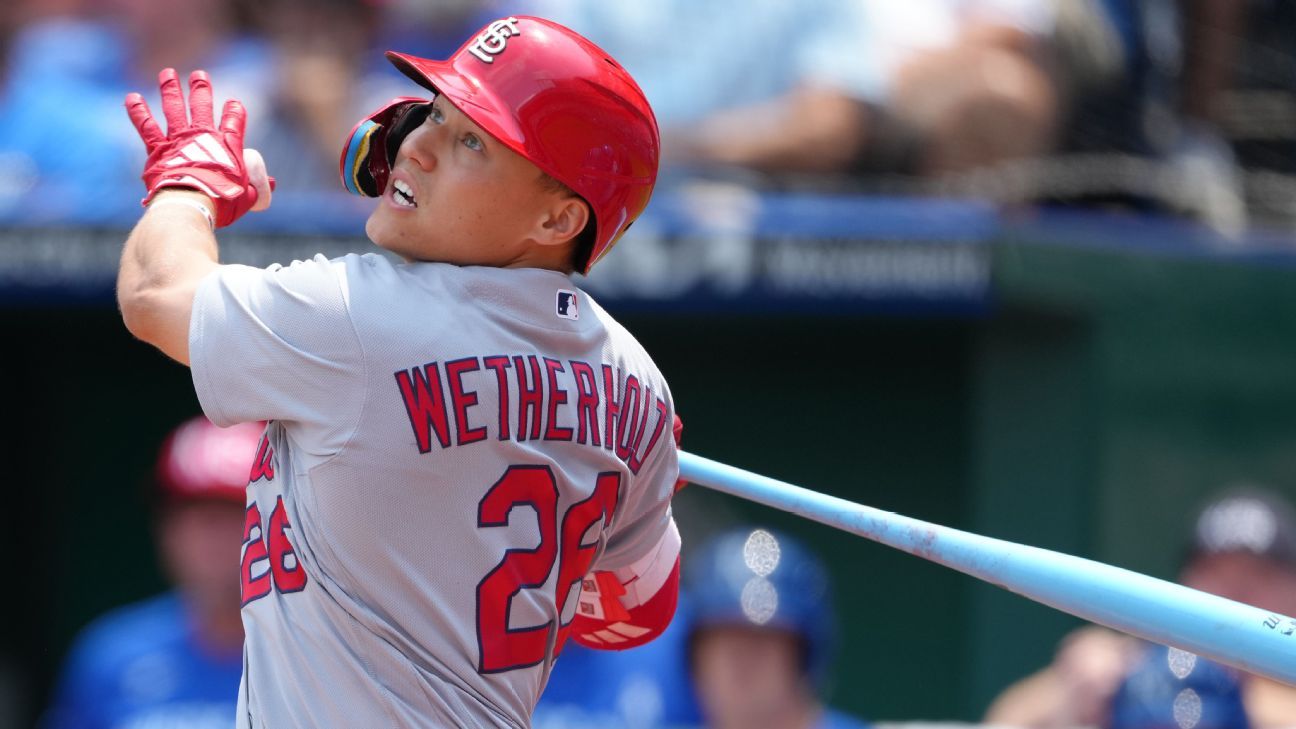
St. Louis activated rookie second baseman JJ Wetherholt from the 10-day injured list Wednesday morning ahead of the Cardinals' matchup against San Francisco. Wetherholt, sidelined since August 30 with right wrist tendinitis after last appearing on August 29, missed 15 games—a meaningful gap for a 24-year-old still building his MLB foundation in a season where the Cardinals are jockeying for October relevance.
The activation carries immediate roster consequences. The Cardinals designated infielder Ramón Urías for assignment—a 32-year-old who batted .151 over 43 games and had become organizational deadweight—and right-hander Peter Strzelecki, a 31-year-old reliever carrying a 5.78 ERA across eight appearances. Those moves clear salary and 40-man space while signaling that St. Louis views Wetherholt's ceiling as substantially higher than the depth pieces it's jettisoning.
Wetherholt's season line tells a familiar young-player story: .242 average across 130 games, but with modest power (17 home runs) and legitimate speed (14 stolen bases). He's scored 88 runs, a respectable total that suggests he's getting on base and moving through the lineup despite the low batting average. The wrist injury interrupted momentum he'd built before late August; the real question is whether three weeks of recovery fully restores the mobility that drives his value—his legs matter more than his bat in terms of WAR production and offensive variability.
For betting purposes, the return introduces uncertainty into Cardinals batting lines over the next 7-10 days. Wetherholt's speed creates stolen base opportunities (14 SB is material in a 130-game sample), and his plate appearances will push lower-leverage hitters deeper into the order, potentially reducing the pitch quality seen by riskier batting props further down. St. Louis's team total may tick marginally higher if he's slotted into the two-hole or leadoff—his on-base floor, while not elite, is better than Urías's .151 average. However, the magnitude of that shift is small; this is a +3 to +5 run swing on a season-long basis, not a profile redefinition. The lack of high-leverage situational clarity (we don't yet know if he bats second, seventh, or eighth) means sharp money will wait 1-2 games to establish his actual role before committing to directional plays on team totals or individual line adjustments. Monitor his first two starts before leaning heavily on volume assumptions.