Marcus Semien's Mets Experiment Is Deteriorating, Not Correcting
By PropBetEdge Editorial Team ·
The Rangers' trade for a declining hitter is revealing itself as a massive miscalculation, and the numbers suggest Semien's struggles are structural, not cyclical.
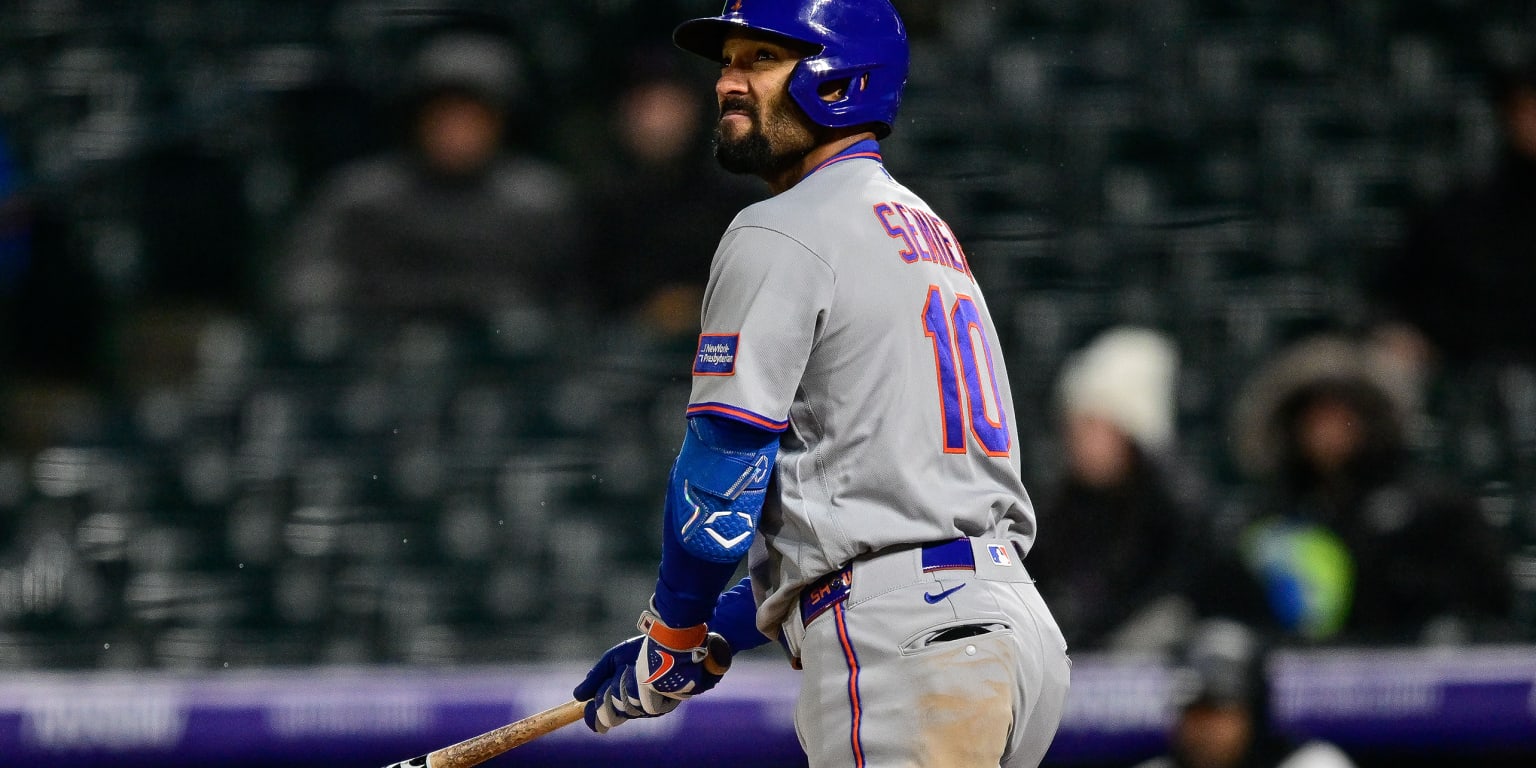
Marcus Semien is batting .219 with a .584 OPS for the Mets, a performance so far removed from what New York expected when it traded Brandon Nimmo to Texas that the original calculus has already inverted. Through Sunday's action, the 35-year-old second baseman has three homers and shows every sign of finishing the season with one of the weakest power outputs of his career—on pace for nine total, which would rank as his worst full-season mark since 2014. The Mets didn't acquire Semien to bat .219. They acquired him expecting a veteran anchor to stabilize the middle infield after solid production in 2023. What they received instead was confirmation of a decline that started in 2024 and has only accelerated.
The mechanical picture is unambiguous. Semien's average bat speed sits at 68.2 mph, ranking in the seventh percentile league-wide—essentially unchanged from 2025 and lower than his 2024 floor. At 35, the likelihood of a bat-speed reversal is near-zero; this is who he is now. His exit velocity has cratered to 85.7 mph, career-low, and despite a promising 27.3% pulled air-ball rate—his highest since 2021—the underlying contact quality tells the real story. Semien's .297 slugging percentage sits 97 points below his expected slugging (.394), putting him in the top 20 for batted-ball misfortune. But here's the critical distinction: that luck gap masks a worsening plate-discipline problem. His strikeout rate has climbed to 20%, up from 17.4% last year. His walk rate has cratered to 6.2%, a career low. His first-pitch swing rate hit a career-high 42.7%. Semien isn't unlucky; he's fishing.
Defensively, the deterioration extends to second base, where he's posted minus-3 outs above average and minus-2 fielding run value—numbers that rank 62nd among 68 qualifying second basemen. The original trade thesis hinged on Semien as a two-way stabilizer. Neither half is delivering. The Mets are a 22-32 team in last place in the NL East, and Semien's inability to produce either power or plate discipline has become a concrete liability rather than a pending correction.
For betting purposes, the key is separating unlucky underperformance from structural decline. The .297 SLG against .394 xSLG suggests some variance could theoretically swing his way—but only if the plate discipline stabilizes, and there's no evidence it will. His 20% K rate paired with a career-low 6.2% walk rate indicates aggressive desperation, not a player poised for a breakout stretch. The expected metrics don't help if the hitter's discipline is actively working against him. Semien's home-run prop should be faded for the remainder of the season; his career-low bat speed and worsening chase tendencies are structural anchors, not one-month blips waiting for luck to flip.