Caminero Joins Elite Power Club at 23—And the Rays' Lineup Just Got More Dangerous
By PropBetEdge Editorial Team ·
Junior Caminero became the sixth-youngest player ever to string back-to-back 30-homer seasons, signaling a sustained offensive engine that rewires Tampa Bay's entire run-production calculus.
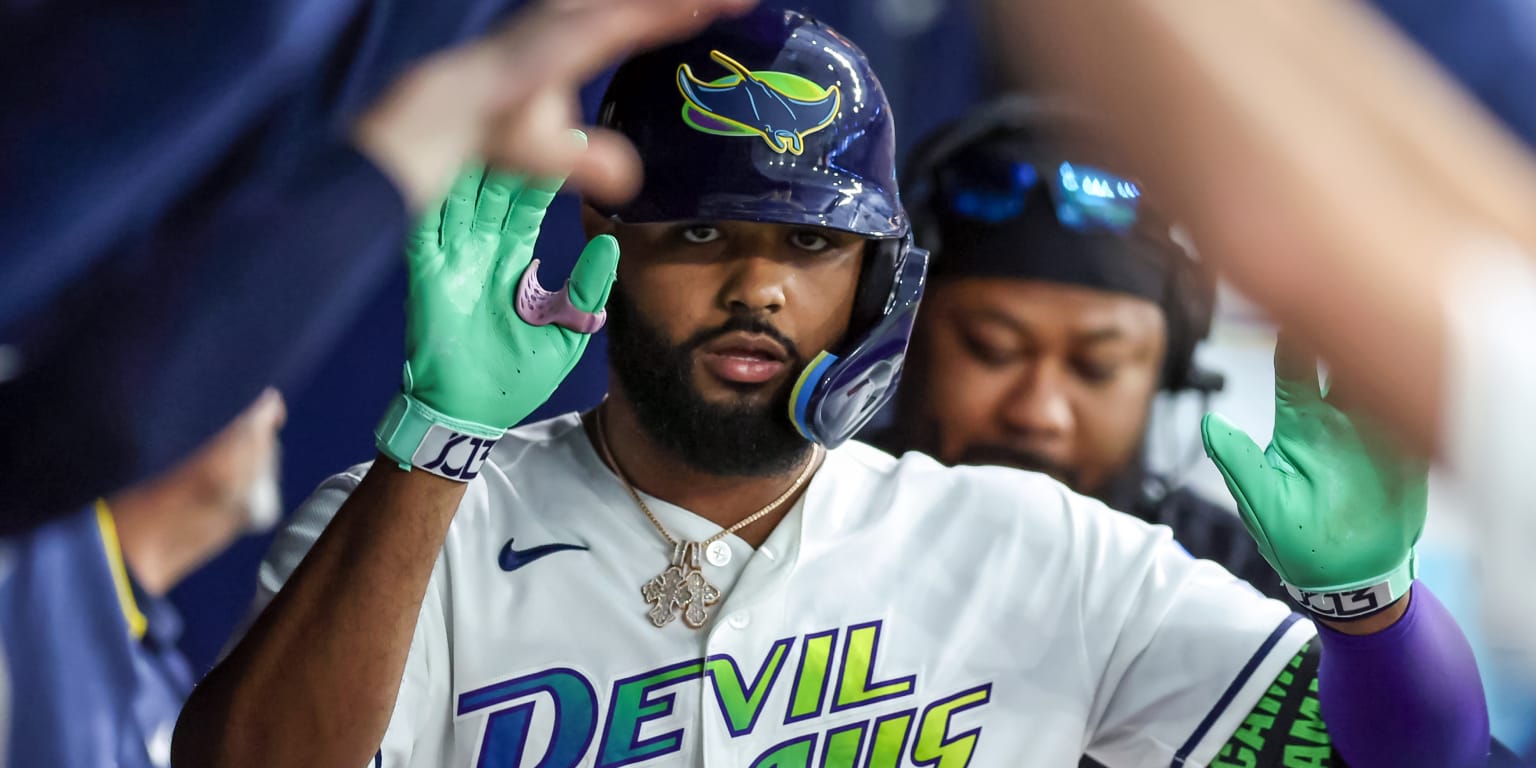
Junior Caminero hit his 30th home run on Friday night, drilling a full-count sinker from Erick Fedde in the fourth inning of the Rays' loss to Chicago. The 109.5 mph shot off the Tropicana Field catwalk was projected at 453 feet—his second-longest blast of the season—and it moved him into rarefied air: only the fourth player in franchise history to post multiple 30-homer campaigns, and only the second Ray ever to hit 30+ in consecutive seasons alongside Carlos Peña (2007-09). The milestone is more significant because of Caminero's age: at 23 years and 26 days old when he reached 30 homers, he became the sixth-youngest to accomplish the feat, trailing only Miguel Cabrera, Albert Pujols, Jimmie Foxx, Eddie Mathews, and Giancarlo Stanton.
Caminero's power consistency tells a story the raw home run count alone doesn't capture. After a 12-game drought that ended Friday—his second-longest of the season—he still maintained a 45-homer pace last year and remains on track for similar output this season. The gap between his 45 homers in 2025 and his current 30 suggests his barrel-contact mechanics remain intact despite the normal volatility of young sluggers in their early twenties. His 109.5 mph exit velo on the Fedde shot isn't a one-off; it reflects his sustained ability to generate elite bat speed in high-leverage counts. That consistency is the differentiator between a breakout season and a breakout player.
For Rays bettors, this matters because Caminero's presence in the cleanup or DH spot changes the team's run-generation profile game-to-game. Tampa Bay's offensive ceiling has historically been modest relative to power-rich lineups—the team lacks the headline names of Houston, Philadelphia, or New York. But a 23-year-old entering his third year with consecutive 30-homer seasons is a legitimate anchor. When Caminero reaches the plate in run-scoring situations, the probability of runs crossing jumps materially. His HR/PA ratio (one homer per 9.7 plate appearances based on his 30 homers through late July) sits comfortably above league average for a corner infielder, and that rate stabilizes across consecutive seasons—a behavioral marker, not noise.
The betting implication is straightforward: Rays team totals and run lines carry hidden value when Caminero is in the lineup against pitchers who don't neutralize his approach. Fedde was hit for his fourth home run in six innings Friday, signaling he wasn't executing his game plan. Against starters who lack strikeout-inducing stuff in the zone—fastball-heavy hurlers, in particular—Caminero's power translates directly to run production. The market has likely priced Caminero as a solid third-baseman talent, but not yet as a franchise cornerstone capable of single-handedly widening a run line. Over the remainder of July and August, lean toward modest overs on Rays team totals when he faces contact-rate pitchers, and treat his solo home run prop (typically 0.5) as a lean-over target. His two consecutive 30-homer seasons aren't a statistical blip—they're the foundation of a more explosive Tampa Bay offense than conventional wisdom accounts for.