Cubs Rotation Collapse Accelerates: Cabrera's Blister Signals Emergency-Level Pitching Depth
By Erik Schwartz ·
Edward Cabrera's early exit with a blister injury leaves Chicago's starting rotation in freefall, with three key arms already sidelined and velocity red flags emerging before the injury forced him out.
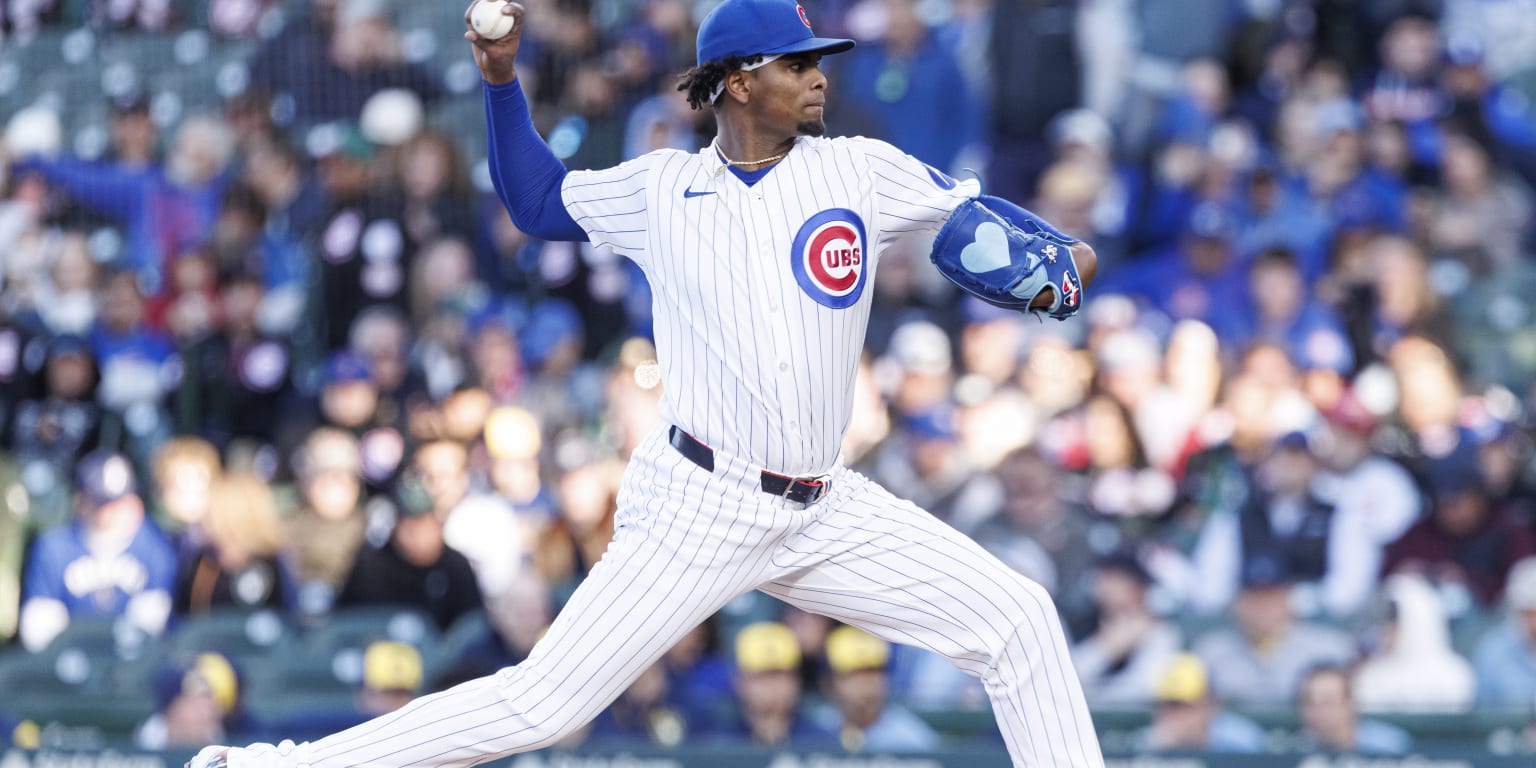
Edward Cabrera lasted three-plus innings Wednesday night against Milwaukee before a blister on his right middle finger forced him from the mound—and the timing couldn't be worse for the Cubs' battered pitching infrastructure. The injury itself ranks as manageable on the severity scale, but the context reveals a rotation in genuine crisis. Chicago is already without Matthew Boyd (left knee) on the 15-day IL, has lost Cade Horton for the season to right elbow surgery, and won't see Justin Steele back until deep in the second half with a left flexor strain. One pitcher is not a catastrophe. Three key arms gone simultaneously becomes a staffing emergency that reorders how the Cubs approach both their ceiling this season and their bullpen workload going forward.
Cabrera's performance against Milwaukee exposed another layer of concern beyond the injury itself. His fourth-inning fastball clocked 92.5 mph—a meaningful dip from his 95.5 mph average in that start and well below his 95.7 mph season baseline. That velocity decline isn't noise; it's a diagnostic signal that something was already compromised before the blister became symptomatic enough to pull him. His strikeout rate has slid to 21.3% this season from 25.8% last year with Miami, another indicator that his stuff has not translated cleanly to his Cubs debut. In his 10 starts, Cabrera has posted a 4.00 ERA across 54 innings—serviceable, but not the breakout continuation Chicago signed up for after his strong Marlins campaign.
The Cubs' bullpen now absorbs responsibility for innings that should belong to a healthy rotation. Trent Thornton replaced Cabrera in the fourth inning of a game already tilted toward Milwaukee, and with three rotation anchors offline, the relief corps will face a heavier usage trajectory through the season. That's the hidden cost of rotation depletion—not just the missing wins, but the compounding fatigue on arms that were already tasked with high-leverage work. For bettors tracking Cubs totals and run-line exposure, the pivot matters significantly.
For prop wagering, Cubs team totals deserve downward pressure for their upcoming starts against quality opponents. The rotation depth chart now reads as makeshift at best. Cabrera's K prop should be approached with caution if he returns within the next week or two—his velocity baseline may not stabilize immediately post-blister, and strikeout upside correlates directly with fastball velo he's already lost. More broadly, any Cubs pitcher starting for the next month operates without the comfort of a traditional backup plan. When a rotation has three regulars sidelined and a fourth showing velocity decline in his fourth-inning exit, the starting pitcher's workload becomes binary: succeed, or the bullpen absorbs a spike in usage. That binary calculus favors fading Cubs overs on team totals until the injury picture clarifies.