Buxton's Hip Impingement Enters Fourth-Game Stretch; Twins Offense Absorbing the Loss
By Ty Whitney ·
Byron Buxton has been out of Minnesota's lineup since June 28, and while the Twins have maintained offensive output without their star center fielder, the absence of his elite bat and baserunning presence is beginning to show up in variance metrics.
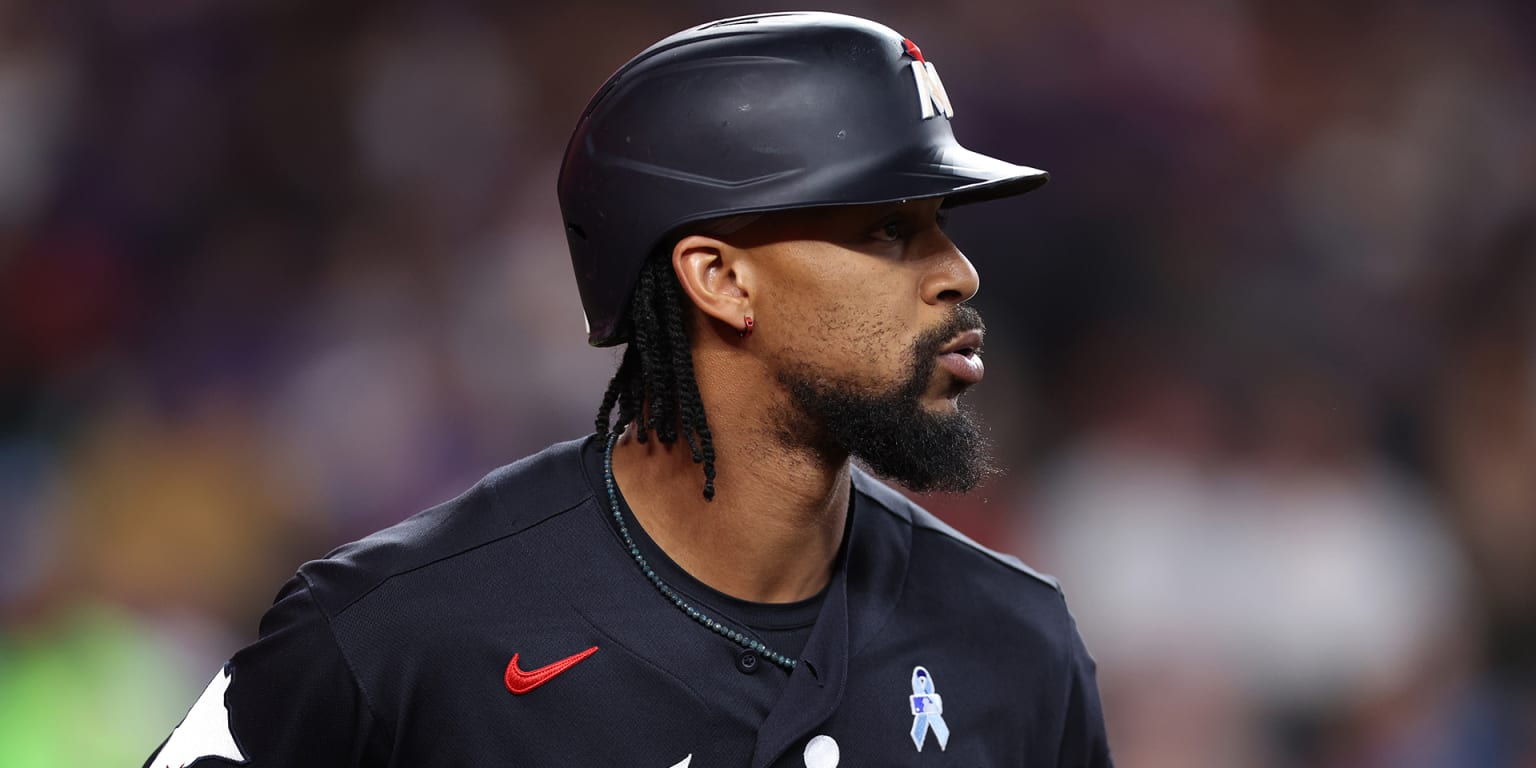
Byron Buxton sat out his fourth consecutive game Friday at Yankee Stadium, continuing to nurse a right hip impingement that has sidelined him since June 28 — five days ago. Manager Derek Shelton indicated the club is monitoring Buxton day-to-day after an off-day Thursday, with hopes of "seeing where we're at" before making further decisions. The injury traces back to last weekend's series against Colorado, when Buxton felt his swing deteriorate mid-at-bat; an MRI followed, and the resulting diagnosis pointed to hip impingement rather than a muscle tear. Buxton's own assessment was telling: his body had locked down his rotation, he said, to protect against a lat strain. That's a defensive posture, not a healing one.
The timing is cruel. Buxton entered the break hitting .268/.325/.573 with 25 home runs across 73 games — an .898 OPS that puts him in legitimate MVP consideration and has made him a lock for his third All-Star selection (announced Saturday, July 5). He represents one of the few pure power-speed threats in baseball, and his absence removes both dimensions from Minnesota's offensive arsenal. That the Twins scored 17 runs across their three-game Houston series and are averaging 4.88 runs per game (sixth in MLB on the season) tells you something important: the loss of Buxton has not yet dented the aggregate output. Ryan Kreidler, the backup, has started four straight games in center field and has not embarrassed himself. But aggregate scoring masks internal rotation.
What the box score doesn't capture is how the Twins are scoring without Buxton. His absence eliminates a threat that commands its own leverage — a batter defenses scheme around, a runner who manufactures extra bases on his own. Without him, Minnesota becomes a more linear, contact-oriented offense dependent on generating runs through conventional plate appearances rather than explosive individual efforts. This is the mechanical shift that matters for prop pricing: team totals priced on recent output (which includes Buxton's full contribution) may not account for the structural change in how the Twins generate runs when he's unavailable.
Markets have had three games to adjust to a Buxton-less Twins offense, and they likely have — opening lines Friday reflected the known absence. The real question is durability. If Buxton misses another 5-7 games, the gap between his contribution rate and the baseline Kreidler replacement becomes material. Minnesota's run-scoring profile assumes Buxton delivers explosive moments; without him, the team regresses toward a more predictable middle. For bettors, this means leaning toward unders on Twins team totals in the 4.0-4.5 range for as long as Buxton remains shelved. The recent 17-run series was an outlier that benefited from facing a weak Houston rotation; the 4.88 run average is propped up by games where Buxton was healthy. Expect tighter clustering around 4.0-4.2 runs per game in his continued absence, especially when Minnesota faces competent starting pitching.
Shelton's language — "day-to-day," "we'll see where we're at" — suggests no clear timeline for return. An All-Star Game (July 15-16) followed by roster expansion on July 28 gives the Twins a window to rest Buxton without losing significant leverage. But every additional game he misses erodes the structural assumptions built into preseason totals. Watch the announcement timing Saturday; if Buxton is named a starter (which is likely given his numbers), expect the narrative to pivot toward "star power returning soon," and market pricing may overshoot optimism. That's your entry point for fading the over.