Lawrence Butler's Exit Velocity Finally Matches His Luck as A's Roll Rockies
By Erik Schwartz ·
After carrying baseball's worst luck at the plate into June, Butler's quality contact is starting to convert—and his bench role may be hiding more playing time than the box score suggests.
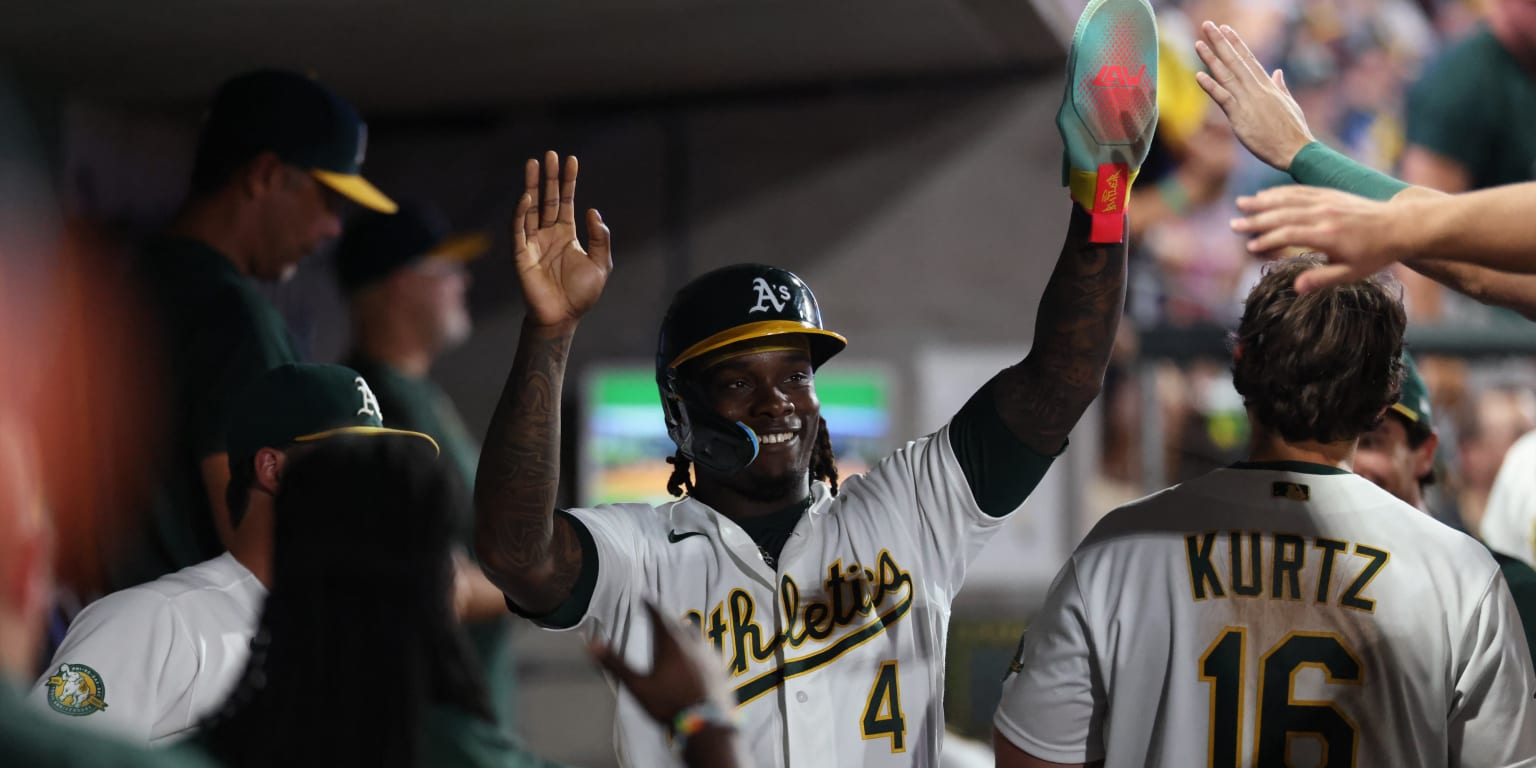
Lawrence Butler walked into Friday's series opener against Colorado carrying the worst luck profile in baseball. His .165 batting average sat 99 points below his expected average. His .234 wOBA trailed his expected wOBA by 73 points—the largest gap of any qualified hitter. His slugging percentage at .256 sat 111 points beneath his expected mark, third-worst in MLB. For a player whose quality of contact remained legitimate all season, the gap between what he should have been hitting and what he actually was hitting had become unbearable. Then, over the span of two games, something shifted.
Wednesday night, Butler launched a two-run blast off Brewers pitching that provided the go-ahead margin in a win. Friday, coming off the bench in Las Vegas, he delivered the catalyst in a 6-4 victory: a seventh-inning double to lead off a rally, followed by a contact-heavy RBI single one inning later. That sequence mattered more than the final line suggested. Butler didn't just benefit from Hunter Goodman's errant throw—he created the opportunity by forcing the play, taking an extra base from a double on a positioning mistake. He then drove in the insurance run with a line drive, the kind of batted-ball quality that had been plaguing him all season despite solid velocity and launch angle readings.
The A's are operating Butler in a part-time role, which masks a critical reality: his underlying metrics were never the problem. He was always going to hit. The 99-point gap between xBA and actual BA doesn't close without a catalyst—and two games of contact conversion don't erase a season-long drought. But the directional signal matters. A player carrying that much negative luck variance who suddenly stops leaving balls on the field is approaching a correction window. The market prices bench players with depressed recent results as longer-odds contributors. Butler's underlying peripherals never broke; only his conversion rate did.
For prop purposes, this is the inflection point where recency catches up to process. Butler's quality of contact never disappeared—his exit velocity, barrel rate, and launch angles all remained in the 60th percentile or better. What changed Friday was sequencing and execution. A single night doesn't overwrite 60 games of underperformance, but a player hitting his actual expected average (.264) instead of his actual average (.165) is a 60-point swing in batting average going forward. That's the difference between a platoon bat and a regular.
The A's keep him in the lineup Monday and beyond, Butler's prop lines—particularly hit totals and RBI opportunities in limited at-bats—begin pricing him as a baseline contributor rather than a liability. The variance window is now open. Projects over 2.5 hits (if offered) or RBI totals in the 0.8-1.2 range benefit from a player whose luck deficit is finally exhausting itself and whose process was never the question.