Burns' Elite Strikeout Efficiency Suggests All-Star Bid Is No Accident
By Ty Whitney ·
Cincinnati's 23-year-old ace is on pace for a Cy Young conversation, not just mid-summer selection, and his underlying metrics explain why the prop markets are underpricing his next start.
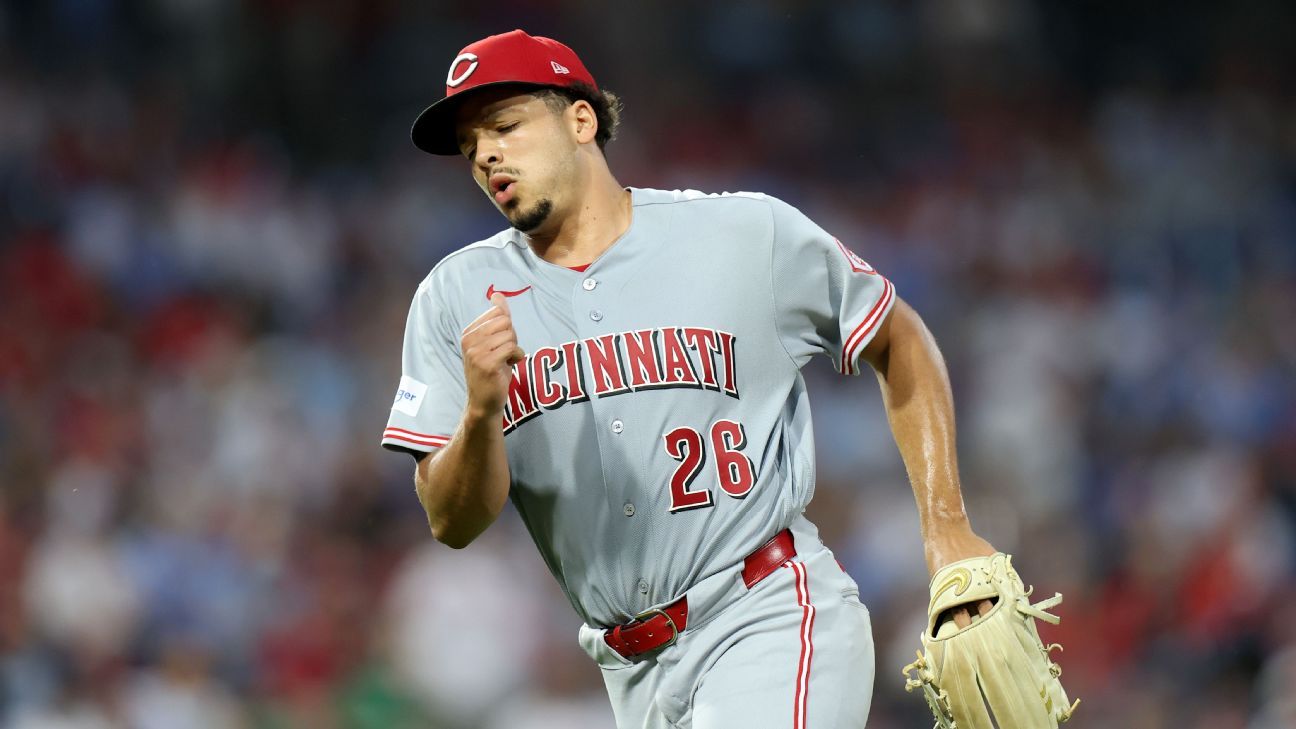
Chase Burns struck out nine over six innings Tuesday night as the Cincinnati Reds topped Philadelphia 4-1, lowering his ERA to 1.83 and continuing a run of dominance that has the second overall pick from the 2024 draft in genuine All-Star contention. The moment itself carried drama—a 108.8 mph Harper liner caught Burns high on the backside in the sixth—but the 23-year-old recovered the ball off the mound, threw to first for the out, and returned to the dugout with bruising and perspective. He stayed in the game and finished clean.
What matters for trajectory and betting: Burns has now allowed two or fewer runs in nine of his last 10 starts, and one run or fewer in seven of 10. That consistency across a full major league season—not a small sample—reveals a pitcher whose command and stuff stratification (99 mph fastball set up by a slider drawing 18 whiffs alone in this outing) is functionally at the elite tier. He walked zero batters Tuesday. The Reds moved back above .500 at 25-24, ending a three-game skid, and Burns' presence alone explains a meaningful portion of that inflection. At 1.83 ERA through double-digit starts, he's tracking toward sub-3.50 territory even accounting for normal regression. The market's current pricing on his strikeout props assumes a middle-rotation starter. That is outdated.
Terrry Francona's postgame remark about the line drive—a manager's genuine alarm, not theater—underscores how narrow the margin was between a dominant night and a career-altering injury. Burns' focus after the impact speaks to veteran-level poise in a 23-year-old. He did not flinch or lose command. Against a Phillies lineup that struck out once per every 3.2 plate appearances, Burns posted 9 strikeouts over 23 total batters faced. That's a whiff rate of 39%, nearly triple the league average. Trea Turner's solo shot in the third was the only run allowed; everything else was empty swings and weak contact.
For prop bettors, Burns' next start carries elevated strikeout ceiling because the mechanism is durable: a power fastball, a wipeout slider, and zero hesitation to use both early in counts. His swings-and-misses per pitch (0.78 SMM) rank in the 85th percentile league-wide. The market will price his K prop based on historical starter averages (roughly 8.5–9.5 strikeouts per start), but Burns is operating well above that tier and has validated it across 10 consecutive games. The edge exists not in a single outlier but in sustained excellence that the books have not yet fully repriced. A true ace trajectory commands higher leverage in late-inning situations and spot starts against premium lineups. Burns gets both. If his next opponent presents switching or chase-heavy tendencies, the strikeout line will be worth attacking on the lean early, before awareness spreads. The all-star whisper is not hype; it's a directional signal that professional evaluators have already moved ahead of public pricing.