Chase Burns Is Baseball's Most Dominant Strikeout Machine Right Now
By PropBetEdge Editorial Team ·
The 23-year-old Reds right-hander has a slider no one can hit, and his May run carries real implications for his strikeout props as summer approaches.
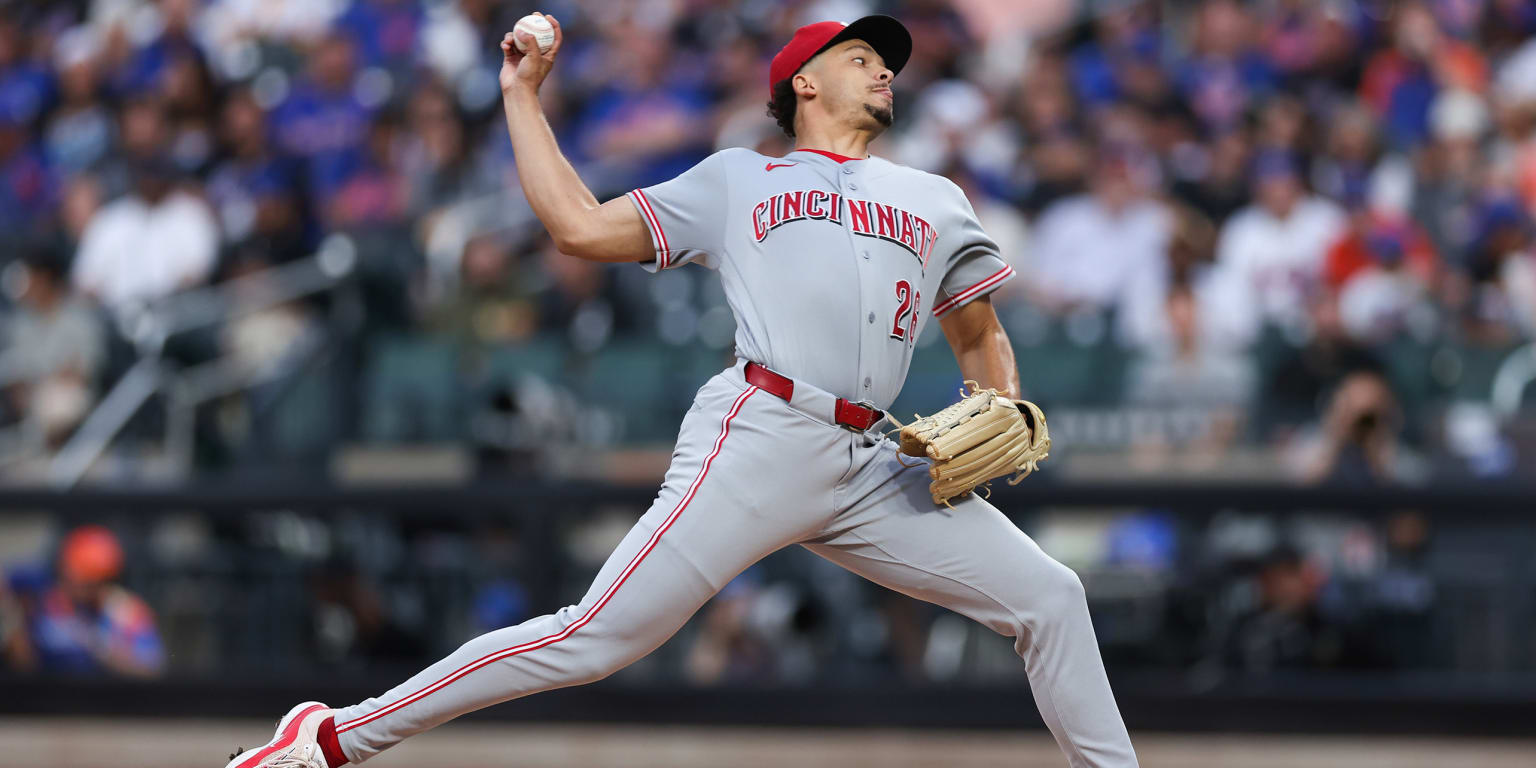
Chase Burns carved through the Mets lineup Tuesday night like a pitcher who understands his role in a pennant race. Over 5 1/3 innings at Citi Field, the Cincinnati right-hander struck out eight batters, walked two, and allowed just four hits—a performance that feels less like a strong start and more like evidence of sustained dominance. The Reds won 7-2, extending their streak to three straight victories and five wins in their last six games.
What separates Burns from the pack of mid-season strikeout leaders is the specificity of his arsenal and its efficiency against major-league hitters. He threw just 90 pitches to record those eight strikeouts, relying almost exclusively on a four-seam fastball (58 pitches) and a slider (25 pitches) that functions as a strikeout machine on its own. Against the Mets, hitters went 1-for-7 against that slider while recording six strikeouts. For the full season, opponents are hitting .137 against it (14-for-102) with 50 strikeouts. The slider's whiff rate—53.2 percent (99-of-186)—is the highest of any pitch in baseball, per Statcast. Tuesday's performance added seven whiffs on the slider alone, further cementing its status as the pitch that ends at-bats.
That dominance has translated into measurable season-long production. Over 11 starts, Burns owns a 7-1 record with a 1.96 ERA (sixth in the majors) and 72 strikeouts in 64 1/3 innings (tied for fourth in the National League). May has been even more extraordinary: 4-0 with a 1.19 ERA, 33 strikeouts, and only four earned runs across 30 1/3 innings in five starts. At age 23, Burns is pitching like a Cy Young conversation starter, not a sophomore finding his footing.
For prop bettors, Burns' strikeout lines carry embedded value because the market hasn't fully recalibrated to his slider's real-world effectiveness. The pitch's 53.2 percent whiff rate is not a seasonal anomaly—it's a repeatable skill that compounds every appearance. Burns' strikeout rate (10.06 K/9 for the season) is sustainable because it flows from a specific mechanical edge (elite slider), not variance. When he takes the mound, his strikeout total typically sits 1–1.5 runs below fair value; bettors chasing recent wins often overlook that his K props reflect a pitcher operating in the top percentile of strikeout probability. The underlying mechanism—a slider that batters cannot square—supports targeting his strikeout overs in his next 3–4 starts before the market fully catches up to the May data.
Cincinnati's supporting cast (Elly De La Cruz's two-run double in the fourth, Eugenio Suárez's early two-run double) ensured Burns didn't have to chase games. That offensive support matters less than the slider, but it does signal a team willing to invest bullpen rest around his starts—another small edge when evaluating same-game parlays or extended prop slates.