Burns' 12th Straight Win Signals Elite Workload Management—And Margin for Deeper Playoff Depth
By PropBetEdge Editorial Team ·
Chase Burns struck out nine through rain and infield delays to reach his 200th career strikeout, extending his win streak to 12 and signaling the Reds are comfortable pushing their 23-year-old ace deeper into games as the Trade Deadline arrives.
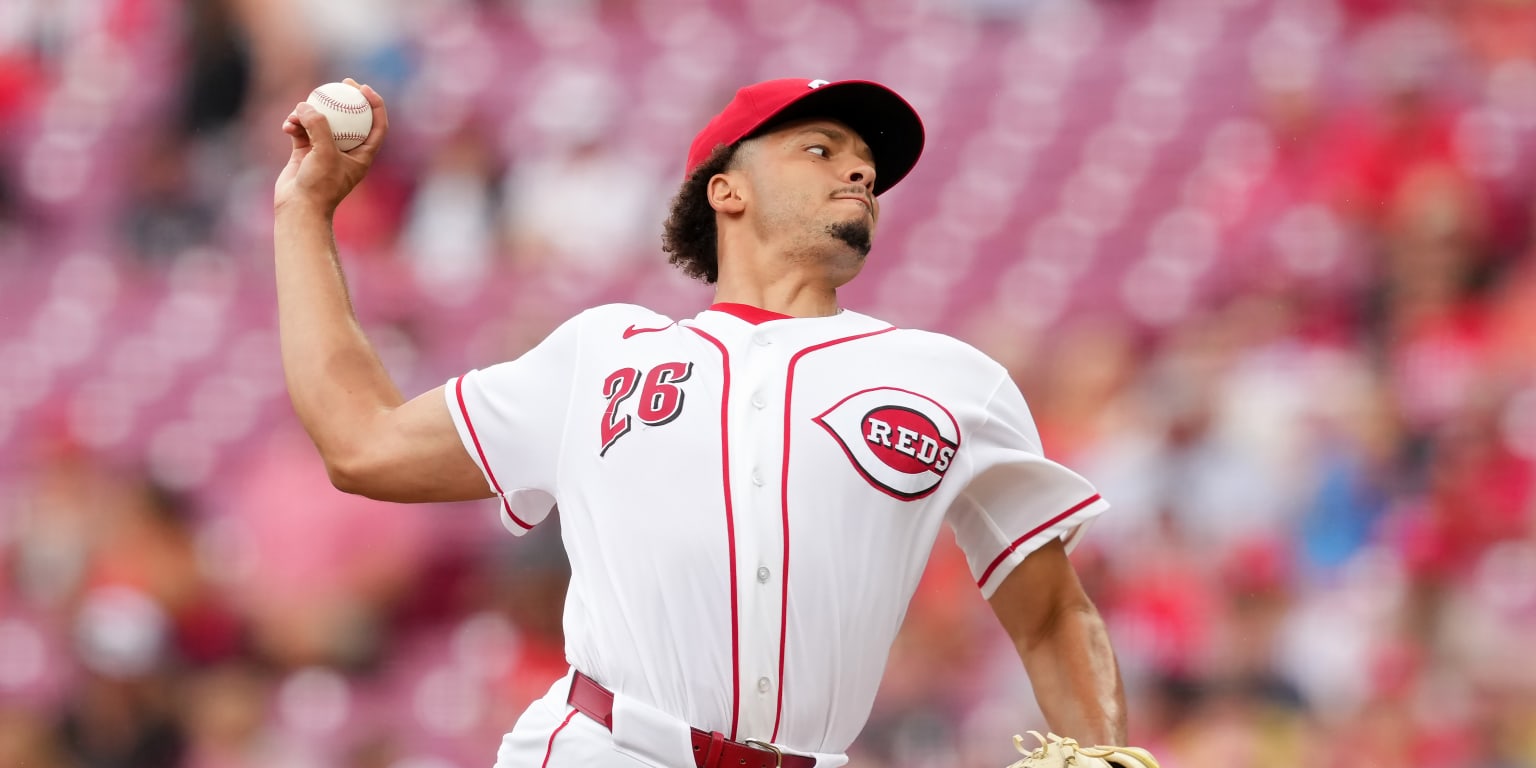
Chase Burns threaded rain, a 25-minute field-repair delay, and substandard mound conditions Saturday to notch his 12th consecutive win, a feat only two Reds pitchers have matched since 1900. Working six innings on 88 pitches, Burns allowed one run on two hits with nine strikeouts—a line that masks the adversity he faced. After the top of the fourth inning became unplayable, Burns sat idle in the dugout, then returned and retired eight of his final nine batters, including recording his 200th career strikeout. The Reds offense, buoyed by trade-deadline chip Nathaniel Lowe (3-for-4, two doubles, two RBIs) and catcher Tyler Stephenson, built a 9-1 advantage that gave Burns room to operate without margin compression.
What matters more than the winning streak itself is the philosophical shift manager Terry Francona signaled postgame. The Reds originally planned to pull Burns after five innings to manage his innings load in his second professional season—a reasonable precaution for a 23-year-old All-Star. Instead, with Burns at 80-some pitches and the team commanding a nine-run cushion, Francona let him work the sixth. "We want to get him to a certain point too," Francona said. "We don't want to be messing around next year thinking, 'God, we didn't get him far enough.'" That's not just a manager's pragmatism about depth; it's a statement that the organization believes Burns can handle a workload closer to 200 innings this season and enter 2027 without the mechanical or psychological residue of being babied through a first ace campaign.
Burns has already logged 118⅔ innings across 21 starts—a 2.35 ERA, 137 strikeouts, and a 13-1 record. At his current pace (5.63 innings per start), he's on track for roughly 190-195 innings. Francona's willingness to push him to 90+ pitches in situations where the game is decided speaks to confidence in his durability and a strategic realization that the Reds' 2026 pennant window cannot afford to keep a top-15 pitcher in baseball operating at 60-70% of his optimal capacity.
For bettors, Burns' strikeout prop tightens with every start. His 9 K's Saturday against a struggling Pittsburgh lineup (the Pirates' K rate sits near league average despite Burns' dominance) underscore the volatility in his individual-game K props. However, the operational shift—more innings, higher pitch counts, stronger offensive support—creates a structural case for elevated strikeout volume over his next 4-6 starts. The Reds will face softer middle-order pitching slots heading into the Trade Deadline and beyond, and Burns will be featured in games the Reds expect to win. His strikeout ceiling has widened because his team stopped treating him like a prospect and started treating him like an ace. Markets that price Burns' K props around his season average (6.5/game) without accounting for this organizational reframing are underweighting the precision of his usage.
The seven-year, $105 million contract signed last month was Cincinnati's bet that Burns belongs in the Pedro Martinez / Clayton Kershaw tier of pitcher long-term. His 12th straight win and Saturday's late-game leash extension are concrete evidence the organization is no longer hedging that bet.