Cooper Pratt's Milwaukee Debut Reshuffles Brewers Infield Depth
By Ty Whitney ·
A $50.75M extension signals Milwaukee's commitment to Pratt as a cornerstone bat—and immediately forces a ripple through daily lineup construction and platoon dynamics.
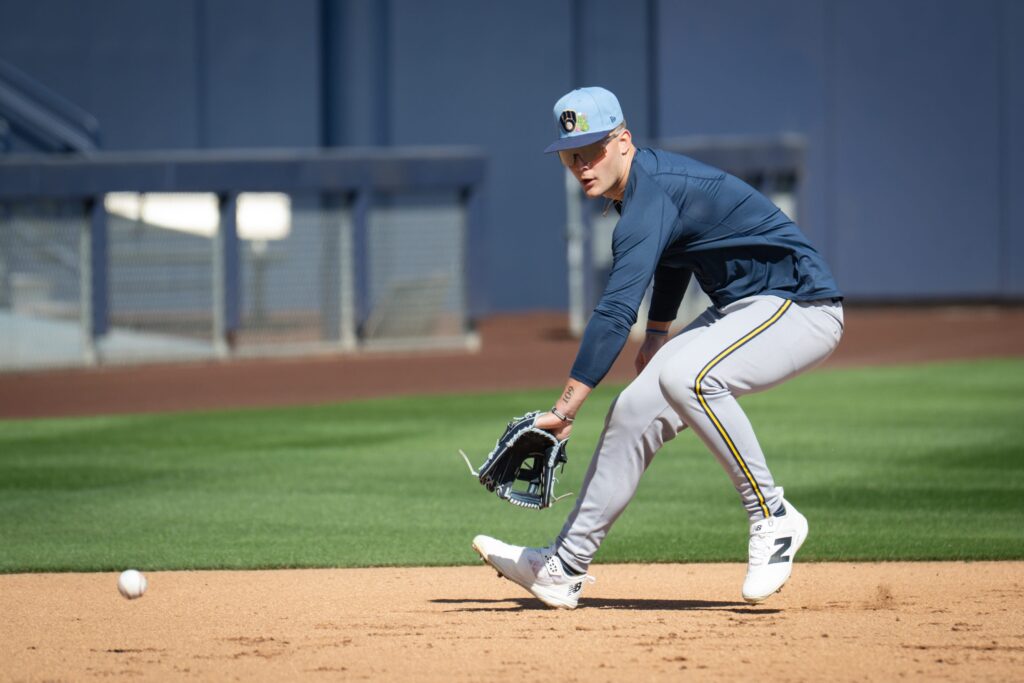
The Brewers promoted Triple-A infield prospect Cooper Pratt to the major leagues on Sunday, completing a promotion that had been telegraphed across social media during Nashville's game when teammates were spotted congratulating him in the dugout. The move arrives roughly six months after Pratt inked a $50.75M extension at the start of the 2026 season—a contract size that signals Milwaukee's front office had already made an internal valuation decision before Pratt threw a pitch in the majors. That kind of financial commitment in-season is not casual roster tinkering.
Pratt's debut forces immediate competitive questions about Milwaukee's infield alignment. The Brewers were already carrying established options in the corner positions; a prospect-to-big-leagues promotion at $50.75M doesn't happen unless the organization believes he's ready for regular work and possibly premium lineup placement. The extension amount—roughly double what a pre-arb player would earn annually—tells you the team is projecting him as a multi-year contributor, not a September fill-in or a depth swing. That conviction matters for daily prop construction because organizations don't overpay in the contract space unless they intend to deploy the asset.
From a betting lens, Pratt's immediate playing time is the hinge pin. If Milwaukee slots him into the lineup daily (particularly in batting-order spots three through six), his early-season performance carries elevated variance—new pitcher scouting, first-month adjustment curve, small-sample noise. But the extension triggers a secondary effect: if the Brewers are willing to allocate $50.75M to a prospect-turned-rookie, they are also telegraphing confidence in his plate discipline and power profile. Teams that back young hitters with that capital typically do so after internal metrics (exit velo, barrel rate, walk rate in the minors) have cleared certain thresholds. The market tends to price debuts conservatively (overs on strikeout props, unders on hit/RBI lines), especially for players with minimal major-league exposure. Pratt's contract size is a counterweight—it's the team's own bet that his floor is higher than the consensus line might assume.
The most actionable edge centers on Brewers team totals and batting-order construction for the coming week. If Pratt enters the lineup immediately in a middle-order slot, Milwaukee's team total in contests where he plays could drift slightly upward relative to pre-promotion lines. His defensive position (infielder, exact role TBD) and platoon split will matter, but the extension signals that scouts see a hitter with above-average hit probability and power upside. When a $50M-plus extension shows up in a major-league box score for the first time, the market has typically underpriced the contribution because it only had minor-league comps to work with. The team's own money already moved. That's worth monitoring on early Brewers totals before the market catches up to the internal valuation.