McCullers Hits the Market: Why Veteran Innings Now Carry Uncertainty
By Erik Schwartz ·
A veteran right-hander's release opens the Brewers' rotation to shorter-term inconsistency and reshuffles late-season bullpen load distribution.
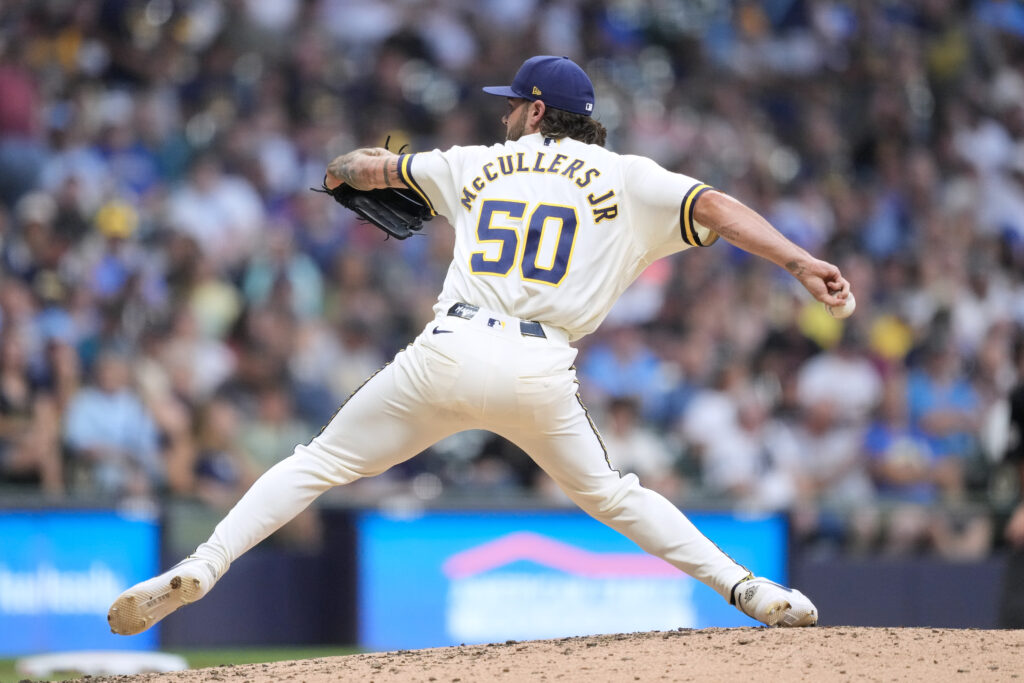
The Brewers designated Lance McCullers Jr. for assignment on Sunday, officially releasing him Monday and clearing him to free agency once he passes through release waivers. The move signals Milwaukee is consolidating payroll or rotating depth in its rotation — either way, McCullers is now available to any contender willing to sign him, or he may sit idle through the final two months of the season.
McCullers' departure removes a veteran innings-eater from a Brewers rotation that, by late July, has already logged significant usage from its primary starters. A righty with 300+ career innings experience who can work five-to-six frames and limit hard contact represents real value to teams in the stretch run, particularly those banking on playoff depth. If McCullers clears and signs elsewhere — most likely with a contender — his new team gains a mid-rotation option without surrendering prospect capital. If he remains unsigned, the Brewers' depth is thinner.
For Milwaukee specifically, losing McCullers creates a domino effect. The rotation now leans harder on its top-two arms and forces earlier relievever deployment in games McCullers would have started. That elevated bullpen usage translates directly into increased leverage situations for closers and setup men: more innings pitched per game, earlier in the count, against batters facing fresh arms. The Brewers' closer — whichever reliever Milwaukee names to that role — will face slightly elevated workload density over the final 55 games. Unders on their team total become modestly riskier because bullpen fatigue compounds across a series, and overreliance on elite arms in non-save situations historically correlates with blown leads late.
From a prop perspective, any Brewers starter not named Burnes or Corbin faces a subtle but real edge on strikeout totals over the next 3-4 weeks. Shorter leashes and earlier hook points mean fewer innings pitched per start, which mechanically depresses strikeout volume even if K-rate per inning holds steady. A pitcher averaging 5.8 innings per start who suddenly gets pulled at 5.0 loses 8-12% of his strikeout opportunity. If sportsbooks price Brewers mid-rotation K props using season-to-date per-start baselines, they're underweighting the likelihood of reduced workload. Conversely, Brewers team totals and spread prices may already account for rotation uncertainty — books adjust fast to staffing news — so betting against Milwaukee's team total is a fade of what's already priced, not an edge. The real angle is in individual pitcher props: leaner innings, same strikeout line = unders become marginally advantaged.
McCullers himself, if signed by a contender, becomes a streaming play for strikeout upside in leagues that permit mid-season pickups. A low-usage recent release often enters a new organization with extended run support and fresh arm angle against unfamiliar offenses. His first 2-3 starts as a new team's pitcher carry elevated uncertainty — both opportunity and variance. Bettors should monitor waiver wire movement closely; the moment he signs, his first appearance line will likely be soft, priced with modest strikeout volume precisely because he's unproven in his new context. Early-window value often emerges in that setup.