MLB
Brewers Shed Wilson's Innings as Richardson Steps In—What Changes in the Bullpen
Milwaukee's decision to cut Bryse Wilson despite a clean outing signals a deeper bullpen philosophy shift tied to workload management during a compressed schedule.
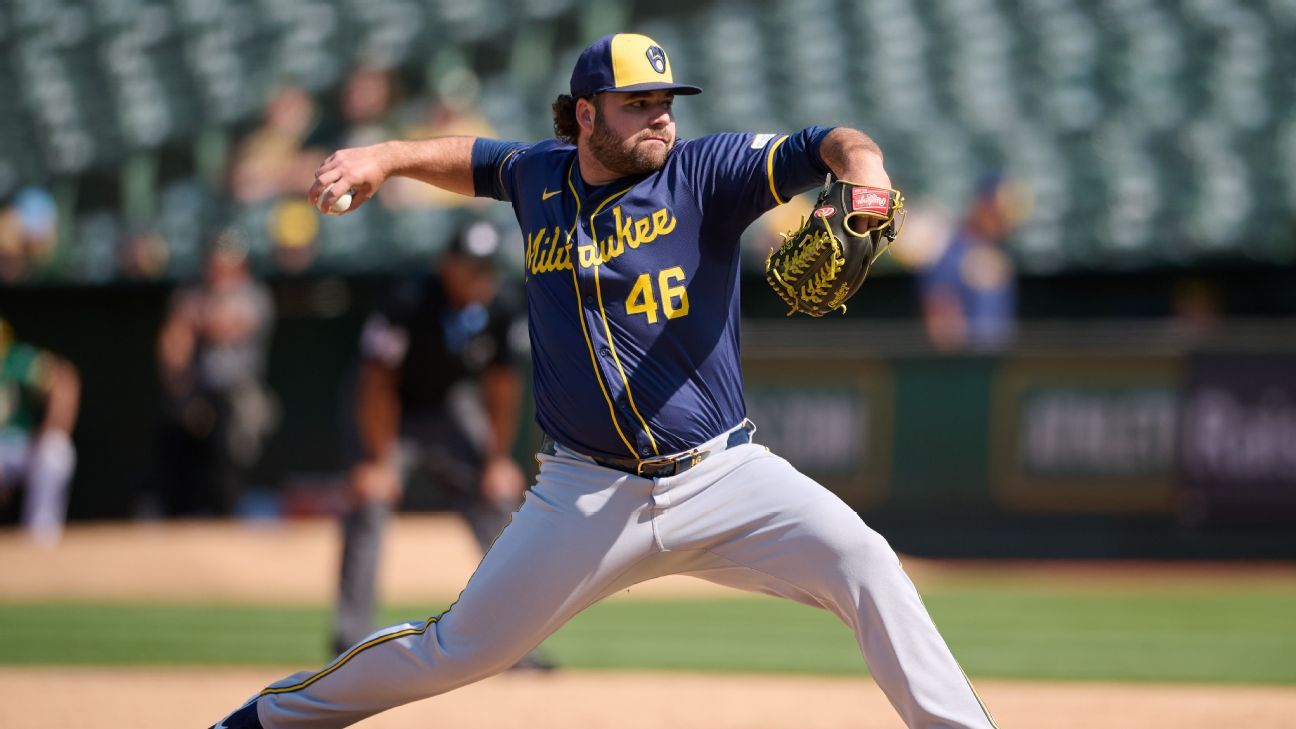
The Milwaukee Brewers designated reliever Bryse Wilson for assignment Saturday and promoted Lyon Richardson from Triple-A Nashville, a roster move that on its surface reads as routine—a struggling arm out, a fresh body in. But manager Pat Murphy's own words reveal the real calculus: the team is running a six-man starting rotation while grinding through 17 games in 17 days, and Wilson's workload, not his performance, has become the bottleneck.
Wilson's résumé in Milwaukee carries weight. He was part of the 2023 and 2024 NL Central championship teams and arrived in this year's bullpen with credibility. In six appearances with the Brewers this season, he's 0-0 with a 2.63 ERA—legitimately useful work. On Friday night against Minnesota, he threw three scoreless innings and allowed only one baserunner. By any functional measure, he'd earned another inning. The Brewers removed him anyway.
What triggered the move is the fixture: Milwaukee is staring down a relentless schedule with no margin for rest. A six-man rotation spreads starting-pitcher innings across more arms, which means the bullpen sees more action per game—more pitches thrown, fewer off-days between appearances. Wilson, having already logged six appearances, was approaching a workload threshold that the Brewers deemed unsustainable over the next two weeks. Richardson, a 26-year-old right-hander fresh from Nashville with a 4.20 ERA in 13 games there, arrives as the canary—a low-innings-count arm available to absorb usage that Wilson can no longer handle without injury risk.
For betting purposes, this move clarifies Milwaukee's bullpen construction over the compressed stretch ahead. The Brewers are prioritizing depth-of-arm over sustained individual contribution, which means pitchers are likely to see shorter leashes and more frequent changes. Bullpen ERAs tend to inflate when usage gets fragmented—fewer stretches where a single reliever locks in a scoreless inning or two, more transitions and fresh-arm cold starts. Any Brewers-related under bet on team total or individual reliever performance over the next 14 days should account for the volatility baked into a six-man rotation paired with rapid-fire scheduling. Wilson's exit also opens 20+ more innings of bullpen availability this season, a material supply shock that increases the probability of weaker arms seeing critical situations.