Brewers Promote Luis Lara: A Top-100 Prospect Arrives Mid-Season With Power Spike
By Ty Whitney ·
Milwaukee's highly paid young outfielder enters the majors after a breakout Triple-A campaign that rewrites his offensive profile — and creates a near-term lineup volatility angle worth tracking.
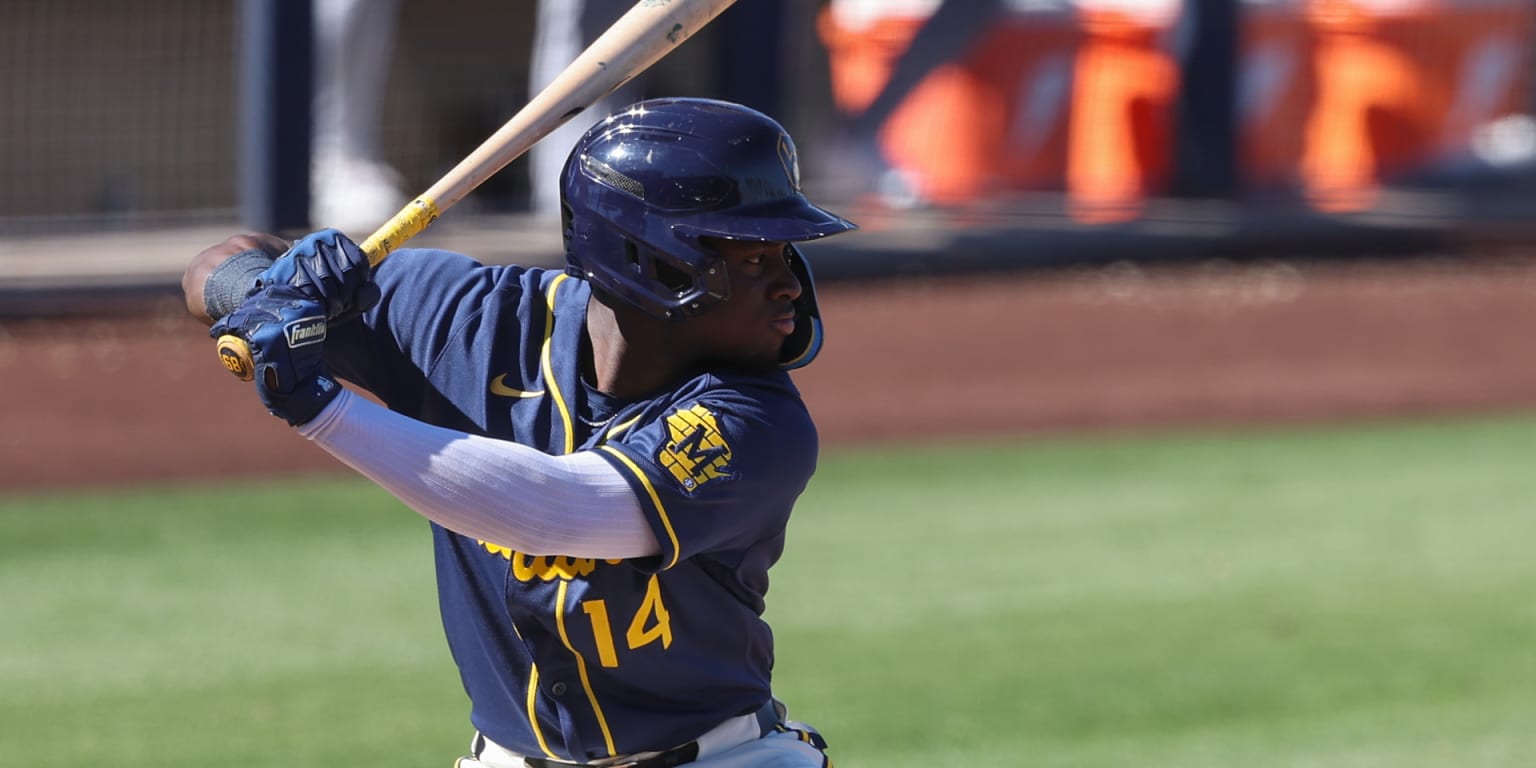
The Brewers called up Luis Lara from Triple-A Nashville on Tuesday, inserting the 21-year-old Venezuelan outfielder into the majors after signing a seven-year, $31 million extension earlier this season. The team's No. 4 prospect and MLB Pipeline's No. 67 overall prospect replaces Blake Perkins on the active roster, with lefty Robert Gasser added as the 27th man for a doubleheader against St. Louis. The move arrives amid injury complications—utility man David Hamilton exited Monday's win with left hamstring tightness, narrowing the Brewers' offensive flexibility.
Lara's 2026 campaign at Nashville fundamentally rewrites what scouts and analysts thought they knew about his ceiling. In 78 Triple-A games, he's posted a career-high .902 OPS with nine home runs—more than he hit across his entire four-year minor-league tenure before this year. He's primarily played center field (69 starts), with seven right-field appearances and two DH shifts, indicating the Brewers view him as a defensive centerpiece, not a utility fill. That power spike is the headline: a player who was a speed-and-contact prospect suddenly generating exit velocity and pull-side authority at an elevated rate suggests either a mechanical correction that took time to mature, or a developmental environment (coaching, strength training, competition level) that unlocked latent tools.
From a roster construction angle, Lara's call-up signals Milwaukee's willingness to inject youth and offensive upside into the lineup despite mid-season positioning. Cooper Pratt, the other Top-100 prospect to debut for the Brewers this year, provides a comp—premium talent arriving outside the traditional spring-training window creates early volatility in both production and playing time. Lara enters with unclear platoon splits, no MLB track record against major-league velocity, and nine games to establish a baseline before public perception settles. The Brewers aren't calling him up to bench him; expect significant early exposure.
For prop bettors, this creates a specific near-term angle: Brewers team totals and offensive props carry elevated variance over the next 10-14 days as Lara either accelerates the offense (if he produces immediately) or compresses run production (if he strikes out at rates typical of prospect debuts). The market will price Lara as a pure addition—straight upside to the run environment—but won't immediately adjust for the uncertainty cost. If Hamilton's hamstring forces extended absence, the Brewers lose a high-contact bench bat and steal threat, creating a net-negative on the offensive floor even as Lara adds ceiling. Fade Brewers unders only if the market hasn't yet priced the David Hamilton injury component; if you see Brewers team totals near their pre-Lara-call levels, the market is overweighting the prospect bump and underweighting the injury tax.
Lara's debut will also matter for center-field depth valuations across the NL Central. If he settles into 250+ at-bats with consistent playing time, the Brewers' outfield ceiling rises materially. If he returns to Nashville after three weeks, the narrative flips to "too-raw, too-soon." Watch his strikeout rate in the first 20 at-bats; it will telegraph whether his Triple-A power is translatable or an outlier baked into a minor-league fastball environment.