Cubs Offense Reaches Critical Mass: Why Distributed Firepower Beats Volatility
By Ty Whitney ·
Chicago's 17-hit outburst wasn't about one star—it was about five hitters clicking at once, a pattern that's now surfaced repeatedly enough to shift team total expectations.
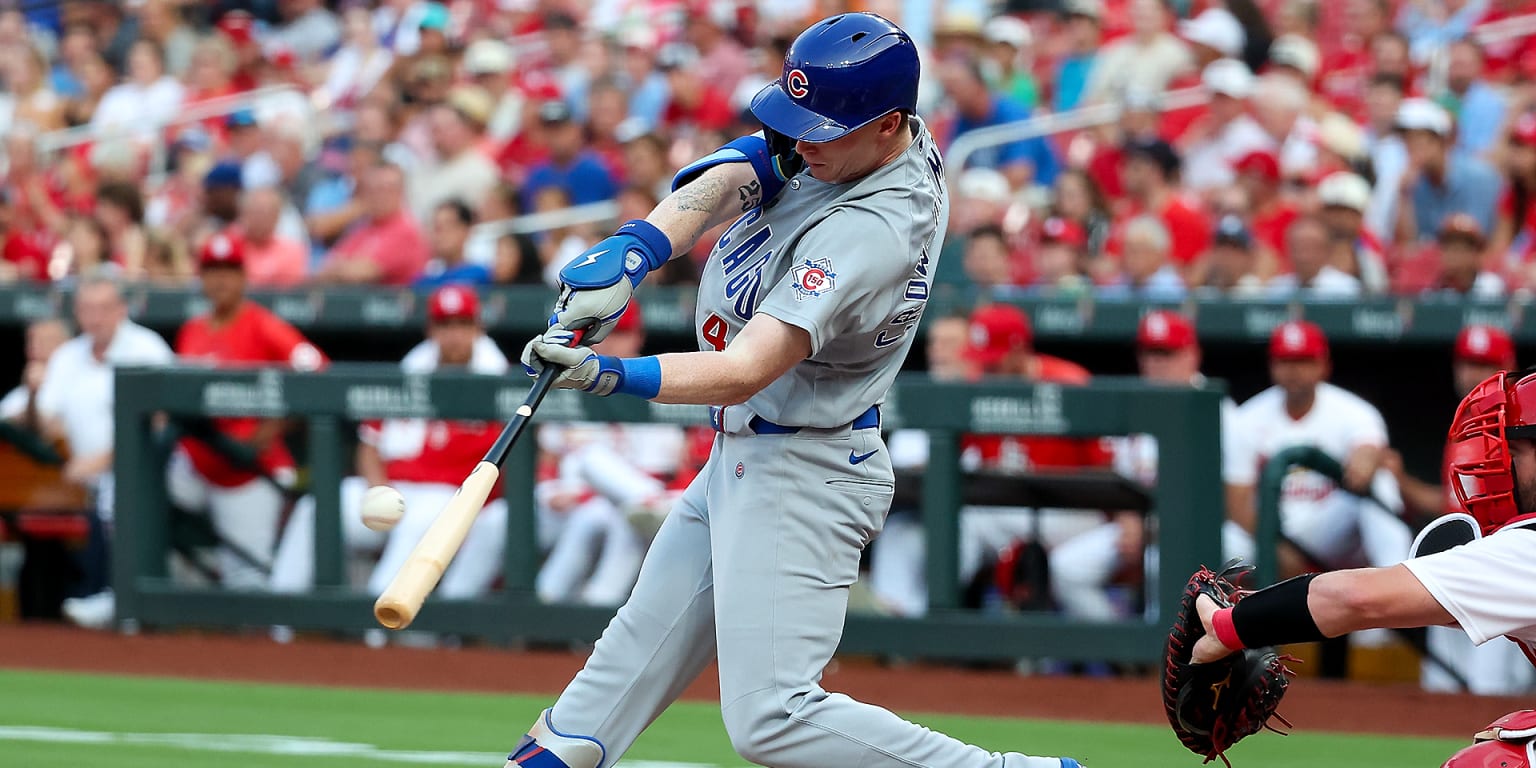
The Cubs dismantled St. Louis 10-2 on Tuesday night at Busch Stadium, and the margin of victory obscures the real story: this was the third consecutive game in which Chicago's lineup produced in volume across multiple spots. After posting seven runs Monday and 18 combined in the Pittsburgh series finale, the Cubs generated 17 hits with contributions from six different players recording multiple hits. That's not variance. That's infrastructure.
Alex Bregman carried the load with three hits—his second straight three-hit game—to tie a career high of seven hits across two consecutive games, a mark he last hit in June 2018 with Houston. But Bregman was one spoke in a wheel. Seiya Suzuki added three hits with two RBIs. Rookie Pedro Ramírez contributed three hits, an RBI, and a stolen base while riding an eight-game hitting streak at .467 (14-for-30). This distribution matters because it inoculates the Cubs against the predictable fade that follows when one player overperforms. Bregman's heat will cool; when it does, the lineup doesn't crater because Suzuki, Ramírez, and Ian Happ—who drove in two runs on Tuesday—are occupying the middle of the order with genuine sustained performance.
On the pitching side, Colin Rea delivered six innings of one-run ball, continuing a Cubs rotation overhaul that's become difficult to ignore. Dating back to July 4, Chicago's starters have posted a 3.07 ERA while limiting opponents to just 3.2 runs per game—elite production in July heat. Matthew Boyd (2.13 ERA), Shota Imanaga (1.19 ERA), and David Peterson (1.56 ERA) have anchored the group, turning what was a question mark at the season's midpoint into a legitimate strength. Rea's 4.43 ERA in this stretch is the weakest of the bunch, but even that represents stabilization compared to the fragility we saw in May and June.
For prop players, the Cubs' team total now sits in a zone where overs carry elevated expected value. Chicago has scored at least nine runs in five of its last seven games, including back-to-back outings with 17 and 18 hits. The Cardinals' pitching staff, lacking both velocity and breaking-ball effectiveness, offered zero resistance. More importantly, this isn't a weather-inflated, Humidor-adjacent bender—the Cubs are manufacturing runs through contact and discipline, which persist across park factors. When you see a team generating 16+ hits in consecutive games while holding opponents to single-digit runs, you're looking at a lineup that's moved from streaky to structural. The market hasn't fully repriced the Cubs' team total ceiling; books are still pricing them as a .500 stretch team rather than a 95-win pace club they're currently running.
Look for Cubs team totals between 4.5 and 5.5 runs in their next three series against division rivals and top-tier opponents. The rotation's recent stabilization removes the tail risk that sinks overs (bad starting pitching forcing the offense to chase blowouts), while the distributed hit approach neutralizes the classic over-betting trap of relying on one player's heroics. This offense has redundancy now, and the books haven't adjusted total lines to reflect that the Cubs are no longer a feast-or-famine operation.