Azócar's Organizational Yo-Yo Signals Atlanta's Bench Scarcity, Not His Value
By Erik Schwartz ·
The Braves' repeated minor-league deals with José Azócar reveal less about his talent than about their depth emergency and usage constraints.
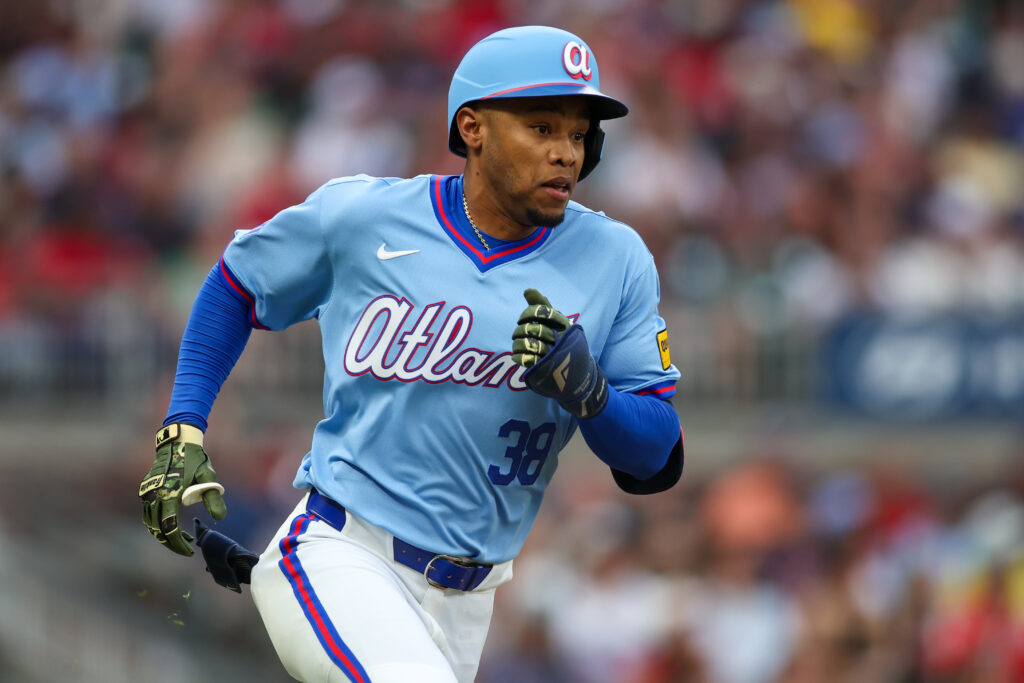
The Braves have re-signed outfielder José Azócar to a minor league deal and assigned him to Triple-A Gwinnett, per MLB.com's transaction tracker. He's already in tonight's lineup at left field, batting seventh—a clear signal that Atlanta views him as an active roster option rather than organizational depth cycling through the system. The move underscores a pattern: Azócar has been through multiple cycles with this organization, and each recall reflects the same calculus: he's available, out of options, and the Braves need bodies.
Azócar carries no remaining options, which means any future recall requires him to stick on the major league roster or be exposed to waivers. That status alone explains why Atlanta keeps cycling him back rather than releasing him outright. He's a known quantity—a left-handed hitter with modest pop and the kind of defensive versatility (left field, corner play) that bench units need. For the Braves, he's cheaper than a true free agent depth piece and comes without the obligation of a major league contract for days when the active roster doesn't need him. The organization has decided his marginal value exceeds his organizational cost.
But what does this tell us about the Braves' roster construction heading into the season? Atlanta's willingness to re-up Azócar multiple times hints at gaps in their corner outfield depth. If the team had confidence in their next tier of young talent—call-ups from Gwinnett or prospects pushing for opportunities—they wouldn't need a 31-year-old journeyman on repeated cycle deals. The fact that he's in the lineup immediately suggests injuries, underperformance, or both among the preferred options.
For bettors, the prop angle centers on playing time distribution and bench usage patterns. Azócar's insertion into the lineup (even at seventh) indicates the Braves are willing to deploy him in consecutive games if performance permits or injuries demand it. His presence reduces the at-bat and run-production ceiling for higher-tier Braves hitters in low-leverage spots. Over a series, teams that platoon or rest regulars against southpaw pitchers see bench players like Azócar accumulate 8-12 plate appearances per week. That matters for team total models: if Azócar is eating plate appearances that would otherwise go to a young slugger with higher ISO or run expectancy, the Braves' cumulative scoring output on nights he plays could trail their season average. Monitor his usage in the next 10 games; if he's averaging 2-3 ABs per game, lean unders on Atlanta's team total when he's confirmed in the lineup.