Carrasco's Carousel: The Braves' Recycled Gamble on Veteran Innings
By Erik Schwartz ·
Atlanta cycles through Carrasco again on a minor league deal, signaling neither confidence in his durability nor willingness to fully commit—a familiar pattern that matters for bullpen construction.
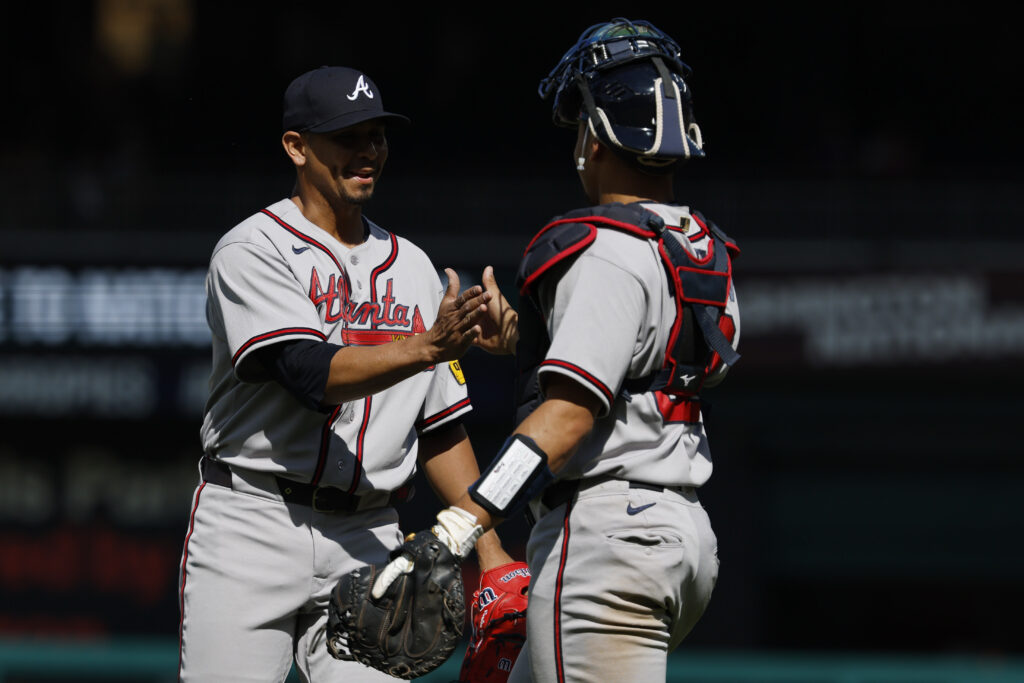
Carlos Carrasco is back in Atlanta. The Braves re-signed the veteran right-hander to a minor league contract after he cleared waivers and elected free agency, just days after being designated for assignment to make room for relievers Tyler Kinley and Ian Hamilton. It's a move that reads like organizational hedging: cheap optionality on a pitcher who has spent pieces of the last three seasons in and out of the Braves' system.
This isn't Carrasco's first dance with Atlanta's front office. He's been a recurring probe—signed, used, shelved, released, re-signed—a pattern that reflects both his injury history and the team's low-cost approach to rotation depth. At 36 years old and coming off an extended absence from the majors, Carrasco no longer carries the reliability that once made him a mid-rotation anchor in Cleveland and Houston. His arm talent remains, but durability is the core liability. The Braves' decision to loop him back on a minor league pact rather than a guaranteed deal is the market's way of pricing that risk: minimal guaranteed money, maximum organizational flexibility.
What matters for Atlanta's depth chart is whether Carrasco can function as an emergency starter or long-relief option, or whether he becomes dead weight on the 40-man roster. The recent add of Kinley and Hamilton suggests the Braves are addressing immediate bullpen attrition—Kinley in particular has provided high-leverage closes. But pulling Carrasco off the roster and then re-signing him signals that the team still views him as a potential pit-stop rather than a solution. If he reaches the majors again, it will likely be a spot start or a three-week injury bridge, not a workable member of the rotation.
For prop bettors, this move ripples indirectly through Braves pitching-related markets. Carrasco's presence on the depth chart slightly lowers the probability that Atlanta trades for external rotation help or that younger prospects get accelerated major-league usage. It's a marginal effect—the kind that bakes into futures and season-long strikeout pools rather than game-by-game props. If you're holding bets on a specific Braves starter to log significant innings this season, the Carrasco re-signing is neutral-to-slightly-negative: it's another emergency fallback, which could compress the role of a prospect or depth arm you're targeting. Monitor whether he actually makes a start; if he does without injury, he's statistically likely to exit early, and the Braves' bullpen will carry heavier leverage.