Braves Cycle Out Carrasco, Gamble on Hamilton's Youth Over Veteran Reliability
By Ty Whitney ·
Atlanta's decision to designate a former Cy Young candidate for assignment signals a bullpen reset—but the move trades proven innings for upside that may not materialize quickly enough.
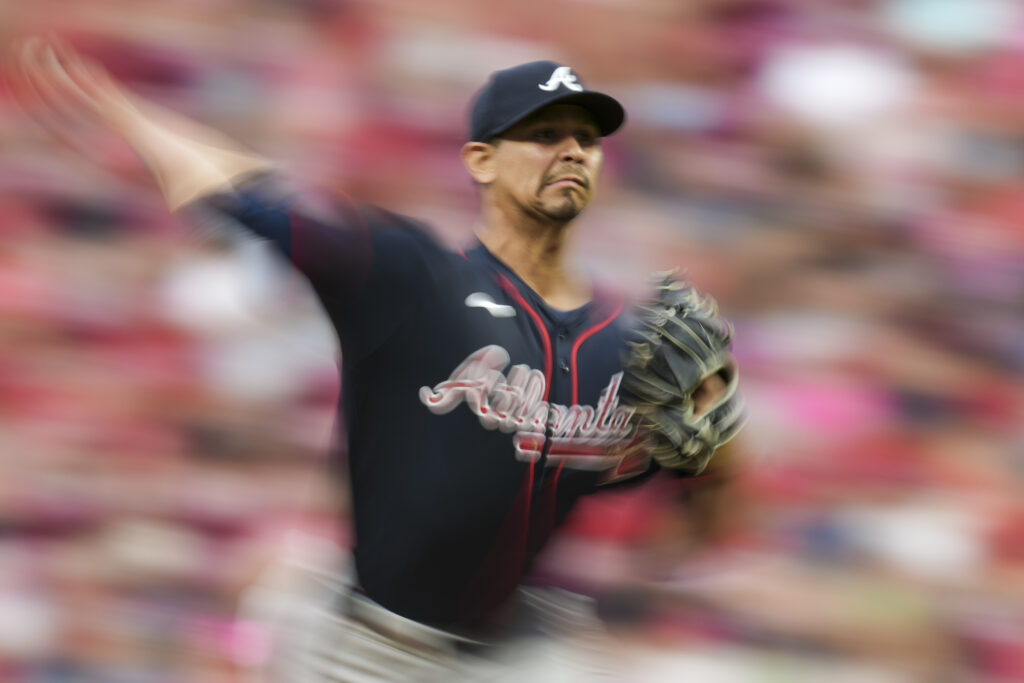
The Braves designated right-hander Carlos Carrasco for assignment on Wednesday, pairing the move with the selection of Ian Hamilton's contract and the reinstatement of Tyler Kinley from the 15-day injured list. In a corresponding swap, the team optioned JR Ritchie. The roster churn reflects Atlanta's pivot from veteran stability to youth—a calculated bet that Hamilton's ceiling outweighs Carrasco's floor as the season enters its final third.
Carrasco, a former Cy Young winner, has been a fixture in big-league rotations for over a decade, but his aging curve and declining fastball velocity have made him increasingly vulnerable to hard contact. At 38 years old, his reliever role with Atlanta represents a sunset chapter rather than a revival. Hamilton, by contrast, is 24 and sits on raw stuff: a fastball that touches 98 and a slider with bite. The Braves are betting that a young arm with plus athleticism can bridge the gap more effectively than a pitcher who has already lost several ticks off his heater. The calculus isn't unusual for a contender at the trade deadline window—youth trumps experience when both are available.
Kinley's return from injury adds depth to the relief corps, though his own injury history complicates the narrative. Ritchie's optioning is a quiet demotion of a pitcher who has shuttled between Triple-A and the majors without establishing a foothold. The moves, taken together, suggest the Braves' bullpen was in need of cleaner separation between prospect upside and veteran dead weight. Hamilton represents the former; Carrasco, fairly or not, has become the latter.
From a betting lens, Braves team totals and bullpen-dependent props—particularly first-five-innings unders when Hamilton takes the ball early in his tenure—face an adjustment window. Hamilton is unlikely to log more than 40-50 innings before the calendar flips, making early-season prop prices on his strikeout rate unreliable; the market will be overweighting recent bullpen volatility rather than his true major-league stabilized rate. If Hamilton does earn starts in August or September, defenses that have built scouting reports on his fastball-heavy approach may begin to sit on the heater. Early-window unders on Braves team totals carry modest edge if Hamilton enters high-leverage situations with minimal major-league tape, though this edge compresses as scouts accumulate video.
Carrasco's release opens a minor free-agent relief market that other contenders will scan. For Atlanta's opponents, the loss of a veteran whose command had been serviceable enough—despite diminished stuff—slightly improves the calculus of facing Atlanta late in tight games. This is a marginal shift in bullpen leverage, not a seismic one, but it compounds across a season's worth of late-inning matchups.