Braves Cycle Through Carrasco Again as Bullpen Triage Continues
By Ty Whitney ·
Atlanta's third DFA of Carrasco in two seasons signals the organization's pivot away from reclamation projects in favor of younger arms with higher ceiling volatility.
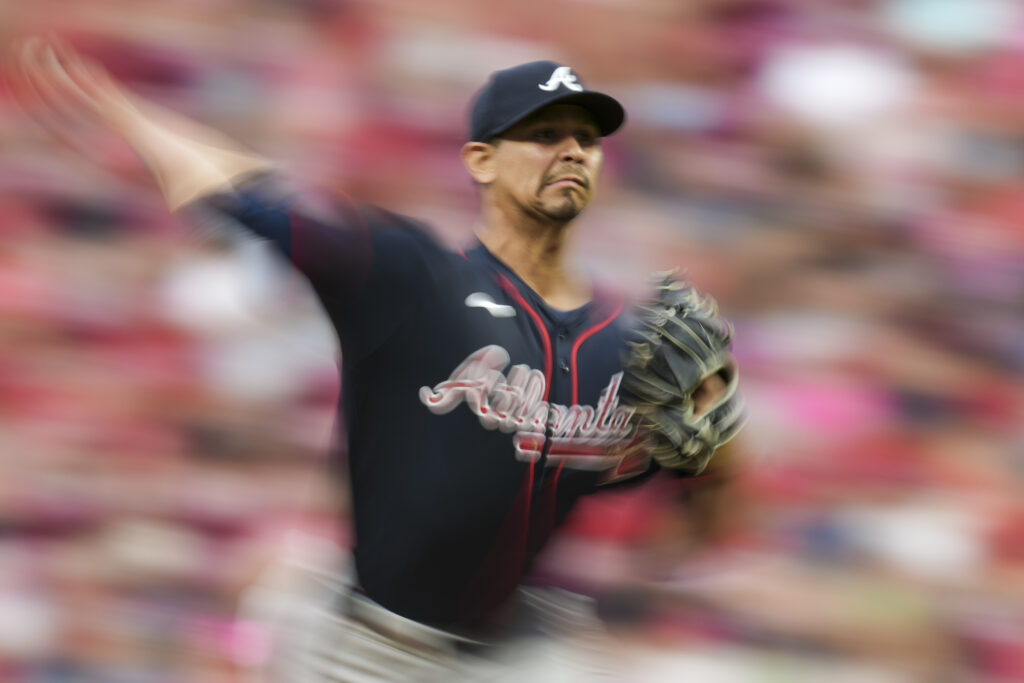
The Braves designated Carlos Carrasco for assignment on Wednesday, marking the third time in roughly two years the organization has cut ties with the veteran right-hander. This move opens roster space for James Karinchak, whose contract was selected from Triple-A Gwinnett. The transaction also reflects a parallel shift: Tyler Kinley landed on the 15-day IL with elbow inflammation, forcing Atlanta to recall JR Ritchie from the minors.
Carrasco's trajectory in Atlanta has been a case study in diminishing returns. Once a stable mid-rotation workhorse, he's cycled through multiple DFA sequences—each a signal that the Braves' evaluation of his remaining value has compressed further. At this stage of his career, even modest innings-eater production carries injury risk and low upside, a profile the team has decided no longer justifies roster real estate when younger alternatives exist.
Karinchak, by contrast, embodies the volatility Braves management is now chasing. Walk rates have historically been his ceiling—a pitcher who can miss bats at elite rates (K% in the 30s during his best seasons) but whose control inconsistency has limited his deployment. Recent reports suggest he's tightened his command window. For Atlanta, the upside of a 27-year-old reliever who can strikeout 12 per nine innings outweighs the floor risk of a 37-year-old Carrasco operating at a third-division talent level.
The Kinley injury compounds the calculus. A healthy Kinley provides reliability in the back-end; his absence forces the Braves to trust younger inventory like Ritchie, a depth swing who works at lower leverage. This cascades into bullpen exposure: if Ritchie is forced into high-leverage spots, Atlanta's opponent totals face elevated variance. The relievers available to pitch the eighth and ninth innings carry wider ranges of outcomes than the organization would prefer mid-season.
For prop bettors, the immediate impact lands on Braves team totals and bullpen-dependent spread movement. The loss of Kinley's reliability tightens the back-end margin of victory, and Karinchak's walk rate (even if improved) introduces volatility that can expand unders in close contests. Over the next 10 days—the window before Kinley's IL stint expires—backing unders on Atlanta at totals above 4.5 carries a structural advantage: the team's ability to protect leads has diminished, and late-game script risk tilts toward tighter, lower-scoring finishes.