Taj Bradley Reclaims April Form With Second Straight 10-K Gem
By Ty Whitney ·
The Twins right-hander's pristine control and elevated fastball velocity signal a sustainable return to early-season dominance, not a single-game spike.
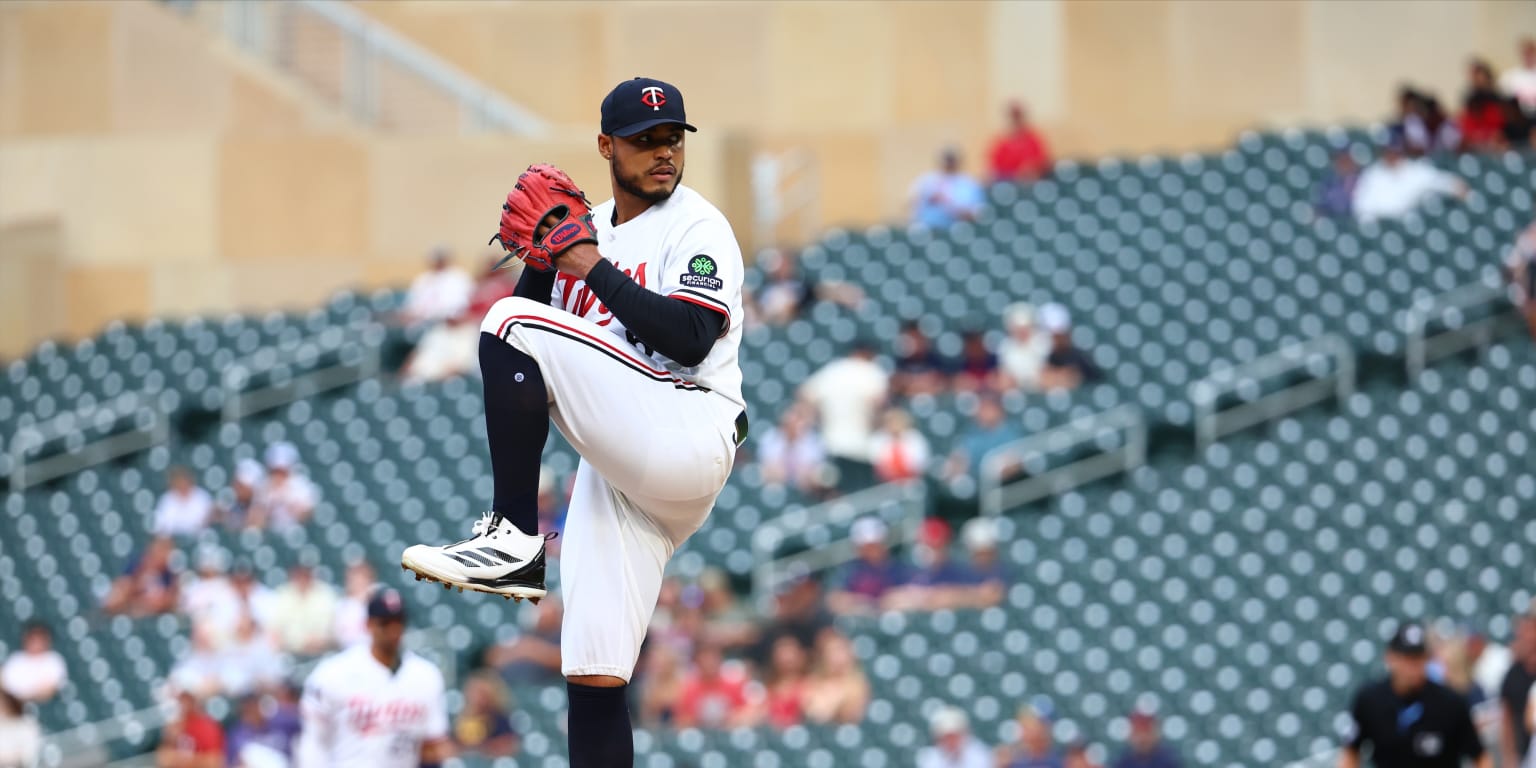
Taj Bradley struck out 10 against Cleveland on Tuesday without walking a batter, becoming only the third pitcher in his career to post double digits with a clean sheet—and the second time he's done it this season. The performance was his follow-up to a nearly identical outing days prior, a pattern that matters far more than the headline strikeout total suggests. The Twins won 3-1 to stay competitive in a tight AL Wild Card race, but the real story lives in Bradley's mechanics and velocity profile.
Bradley's 97.6 mph fastball average sits 0.7 mph above his season norm, but that uptick coincides with a more fundamental shift: his command structure has stabilized after a mid-season dip. He threw his fastball, cutter, and splitter almost identically (one-third each), generating a 45 percent whiff rate on Cleveland swings—elite territory. The Guardians managed three hits in seven innings, with six balls staying in the infield. The one damage was a Rhys Hoskins solo shot in the second; otherwise, Bradley worked around traffic cleanly, including a leadoff double in the seventh.
What separates this from a one-game variance spike is the April echo. Bradley posted a 10-K, no-walk game on April 7, and repeating that signature sequence inside three weeks signals he's not riding a hot streak but recapturing a baseline. Early-season Bradley dominated through precision; mid-summer Bradley lost command. Now he's back. His ability to attack all three quadrants of the zone—not just chasing whiffs—means hitters face a pitcher executing, not a pitcher getting lucky on swing-and-miss.
For prop markets, Bradley's next start carries elevated strikeout equity because the mechanism behind the 10-K games is repeatable: a cutter-splitter mix that plays off a fastball he's throwing with intent and location. His opponent matters less than his own state. If he draws a lower-contact lineup, expect low-20s K potential; against a free-swinging team, the ceiling approaches 12. His strikeout prop should price him as a genuine top-15 arm for the next six weeks, not as a recency play. Books will likely lag the market's recognition of his return, overestimating the regression risk based on his July swoon rather than his April baseline or his recent pair of aces.
Minnesota's 7-of-10 and 13-of-20 records over their respective windows keep playoff odds in play. Bradley is a material part of that equation now. If he sustains this command profile—the fastball velocity and whiff rate aren't outliers if the mechanics stay intact—the Twins' bullpen workload decreases and their rotation becomes a strength. That's a team-total and spread consideration for games where Bradley takes the ball.